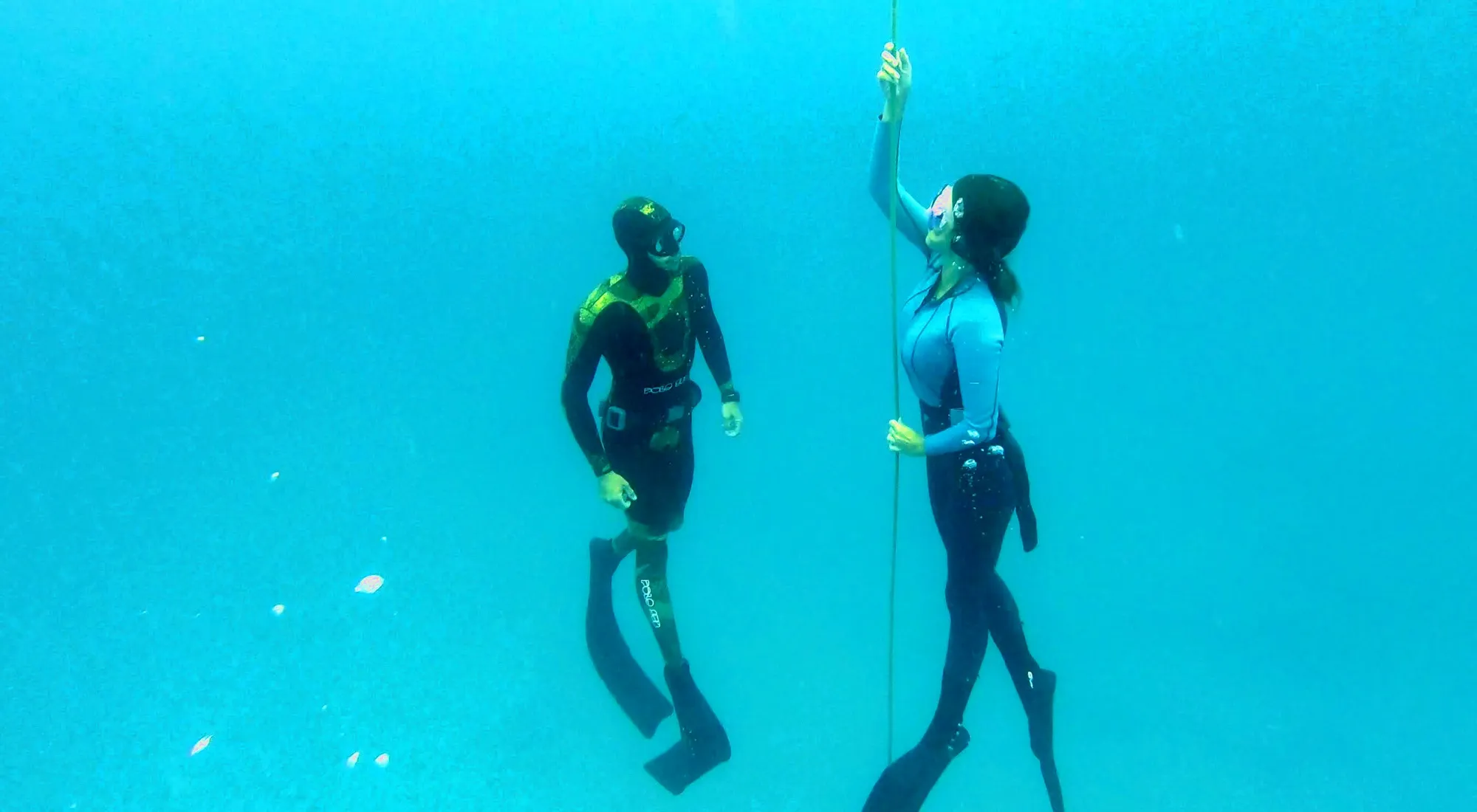
What to expect
- Level
- Beginners to advanced
- Session duration
- 2-3 hours
- Approach
- Integrated with pranayama, yoga and meditation
- Courses
- AIDA & Apnea Total certifications
- Current location
- Guna Yala (San Blas), Panama
- Environment
- Warm, calm, clear water
Why learn freediving on Ikigai?
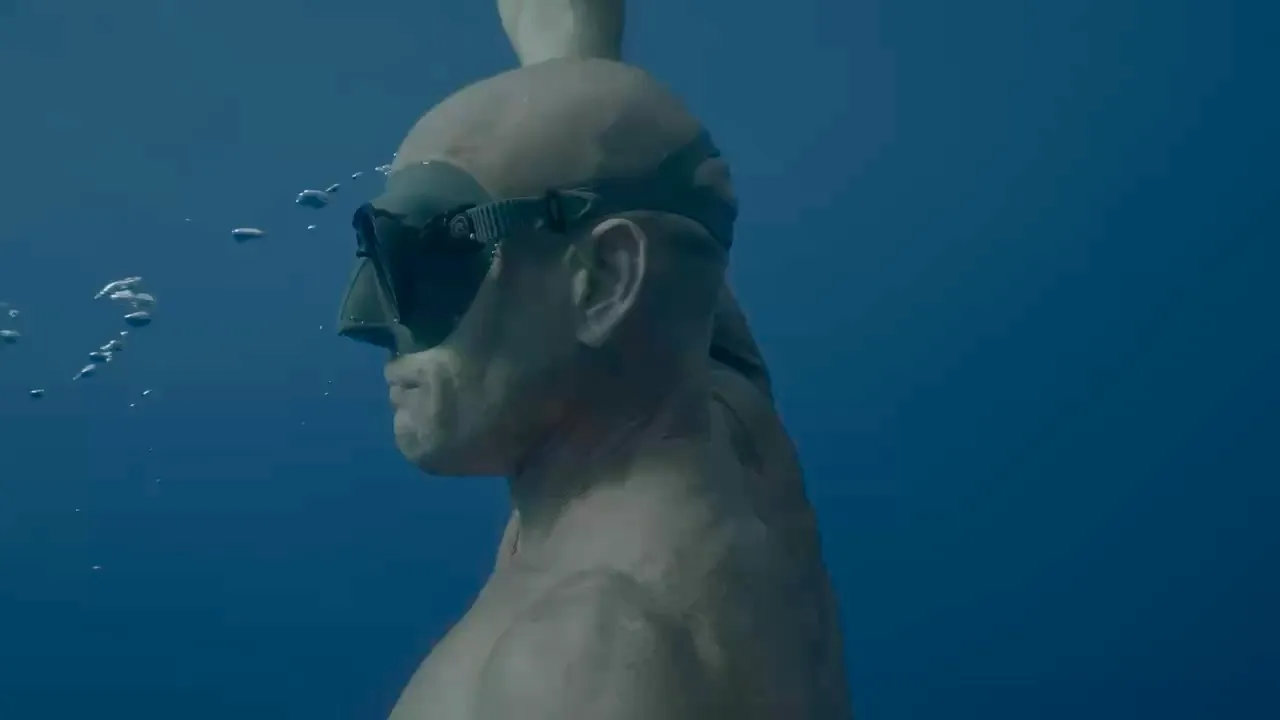
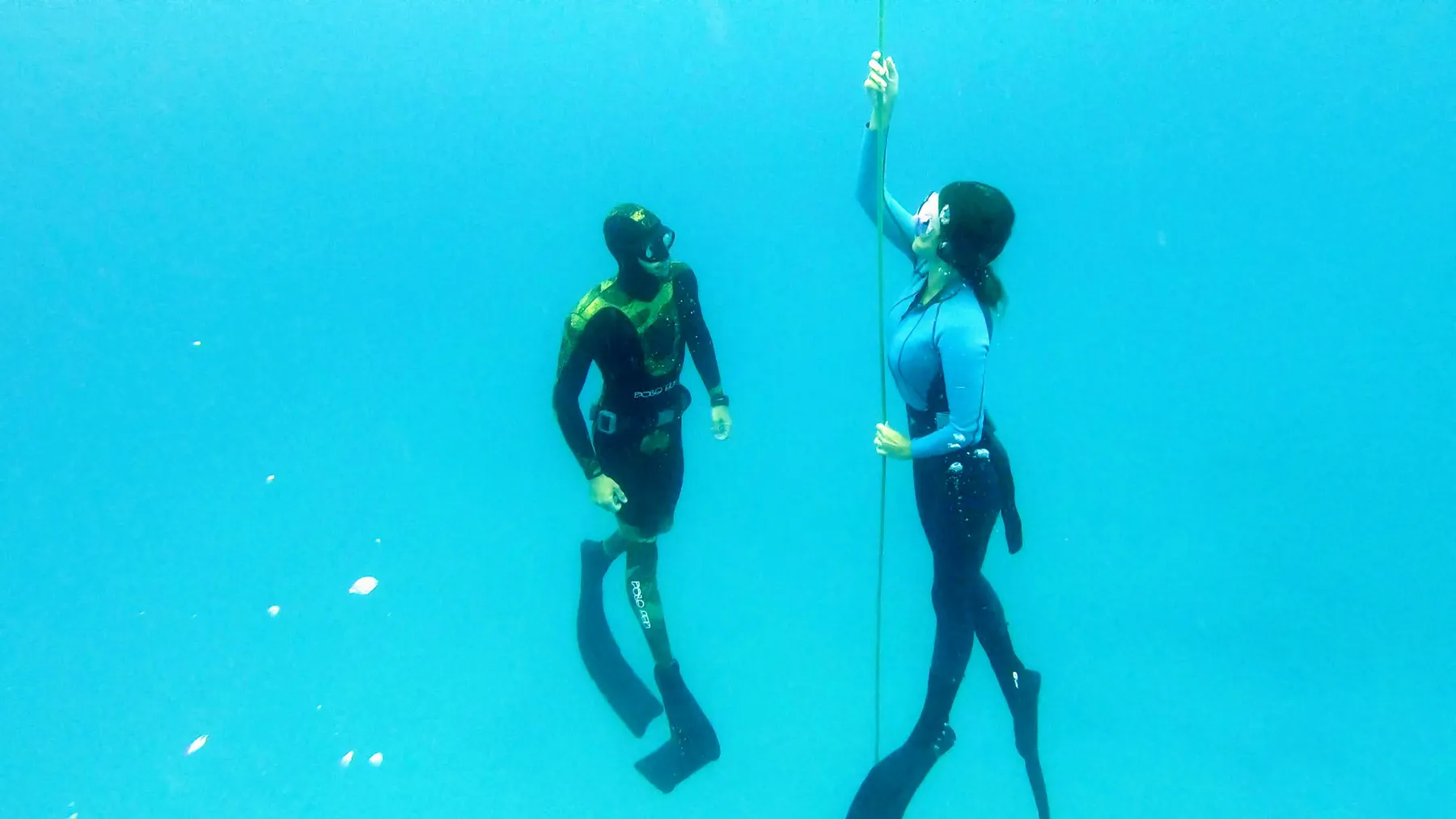
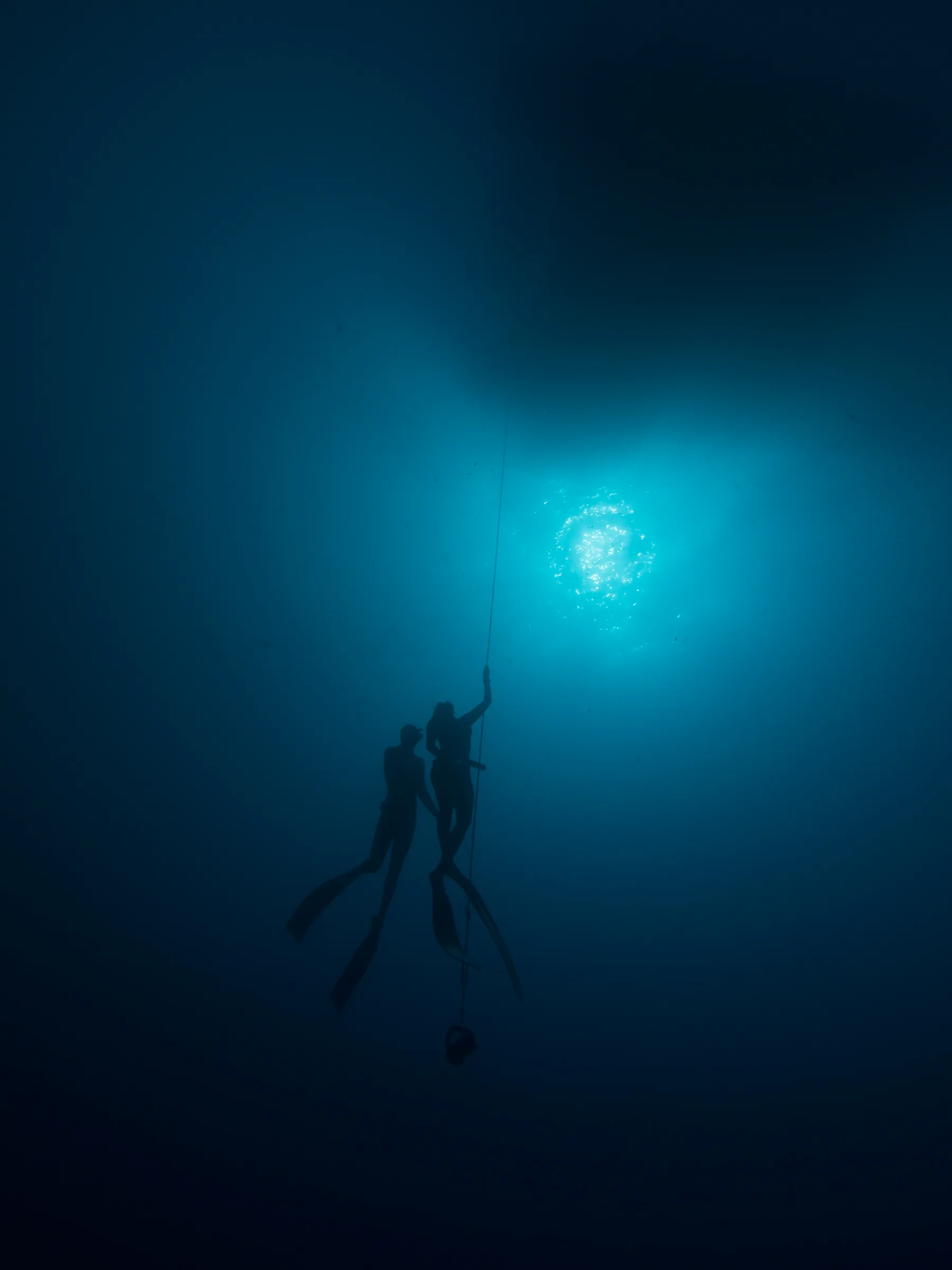
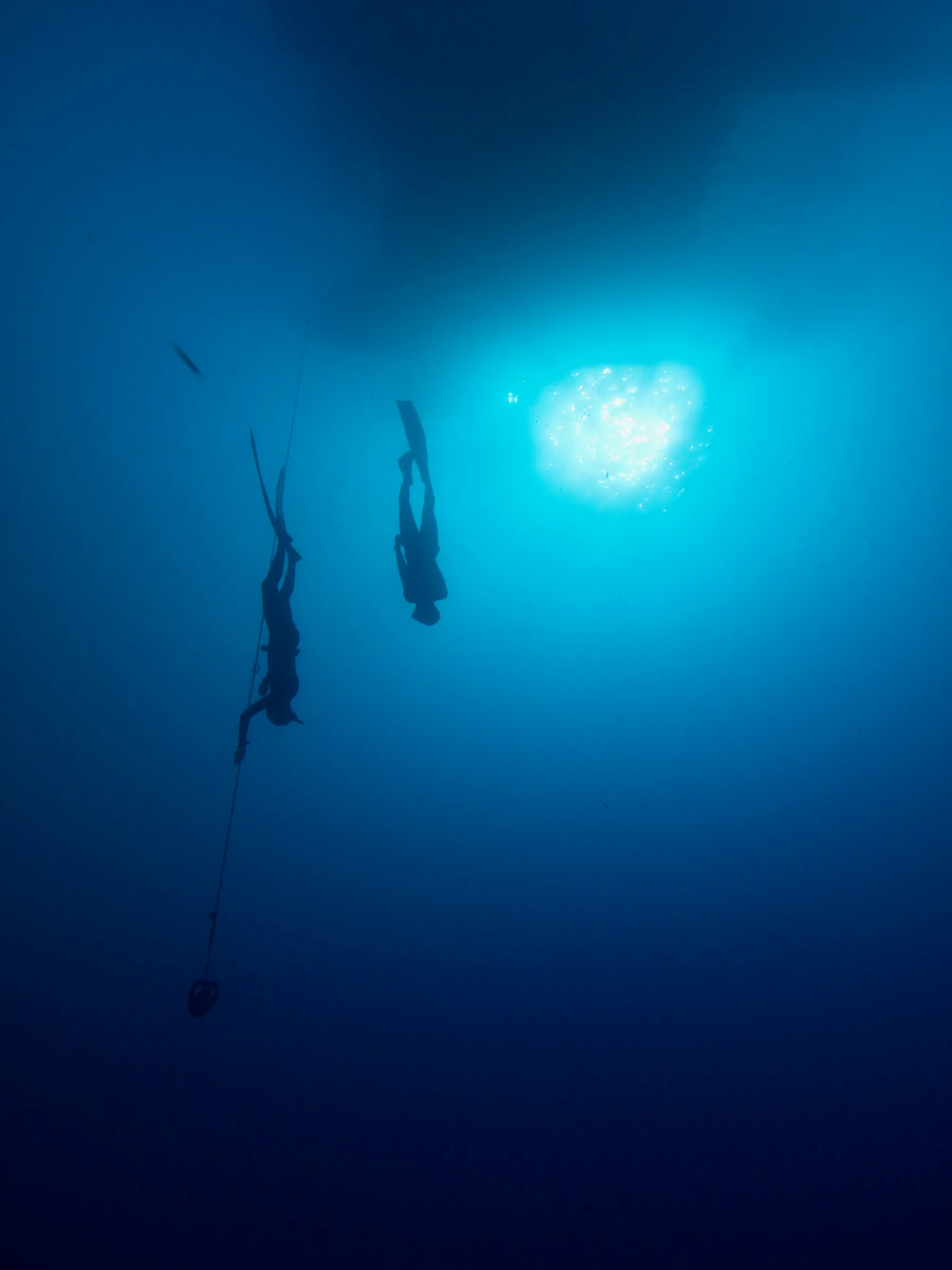
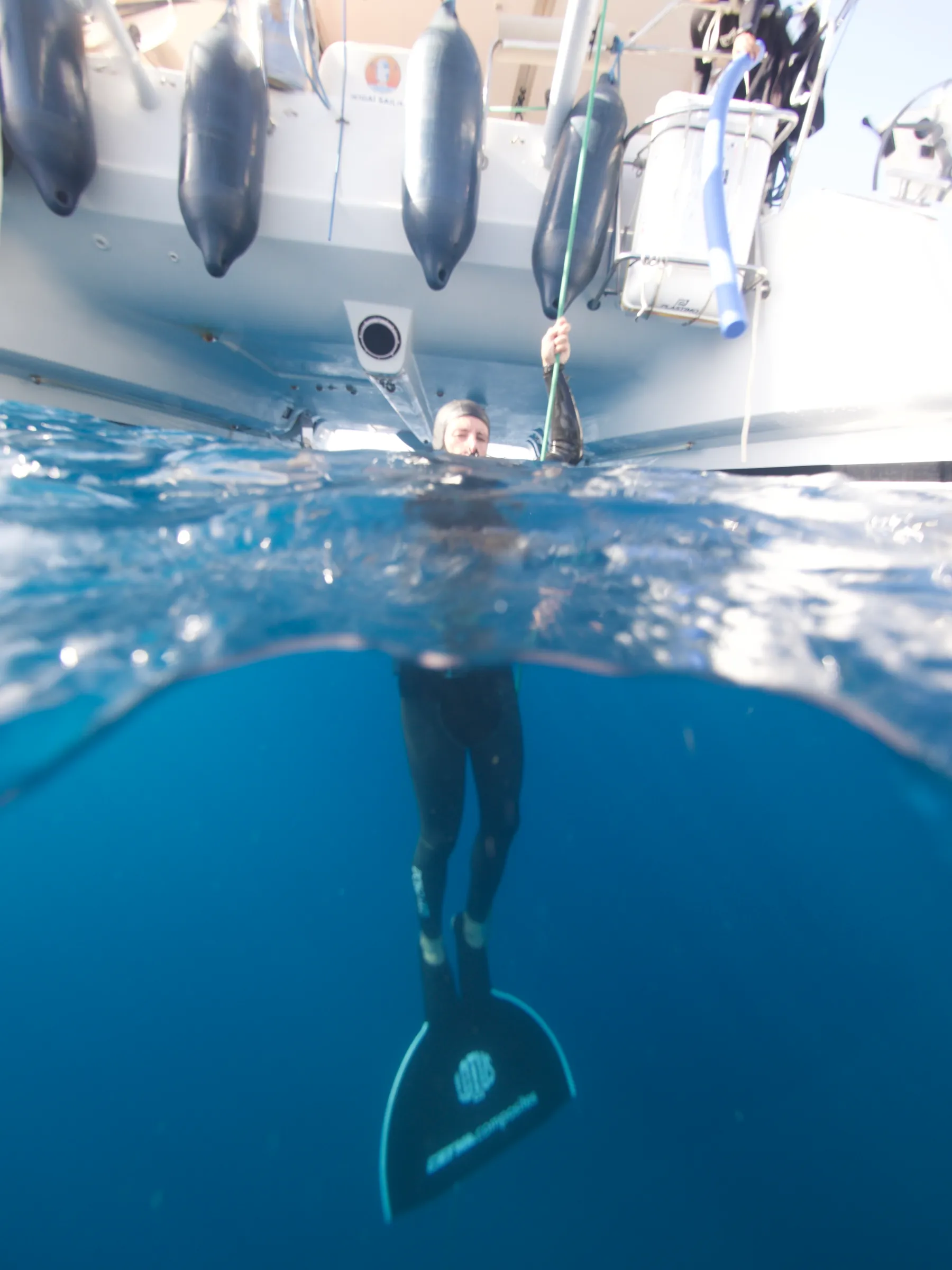
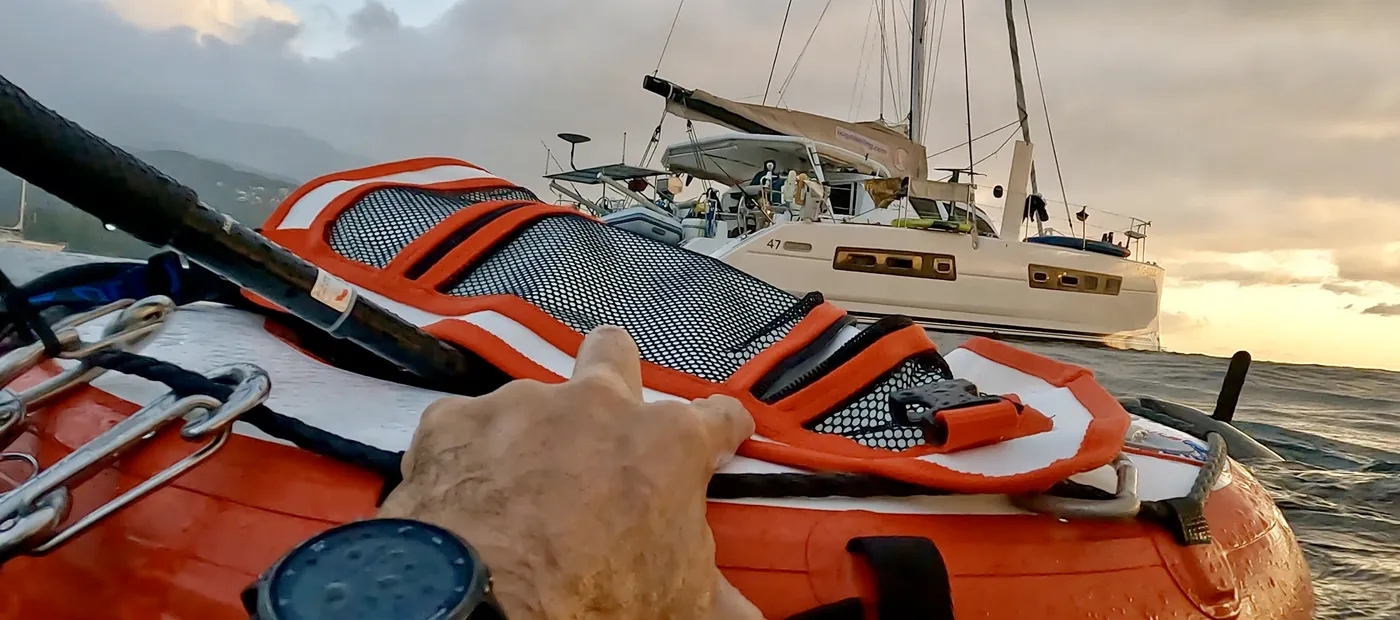
Most freediving courses are split between classroom, pool, traffic, transfers and short water sessions. On Ikigai, the sea is your classroom. You live a few meters from the dive site, train when conditions are best, recover on board and integrate each session without rushing.
01
Direct access to the water
No daily transfers, no traffic, no rush. The dive site is part of your daily life on board.
02
Ideal learning conditions
Warm, clear water, protected anchorages, accessible depths, no waves, no currents.
03
Small Groups
A more intimate learning experience, with time to practice, explore and connect at your own pace.
04
Integrated preparation
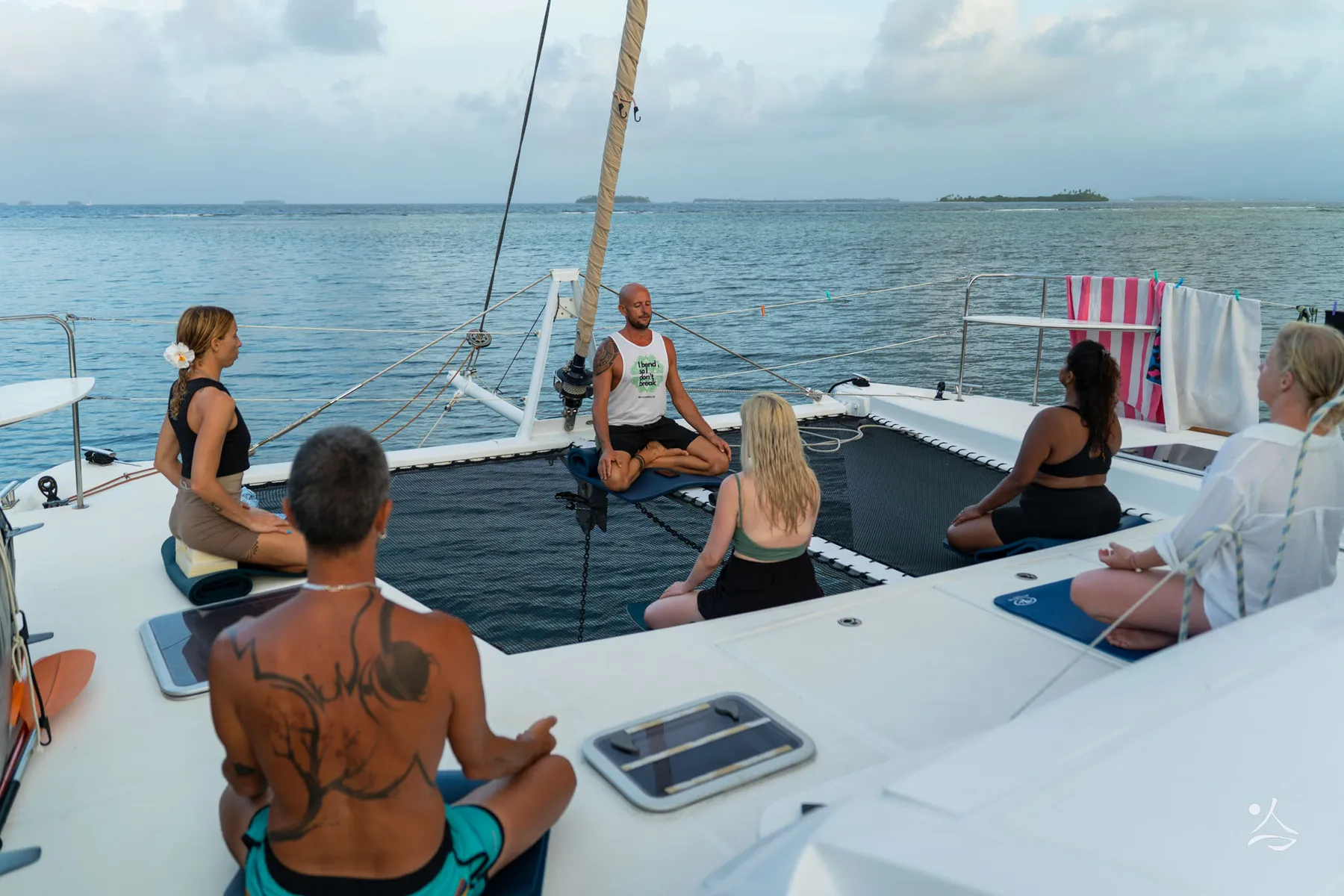
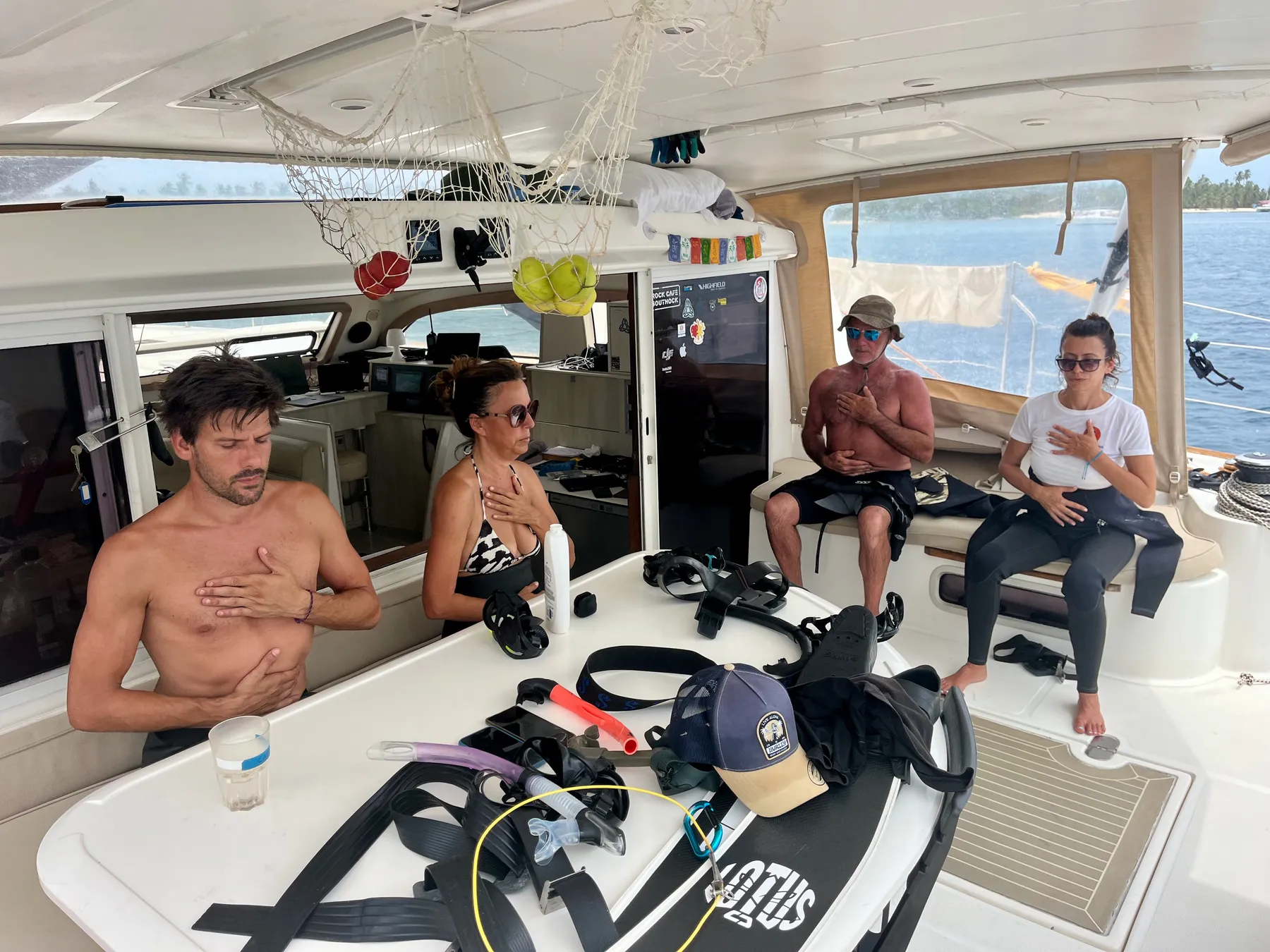
Yoga, pranayama and meditation help prepare the body and nervous system before each session.
05
Recovery on board
Rest, hydrate, eat, breathe, ask questions and integrate the session directly on the boat.
Not sure which course fits you?
“Freediving, for me, has never been just a sport. It's a way to look within — to meet tension, fear and the need for control, and slowly let them go.”
Founder · Skipper · AIDA & Apnea Total Freediving Instructor
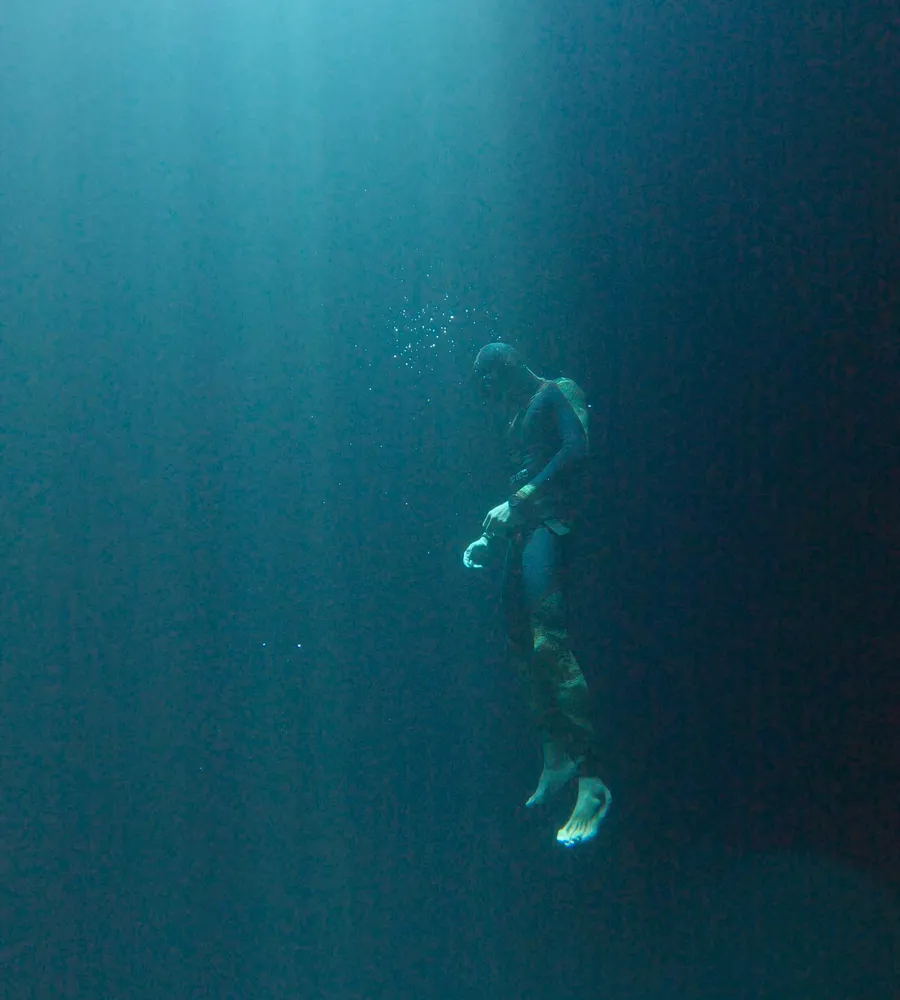
What guests say about freediving
Our guests share their experience aboard, weaving together freediving, meditation, breathwork and yoga.
Video reflection
Learning to breathe differently
A short guest reflection on discovering freediving aboard Ikigai.
Transcript / summary
In this short interview, a guest shares how freediving aboard Ikigai felt less about depth or performance and more about breath, relaxation and trust — learning in calm water, in a small group, with direct guidance from the instructor and time to integrate each session on board.
From a guest review
The deep peace, clarity, and trust felt during the freediving experience, when surrounded by all that blue, are surreal… as is the ecstasy that follows it.
I truly learned how to breathe (and how not to breathe!) during these days, cradled by the waves and the wind, with my eyes full of blue.
Curious but not sure where to start?
Tell us your level, your dates and what you would like to experience. We'll help you choose the right freediving path aboard Ikigai.
Freediving as a path
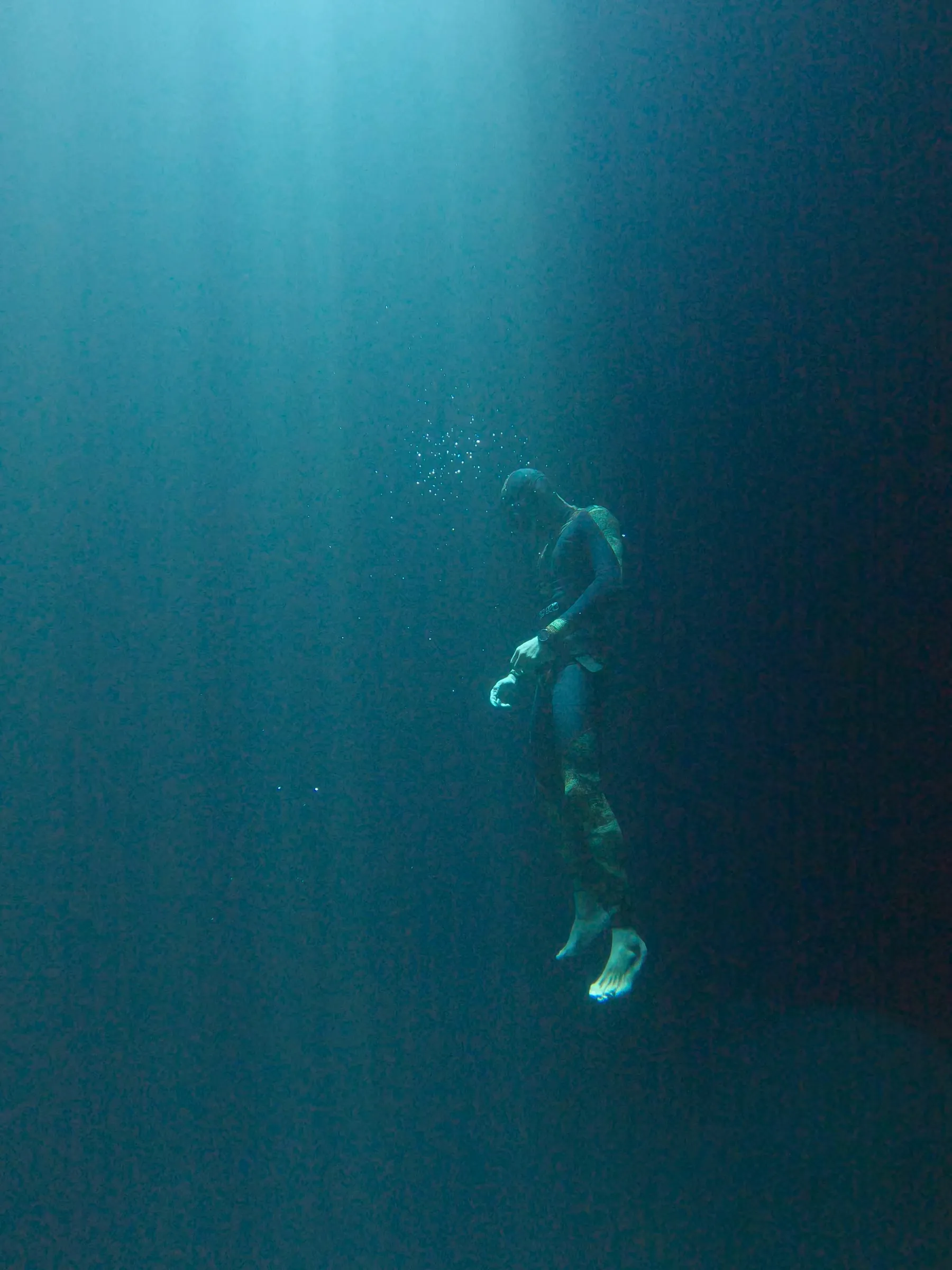
When you hold your breath, many things become visible: tension, fear, the need for control, but also calm, trust and presence. Freediving is not about forcing yourself deeper. It is about learning to relax enough for the body to respond.
You don't descend with force. You descend with trust. The more you let go, the more the body answers — the mind quiets, time stretches, and the water turns into space and silence.
The Powerful Combination: yoga, meditation and pranayama
Before learning to hold the breath, we learn to breathe. On Ikigai, freediving is supported by practices that prepare the body, calm the nervous system and train the mind to enter the water with more ease, trust and presence.
Pranayama
Conscious breathing practices that make the breath deeper, slower and more refined, helping the nervous system settle before each dive.
Yoga
Gentle movement and stretching to release tension, open the diaphragm and rib cage, and allow the body to move through the water with less effort.
Meditation
A training in presence: learning to observe without reacting, so the mind becomes quieter and the descent feels calmer, safer and more natural.
The body already knows
One of the most fascinating parts of freediving is discovering that the body already carries ancient aquatic responses. Through the mammalian diving reflex, the heart rate slows, blood flow redistributes and oxygen is used more efficiently. Freediving teaches you to understand these natural mechanisms instead of fighting them.
Internationally recognised freediving courses
During your stay on Ikigai, you can add internationally recognised AIDA and Apnea Total freediving courses to your boarding — both can happen naturally on board. Certification depends on completing the required course standards; safety always comes before performance.
Two freediving paths on board
On Ikigai, freediving courses can follow different educational paths depending on your level, goals, dates and instructor availability.
AIDA courses follow an internationally recognised certification structure with specific requirements for each level. They are a good fit for students who want a clear progression and formal certification standards.
Apnea Total courses also include safety, technique, breathing, equalisation and open-water practice, with particular attention to relaxation, body awareness and progressive confidence in the water.
Both paths are taught on Ikigai with the same priorities: safety, small groups, respect for the conditions of the day and no forced performance.
AIDA Certification Path
AIDA 1 · Discover Freediving
$140- Duration:
- Half day
- Level:
- Complete beginners
- Max depth:
- 10 m
A gentle introduction to freediving for people with little or no experience. Learn basic breathing, relaxation, safety procedures and your first techniques to move comfortably underwater.
AIDA 2 · Freediver
$399- Duration:
- 2.5 days
- Level:
- Beginner to certified freediver
- Max depth:
- 20 m
The foundational internationally recognised AIDA certification. Learn to freedive safely with a buddy, develop breath-hold capacity and perform controlled open-water dives.
To complete certification
- Static apnea 2:00
- Dynamic apnea 40 m
- Constant weight 12–20 m
- Theory exam
AIDA 3 · Advanced Freediver
$449- Duration:
- 3 days
- Level:
- Certified freedivers
- Max depth:
- 30 m
For freedivers ready to go deeper with more control and safety. Focus on advanced equalisation, underwater efficiency, rescue skills and confidence in open water.
To complete certification
- Static apnea 2:45
- Dynamic apnea 55 m
- Constant weight 24–30 m
- Theory exam
Apnea Total Path
Apnea Total · Introduction to Freediving
$120A first safe and gentle experience of freediving
- Duration:
- 1 day
- Level:
- Complete beginners
A gentle one-day introduction to freediving for people with little or no experience. Explore breath awareness, relaxation, basic safety, static apnea and your first open-water session in the calm waters of San Blas.
Includes
- 1 theory session
- 1 confined-water / static session
- 1 open-water session
Prerequisites
- Comfortable in the water
- Able to swim 100 m non-stop
- Minimum age: 18, or 16-17 with parent / guardian consent
Apnea Total · Freediver
$350A complete foundation in freediving, breathing and open-water confidence
- Duration:
- 2 days
- Level:
- Beginner to certified freediver
- Max depth:
- Up to 20 m, depending on conditions and personal progression
The Apnea Total entry-level certification. Learn to dive safely with a buddy, use efficient breathing and relaxation, equalize, duck dive and build confidence in open water — naturally connected with pranayama, yoga and life at anchor.
Includes
- 2 academic / breathing sessions
- 2 aquatic sessions
- Breathing and relaxation techniques
- Equalization and duck dive technique
- Free immersion and constant weight dives
- Safety and rescue procedures
- Pranayama, yogic breathing and stretching applied to freediving
Apnea Total · Advanced Freediver
$400Going deeper with more relaxation, control and confidence
- Duration:
- 3 days
- Level:
- Certified freedivers ready to progress
- Max depth:
- Progressive deep-water training, depending on conditions and personal level
For freedivers ready to go deeper with more control and safety. Focus on advanced breathing and relaxation, equalisation, pressure adaptation, visualisation and progressive depth, integrated into daily life on board.
Includes
- 3 academic / breathing sessions
- 1 pool or confined-water static session
- 2 deep-water sessions
- Static apnea training
- Advanced breathing techniques
- N.P.S.A. and exhale-dive preparation
- Equalization and pressure adaptation
- Visualization and thoracic stretches
- Safety procedures and progressive depth work
Freediving courses are offered as add-ons to selected Ikigai boarding options. They are not standalone bookings. Accommodation, food, sailing and life on board are covered by the selected boarding formula.
Course contributions are made to Ikigai Sailing ASD, a non-profit sports association recognised by CONI and affiliated with MSP Italia. They help sustain the instructor, equipment, safety setup and the floating training environment on board Ikigai.
Is this for me?
This is for you if
- ✓You are curious about freediving but feel nervous
- ✓You want to learn in warm, calm water
- ✓You prefer small groups and personal attention
- ✓You want a course that includes breathwork, yoga and meditation
- ✓You are already certified and want to train in a relaxed open-water environment
- ✓You want to combine sailing, ocean life and freediving
This may not be for you if
- –You are looking for competitive deep training only
- –You want a fast pool-based course in the city
- –You are not comfortable living on a boat
- –You want a large group school environment
How to add a course to your boarding
Freediving courses can be added to selected Ikigai boarding options, depending on the itinerary, weather, group size and instructor availability. The best way is to tell us your current level and what you would like to explore, then we will suggest the most suitable course or training path.
Learn freediving where the sea becomes your classroom.
An invitation
If you feel there is something to explore, freediving can be a doorway. No performance is required. No previous experience is needed for the first level. Only the willingness to listen, breathe and meet the water with respect.
Frequently asked questions
What is the difference between AIDA and Apnea Total?
AIDA and Apnea Total are two recognised freediving education paths with different course structures and teaching approaches. AIDA courses follow a clear international certification framework with specific requirements for each level. Apnea Total courses also include safety, technique, breathing, equalisation and open-water practice, with particular attention to relaxation, body awareness and progressive confidence in the water. On Ikigai, the best path depends on your level, goals, dates and instructor availability. In both cases, safety, small groups and respect for the sea conditions always come first.
Can I choose between AIDA and Apnea Total?
Yes, when both options are available. We can help you choose the most suitable path based on your experience, goals, available time and the conditions during your stay on board.
Do I need previous freediving experience?
No. AIDA 1 is designed for complete beginners, while AIDA 2 and AIDA 3 are for those who want formal progression.
Do I need to be a strong swimmer?
You should be comfortable in the water, but you do not need to be an athlete. The course is progressive and adapted to your level.
Is freediving safe?
Freediving is safe when practiced with proper training, a buddy system, progressive depth and certified instruction. On Ikigai, safety always comes before performance.
Can I get certified on board?
Yes. Ikigai offers AIDA and Apnea Total courses that can be added to selected stays on board.
Why learn freediving on a catamaran?
Because you live directly on the sea, close to the dive sites. There are no daily transfers or rushed sessions, and you can combine training with rest, breathwork, yoga and life at anchor.
Can I combine freediving with yoga or Janzu?
Yes. This is one of the strengths of Ikigai. Freediving naturally connects with yoga, meditation, pranayama and Janzu.
What is the best level to start with?
If you have no experience, start with AIDA 1. If you already feel comfortable in the water and want a full certification, AIDA 2 is the standard entry-level certification.