
The mammalian diving reflex
Published March 4, 2025 · Ikigai Sailing crew
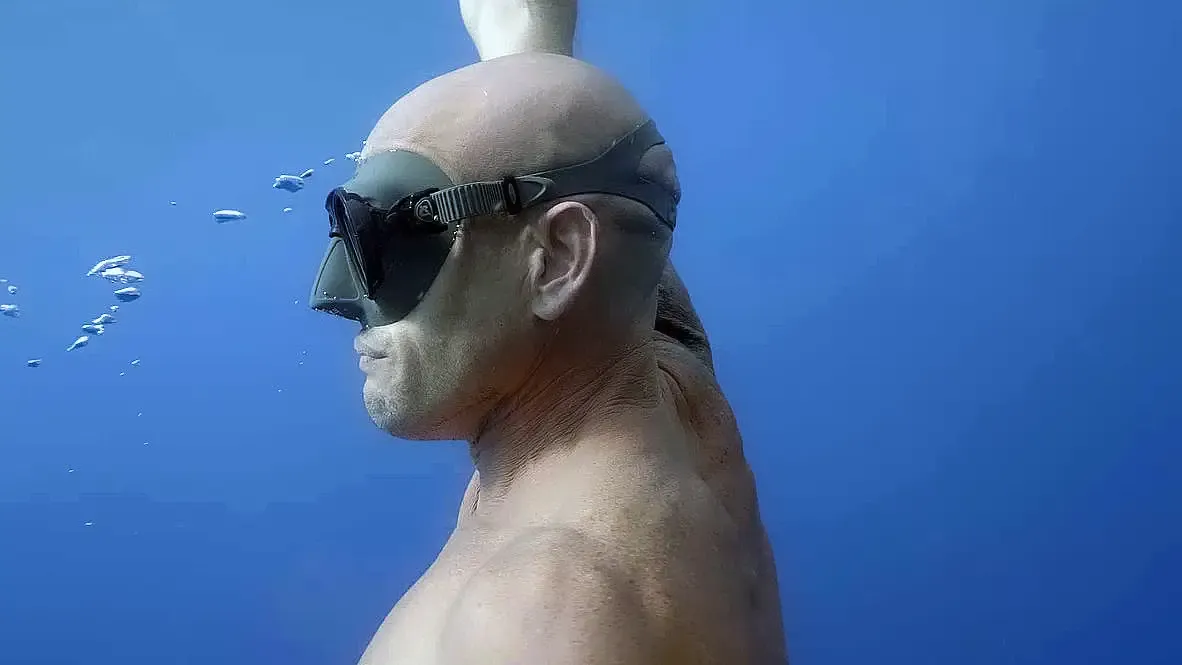
When we hold our breath and immerse our face in water, the body activates a coordinated set of involuntary responses. Together, they are known as the mammalian diving reflex, or diving response.
This is not a “superpower”, and the body does not produce any new oxygen. Instead, it changes how the oxygen already available is managed, temporarily altering heart rate and circulation.
The strength of the response varies from person to person and depends on factors including breath-hold duration, water temperature, depth, movement, mental state and experience.
The body’s main responses
1. Bradycardia
During a breath hold, the heart rate may slow. By reducing the heart’s workload, the body limits some of its oxygen consumption.
There is no single percentage that applies to everyone. The reduction in heart rate varies widely between people and situations, and can be offset by physical effort, stress or the body’s initial response to cold water.
2. Peripheral vasoconstriction
Blood vessels in the periphery, particularly in the arms and legs, may constrict. This reduces blood flow to less immediately essential tissues and helps preserve circulation to the central organs, especially the heart and brain.
This does not mean that blood completely “leaves” the limbs. It is a gradual and temporary redistribution.
3. Centralisation of blood and blood shift
During immersion, water pressure and vasoconstriction move part of the blood volume towards the chest.
In deep dives, this becomes especially important. As pressure compresses the lungs, the increased blood volume in the thoracic circulation helps support pulmonary structures. Freedivers know this phenomenon as blood shift.
It is not simply “plasma filling the lungs”, but a complex circulatory response to pressure and decreasing lung volume.
4. Splenic contraction
During repeated or sufficiently long breath holds, the spleen may contract and temporarily release some of the red blood cells it stores into circulation.
This can briefly increase haemoglobin concentration and therefore the blood’s capacity to carry oxygen. The effect is real, but variable, and far less like an “extra tank” than some popular explanations suggest.
Why it matters in freediving
The diving response helps the body manage its oxygen reserves during a breath hold. Understanding these mechanisms can help freedivers interpret what they feel and appreciate why relaxation, technique and economy of movement matter so much.
The calm many freedivers experience underwater, however, does not come from physiology alone. It also develops through training, familiarity with breath-hold sensations and the ability not to react immediately to tension or the urge to breathe.
A natural response, not a guarantee
The diving reflex does not remove the risk of hypoxia or make untrained breath holding safe. Oxygen consumption continues and, during ascent, the reduction in pressure can rapidly decrease the oxygen available to the brain.
This is why freediving should never be practised alone. It requires a trained buddy who can observe and respond, as well as guided progression that places safety before depth or duration.
Discover freediving aboard Ikigai