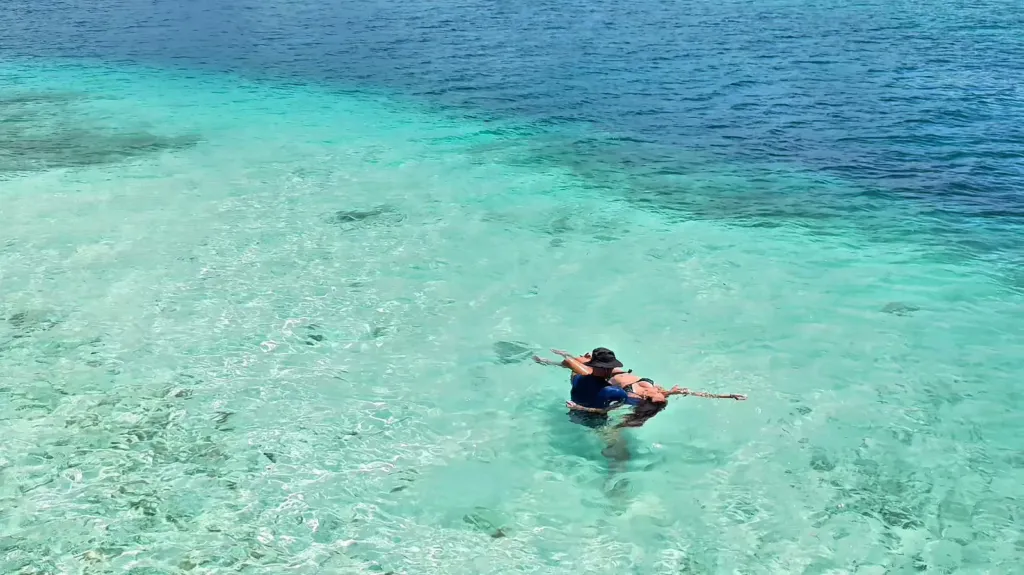
AQUATIC BODYWORK · BREATH · PRESENCE · WATER
Janzu Water Therapy aboard Ikigai
An experience of deep relaxation through water
What is Janzu water therapy?
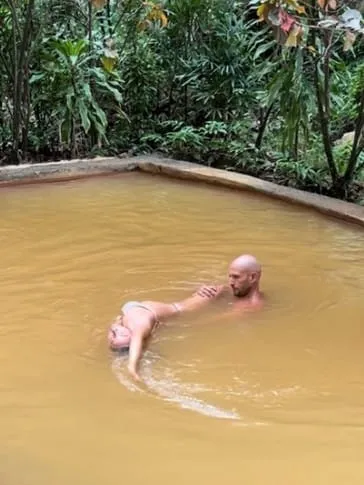
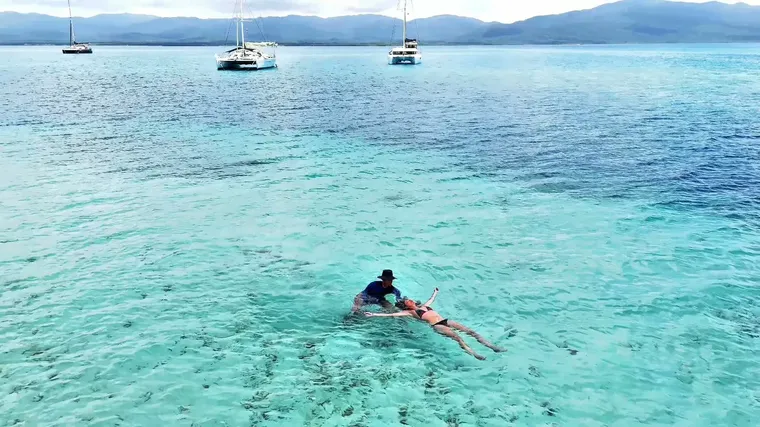
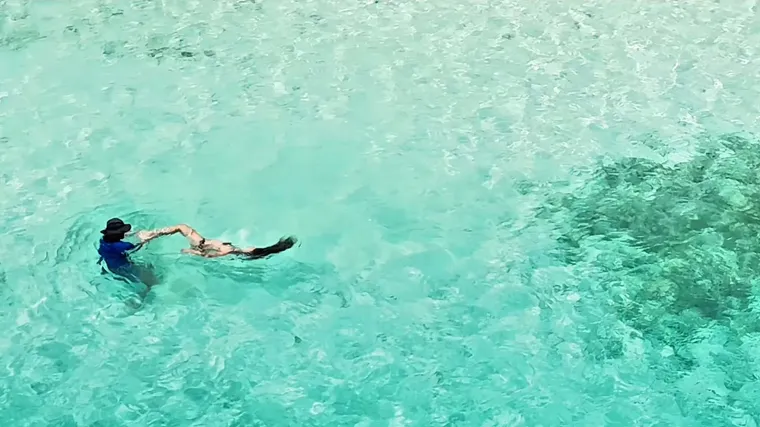
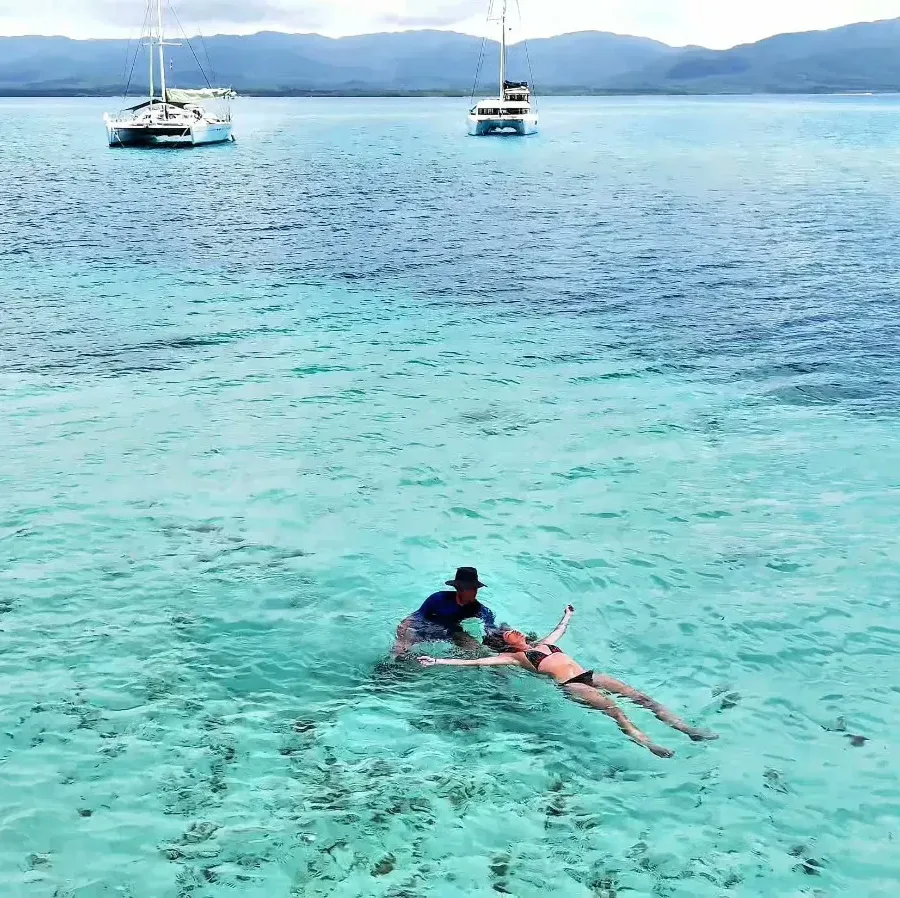
Janzu water therapy is a form of aquatic bodywork in which the receiver is gently supported and moved through water. The practitioner guides the body with slow, circular and wave-like movements, helping the spine, joints and muscles soften without effort.
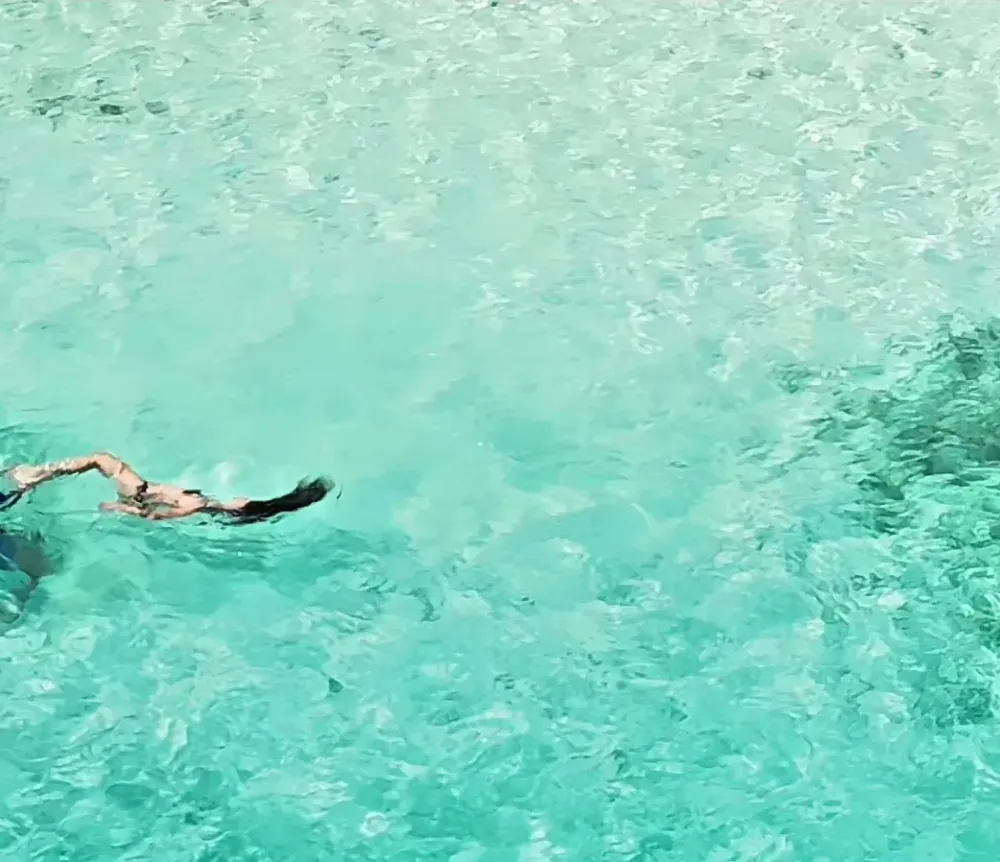
Janzu is not based on effort, and there is nothing to achieve. The body does not need to perform — it is held, moved and invited to soften. Some sessions may include brief immersions, always depending on the person, the conditions, comfort level and consent.
At first, the mind may try to stay in control. Little by little, the support of the water, the rhythm of the movement and the presence of the practitioner can help the body release tension and enter a deeper state of trust.
Many people describe it as a floating meditation: a moment in which the body feels lighter, the breath becomes quieter and the mind can finally stop holding so much. Aboard Ikigai, Janzu is offered in warm, clear and protected waters, where the sea itself becomes part of the experience.
What to expect
- What it is
- Aquatic bodywork (Janzu + WATA / WaterDance)
- Duration
- About 30–60 minutes, one-on-one
- Where
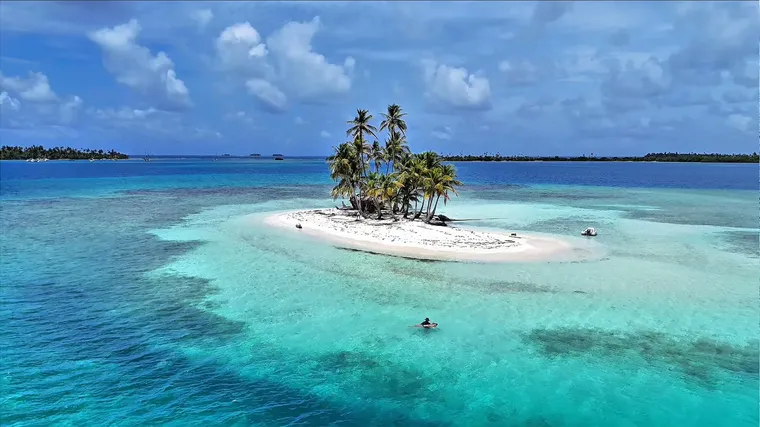
- Warm, shallow, protected water — currently Guna Yala, Panama
- Swimming
- Not required — you are supported throughout
- Guided by
- Luca, trained in Janzu and WATA / WaterDance
How does a Janzu session work aboard Ikigai?
A session usually takes place in calm, shallow and protected water. Before you enter, Luca explains how it works, checks your comfort level and adapts the practice to you. You don't need to know what to do, to perform, or to be flexible or experienced — your role is simply to breathe, listen and let the water support you.
After a session, many people simply feel calmer, lighter and more connected to their body. There is no result to reach.
“In the water there is nothing to perform. The body is held, and little by little it remembers how to let go.”
Janzu & WATA practitioner · Ikigai
Where Janzu comes from
Janzu was developed in Mexico in the 1990s by Patik, Juan Villatoro, who created the name and helped shape the vision of this aquatic practice.
During his path, Patik shared the practice with different people who later kept Janzu alive and transmitted it in their own way. One of them was María Ornelas, who helped develop a teaching methodology that later became part of the Escuela de Artes Acuáticas and Colectivo Agua.
Another transmission, important in Luca's own path, came through Richard Dionne — known as Sol Naciente — who also received Janzu from Patik and later shared its foundations with Luca in Mexico.
This history matters because Janzu is not simply a relaxation technique. It is an aquatic practice passed on through direct experience in water. Aboard Ikigai, Luca offers it not as a rigid method, but as a grounded practice shaped by this transmission, his work with WATA / WaterDance, freediving, meditation, breathwork and daily life at sea.
Benefits of Janzu water therapy
The effects of a session can be different for each person — some experience mainly physical relaxation, others a deeper sense of calm or emotional softness. Janzu water therapy is not presented aboard Ikigai as a medical treatment; it is an aquatic bodywork practice that may support relaxation, body awareness and nervous-system regulation through water, movement and trust.
Body
May help release muscular tension, supports joint mobility and softness, and creates a sense of lightness through buoyancy — often inviting a slower, more natural breath.
Mind
Can help calm mental activity and relax the nervous system, inviting trust and surrender and, for many, a quiet meditative state.
Inner experience
May support emotional release and a feeling of safety and being held, often leaving a sense of space, calm and reconnection with the body.
Luca's training in Janzu and WATA
Luca learned the foundations of Janzu directly from Richard Dionne, known as Sol Naciente, in Mexico.
He later deepened his aquatic work through WATA / WaterDance in Italy, training with Arjana Brunschwiler, one of the founders of the practice.
Aboard Ikigai, Luca integrates these influences with his experience as a freediving instructor, sailor, meditation practitioner and ocean-based guide. The result is not a fixed protocol, but a session adapted to the person, the sea conditions and the level of comfort in the water.
Why experience Janzu aboard Ikigai?
Aboard Ikigai, Janzu is not a separate spa treatment — it is part of life at sea. Sessions take place in warm, clear and protected waters, surrounded by silence, light and the slow rhythm of life at anchor. There is no pool and no closed room: the same water that carries the boat also supports the body. Janzu sits naturally alongside the other practices on board — freediving, yoga, meditation and breathwork — and for many guests it becomes one of the most intimate moments of the journey.
Experience Janzu aboard Ikigai
If you feel curious about receiving a Janzu session during your time on board, tell us your dates and we'll let you know what's possible depending on the route, the weather and the sea conditions.
Frequently asked questions
What is Janzu water therapy?
Janzu water therapy is a form of aquatic bodywork where the body is supported and guided through slow, fluid movements in water. The practice may support relaxation, body awareness, trust and a meditative state. Some sessions may include brief immersions, always with consent and care.
Is Janzu the same as Watsu?
No. Janzu and Watsu are related forms of aquatic bodywork, but they are not identical. Watsu usually stays on the surface and focuses on holding, stretching and gentle movement. Janzu is often more fluid and may include brief immersions when appropriate. Aboard Ikigai, Luca also integrates elements of WATA / WaterDance depending on the person and the conditions.
How long is a Janzu session?
A session usually lasts between 30 and 60 minutes, depending on the conditions, the person receiving and the rhythm of the experience. It is always adapted to the individual.
Do I need to know how to swim?
You don't need to be a strong swimmer, but you should feel comfortable being in the water. Sessions take place in calm, protected areas and the body is supported throughout the practice.
Is Janzu safe?
Janzu is practised gently and progressively. Aboard Ikigai, sessions take place only when sea conditions are appropriate, and always with care, consent and respect for the receiver's comfort. Any immersion is optional and introduced only when it feels right.
Where can I experience Janzu in the Caribbean?
You can experience Janzu aboard Ikigai during selected sailing experiences in the Caribbean, currently in Guna Yala, Panama. Sessions are held in warm, clear and protected waters, depending on weather, anchorage and sea conditions.
What should I expect after a session?
Many people feel relaxed, lighter and more connected to their body after a session. Some experience calmness, emotional softness or a deep meditative state. Every session is different, and there is no specific result to achieve.
Moments from the water