What to expect
- Level
- Open to beginners, adapted to the group
- Session length
- About one hour
- Where
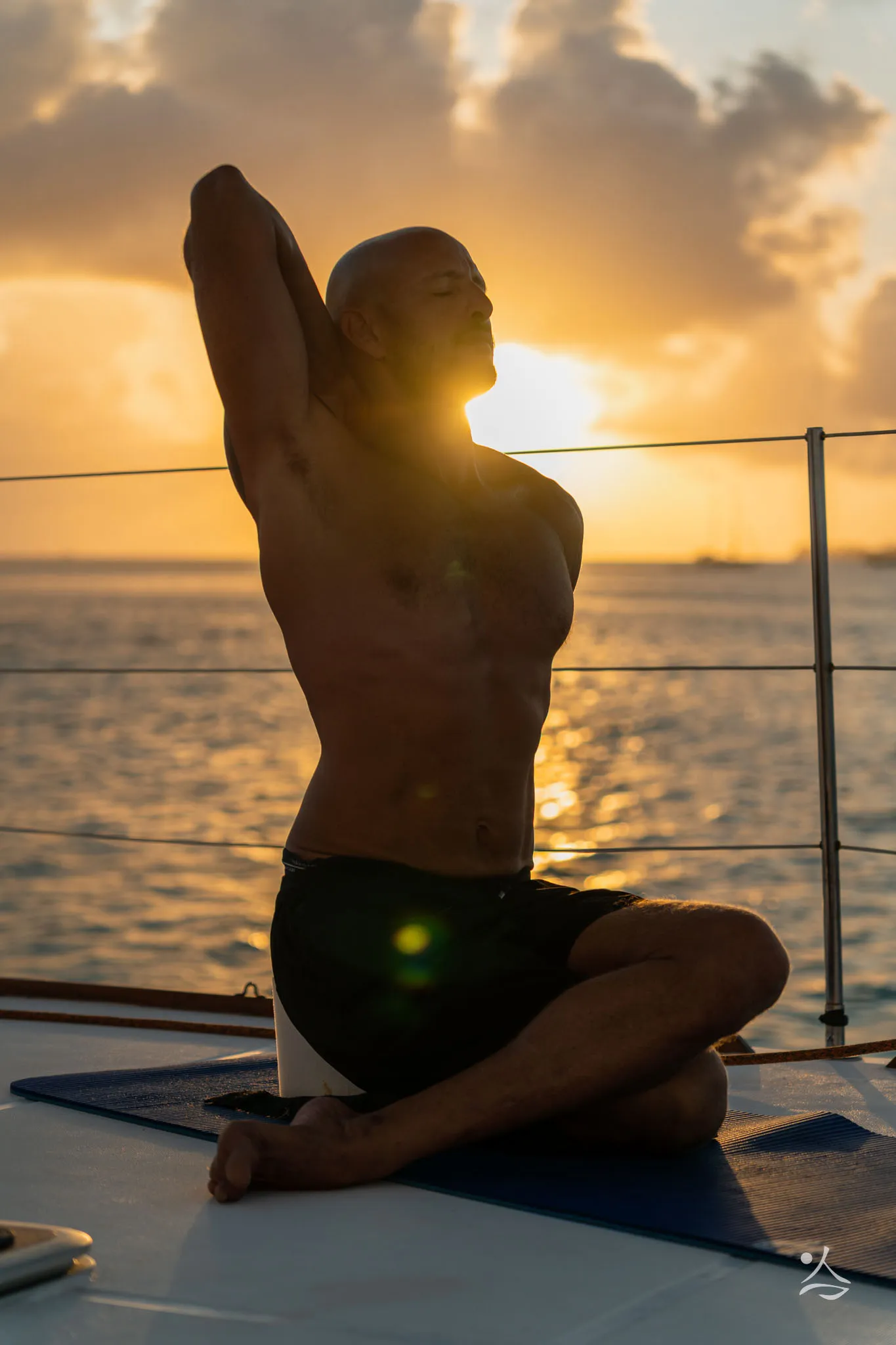
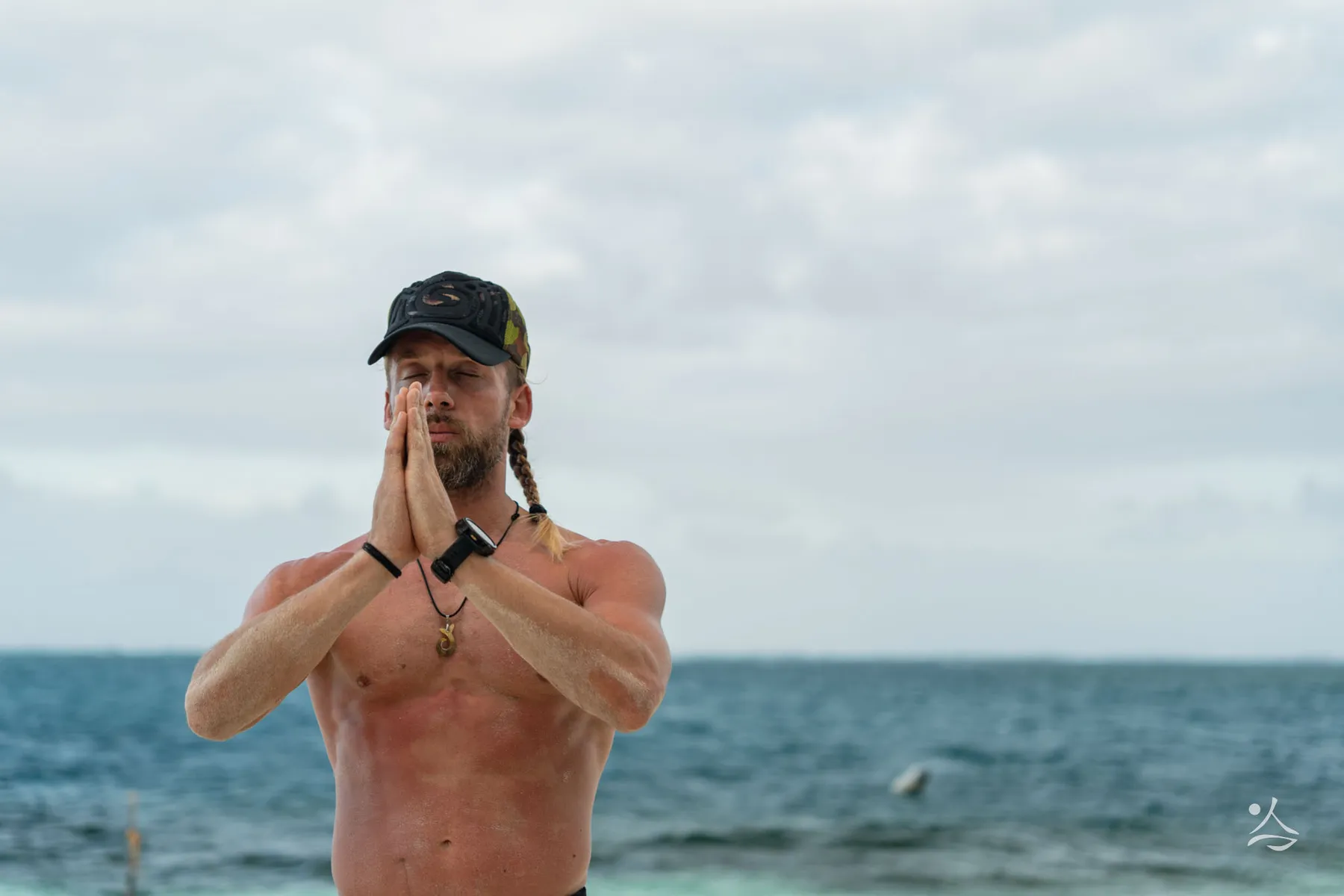
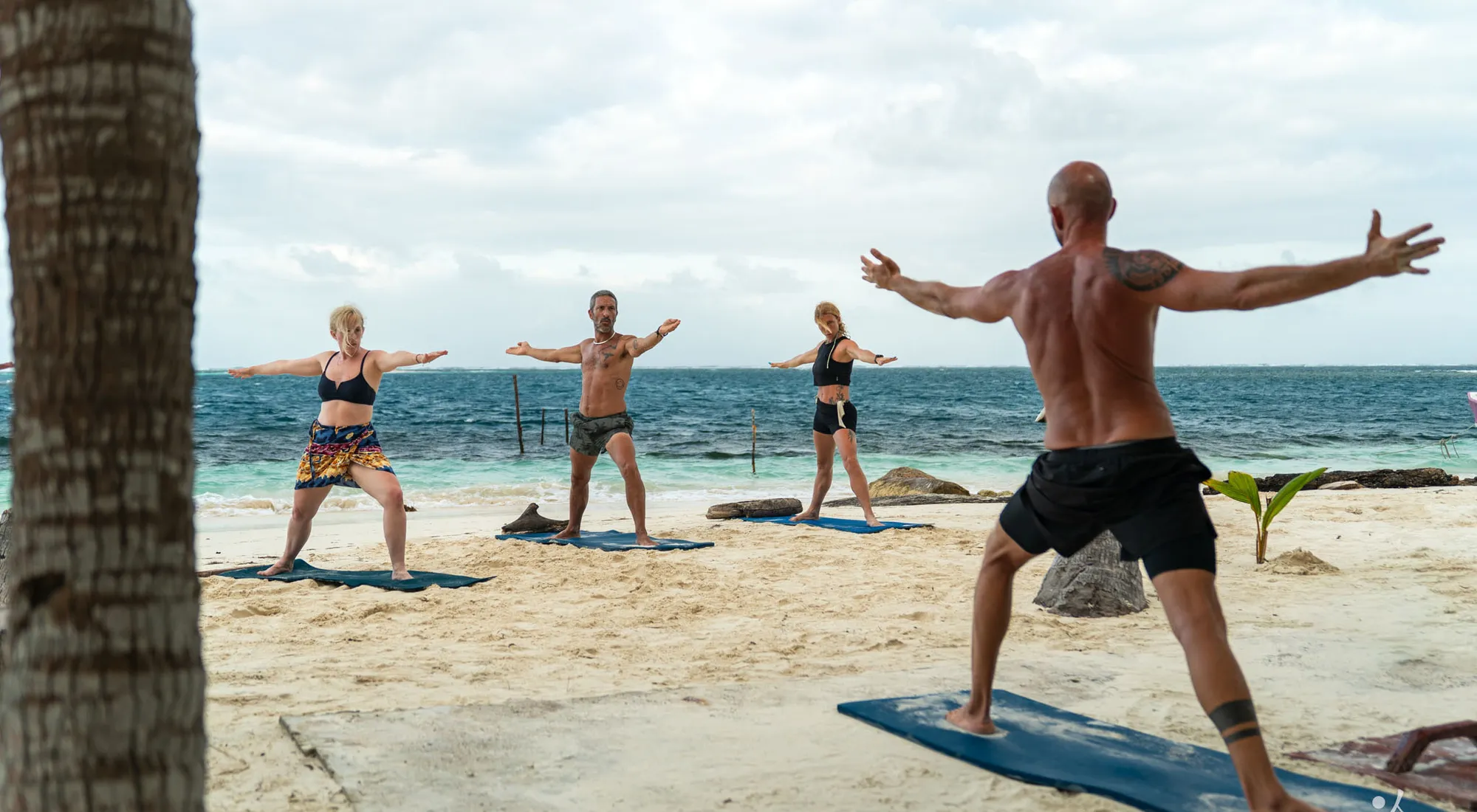
- On the catamaran deck or on a beach, at sunrise or sunset
- Guided by
- Luca, Yoga Alliance certified teacher
- Style
- Dynamic or restorative flows, depending on the day
- Contribution
- Included in the contribution for your stay
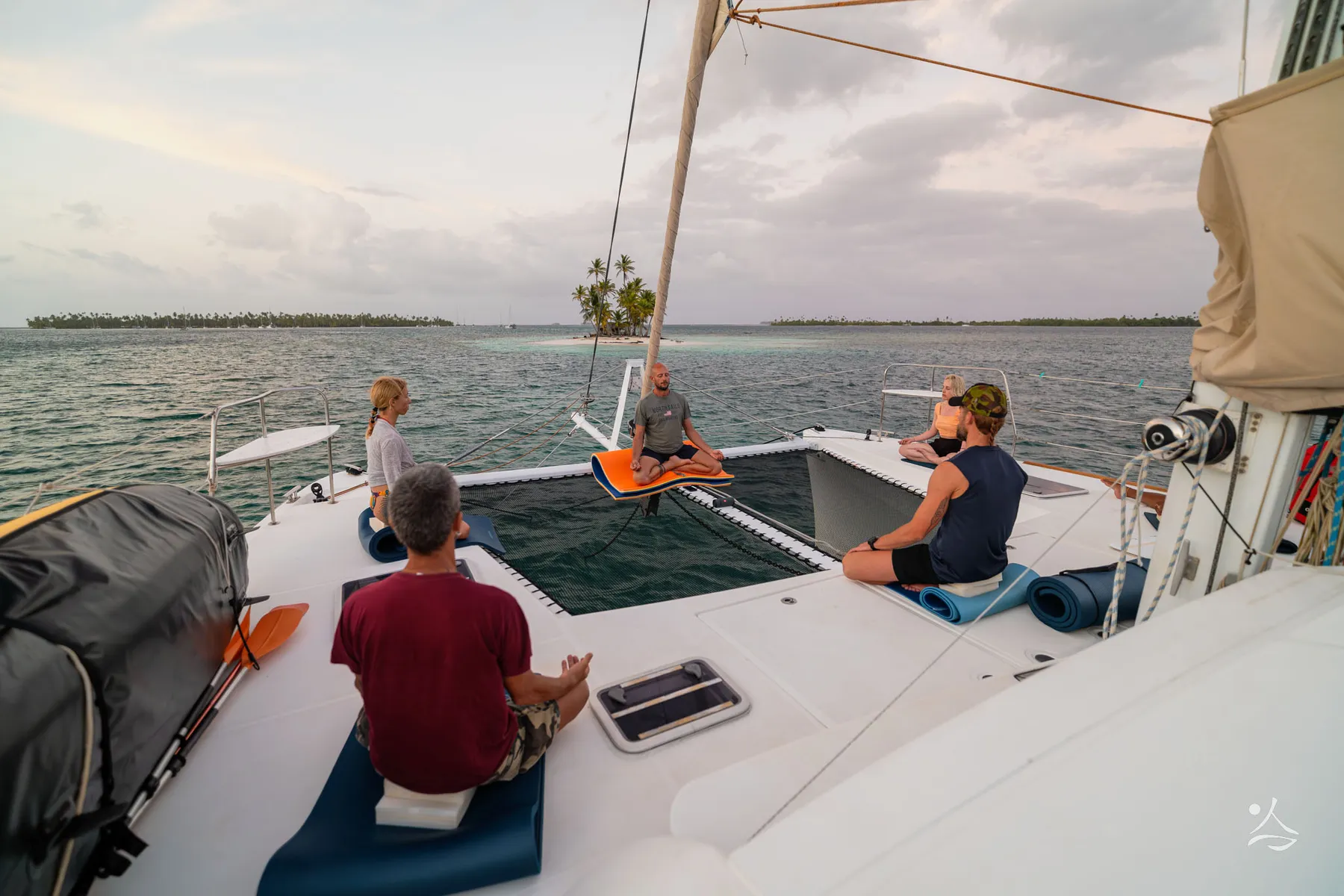
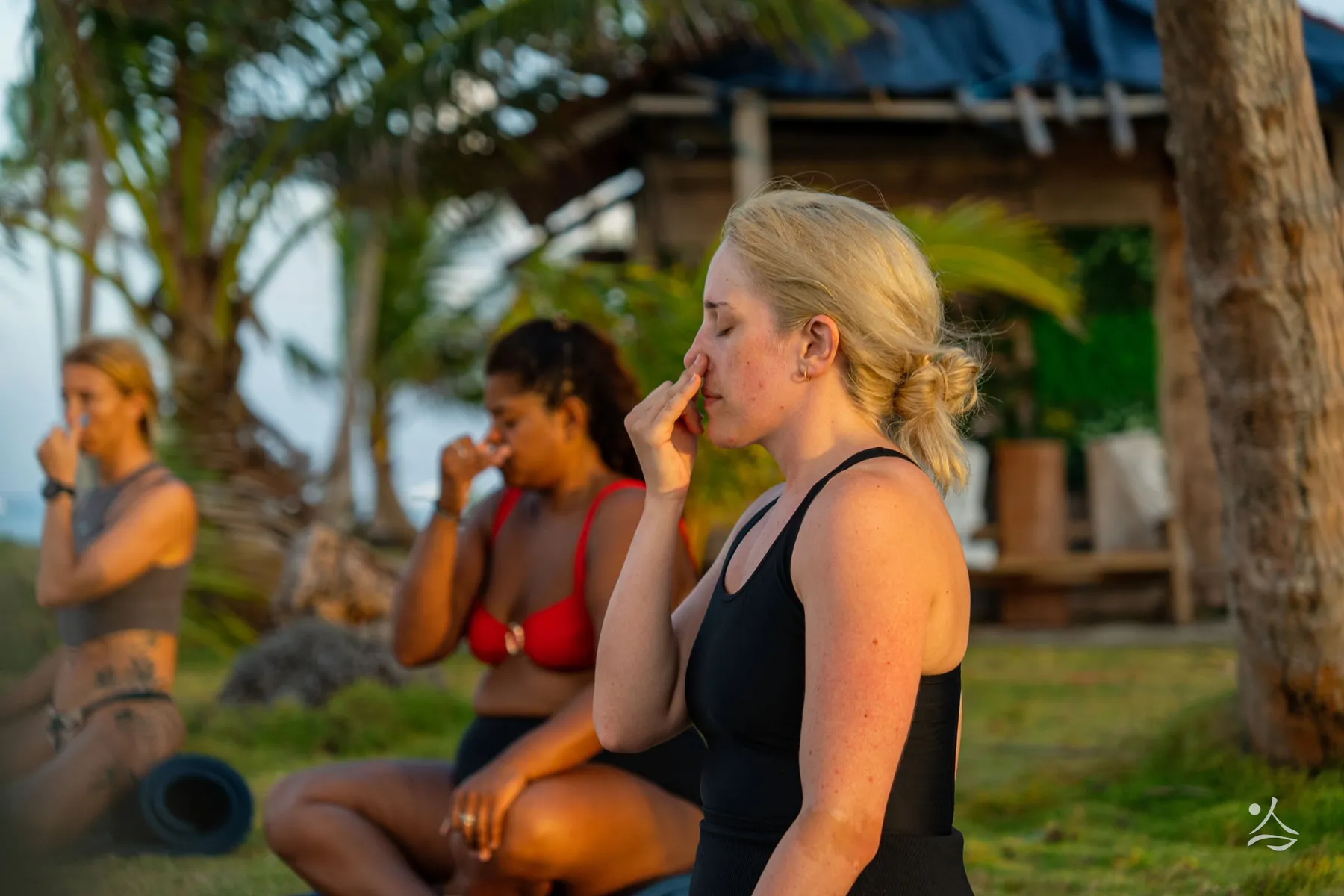
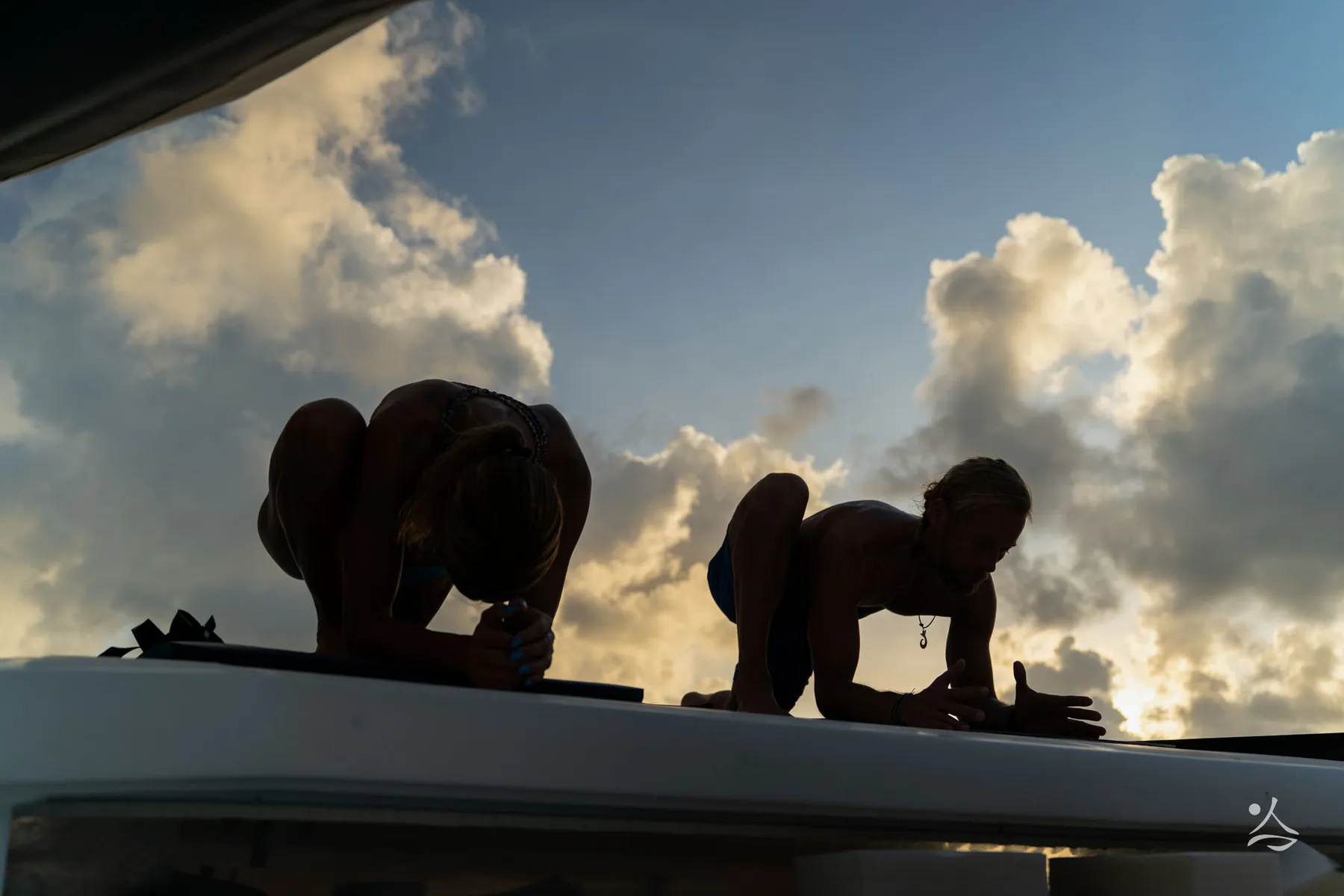
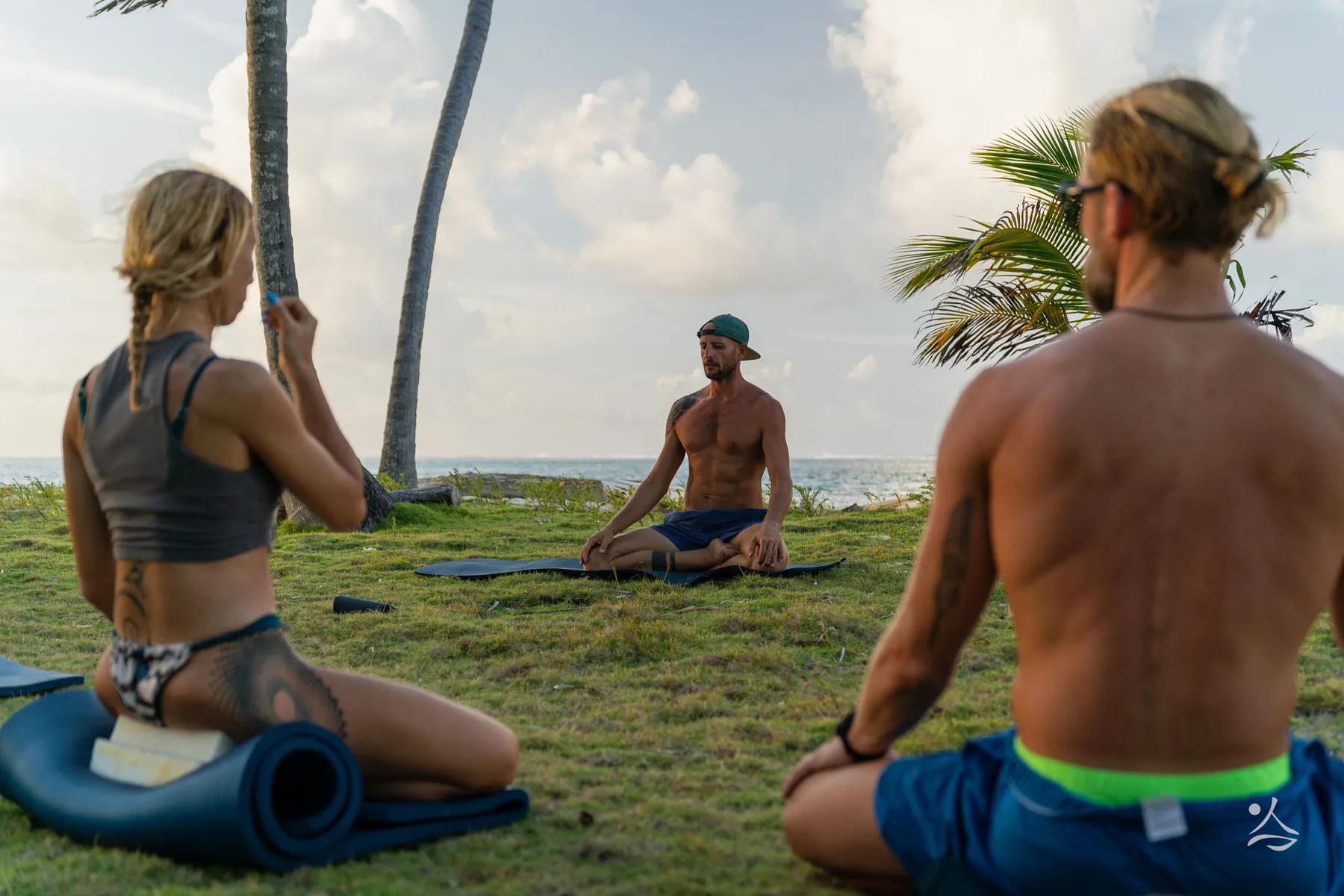
Yoga aboard Ikigai is an hour on the deck of a Catana 47 or on a beach in Guna Yala, at sunrise or sunset. Sessions are guided by Luca, a Yoga Alliance certified teacher, adapted to whoever is aboard that week and open to people who have never practised. They are part of the contribution for your stay, not a paid extra.
Returning to the body
For me, yoga is not a sequence of poses. It’s a way to return to the body. In everyday life we’re often stuck in the mind: thoughts, tension, automatic patterns. Yoga is the moment you begin to listen, to the breath, to the sensations, to the limits and the possibilities of your body.
Not “doing the pose well”. Feeling what happens while you’re in it. And something shifts in that feeling. The body softens, the mind slows down, and you reconnect with yourself in a simpler, more honest way.
Why practise yoga on a catamaran?
A catamaran sits flat. Two hulls, 7.5 metres of beam, no heel: the deck is a wide, stable platform that won’t tip you out of a balance the moment a wake rolls through. On a monohull you’d spend half the session bracing. Here you hold the pose and breathe into it. We practise on deck at sunrise or sunset, or on a beach in Guna Yala with no walls, no mirrors and no recorded music, only sea and wind. Mats are aboard, so there’s nothing to carry. The body opens more easily in warm air, the breath comes on its own, and the mind puts up less resistance to letting go. You don’t have to build a state of presence. The place does most of it for you.
Who guides the sessions
Luca does. He’s a Yoga Alliance certified teacher, an AIDA and Apnea Total freediving instructor and an RYA Yachtmaster, and the same attention runs through all three. No previous experience is needed: the practice is adapted to each person’s level and energy, with attention to breath, mobility and listening to the body. Dynamic or restorative, depending on the day.
One honest note. Between 20 August and 20 October, Luca is sometimes ashore between voyages and a relief skipper is aboard. Sailing, snorkelling and island life carry on as usual, but the practices he guides personally, yoga among them, aren’t available in that window. Tell us your dates and we’ll confirm who will be aboard.
How yoga fits into the rest of the day
There’s no timetable. Yoga sits inside the rhythm of the day alongside meditation, breathwork, freediving, swimming and sailing, and each session is optional and shaped by the group, the conditions and the time available.
The practices feed each other. In freediving, a body that has already opened and a breath you can follow make a real difference at the line. In meditation, a stable posture and a less tense body make it easier to stay present. Practised together, each one goes further than it would alone.
What stays with you afterwards
What you build on the mat doesn’t stay on the mat. You become more aware of your body, more attentive to your breath, less reactive to tension. You learn to notice when you’re stressed, and you have something concrete to do about it. Even in ordinary situations, the way you meet them starts to change: more presence, more stability, more clarity. We don’t promise a transformation. We create the conditions for something real to happen, and then we stay out of the way.
Practising yoga during the 2026/27 season
Ikigai is sailing among the islands of Guna Yala for the 2026/27 season, the current chapter of a longer journey. She welcomes up to six guests in three cabins, for stays of at least three nights, from 325 USD per person per night in a shared cabin. Yoga, breathwork and meditation are part of the stay when they’re offered aboard; freediving courses are booked separately. What you pay is a membership contribution to Ikigai Sailing ASD, a non-profit amateur sports association recognised by CONI and affiliated to MSP Italia, which is why a week aboard costs a fraction of a comparable charter. The season page has the dates, the boarding options and the practical details.
Frequently asked questions
Do I need previous yoga experience?
No. Sessions are adapted to whoever is aboard, and people who have never practised are welcome. If you carry an injury or a limitation, tell us before boarding and the practice is shaped around it.
What style of yoga do you practise?
Dynamic or restorative flows, chosen for the day, the sailing and the group. A session runs about an hour, on deck or on a beach, at sunrise or sunset.
Do I need to bring a mat?
No. Mats are aboard, along with the deck space to use them.
Is yoga included in the contribution for my stay?
Yes, when it is offered aboard. Breathing, movement and meditation practices are among the inclusions for the stay. Freediving courses are a separate contribution.
Is there a session every day?
No. Weather, sailing and the group shape each day, and every session is optional. Between 20 August and 20 October, Luca is sometimes ashore between voyages, and the practices he guides personally are not available in that window.
Is this a yoga retreat?
Not in the usual sense. Ikigai is a floating home that sails, and yoga is one of the practices that make up daily life aboard, alongside sailing, freediving, breathwork and shared meals. If you are looking for a full-time yoga programme on land, this is not that.