What to expect
- Format
- Tabata-style intervals — ~20s work, 10–20s rest, station to station
- Kit
- Resistance bands, TRX, kettlebells, bodyweight
- Where
- On deck or on an island in Guna Yala, around twice a week
- Optional
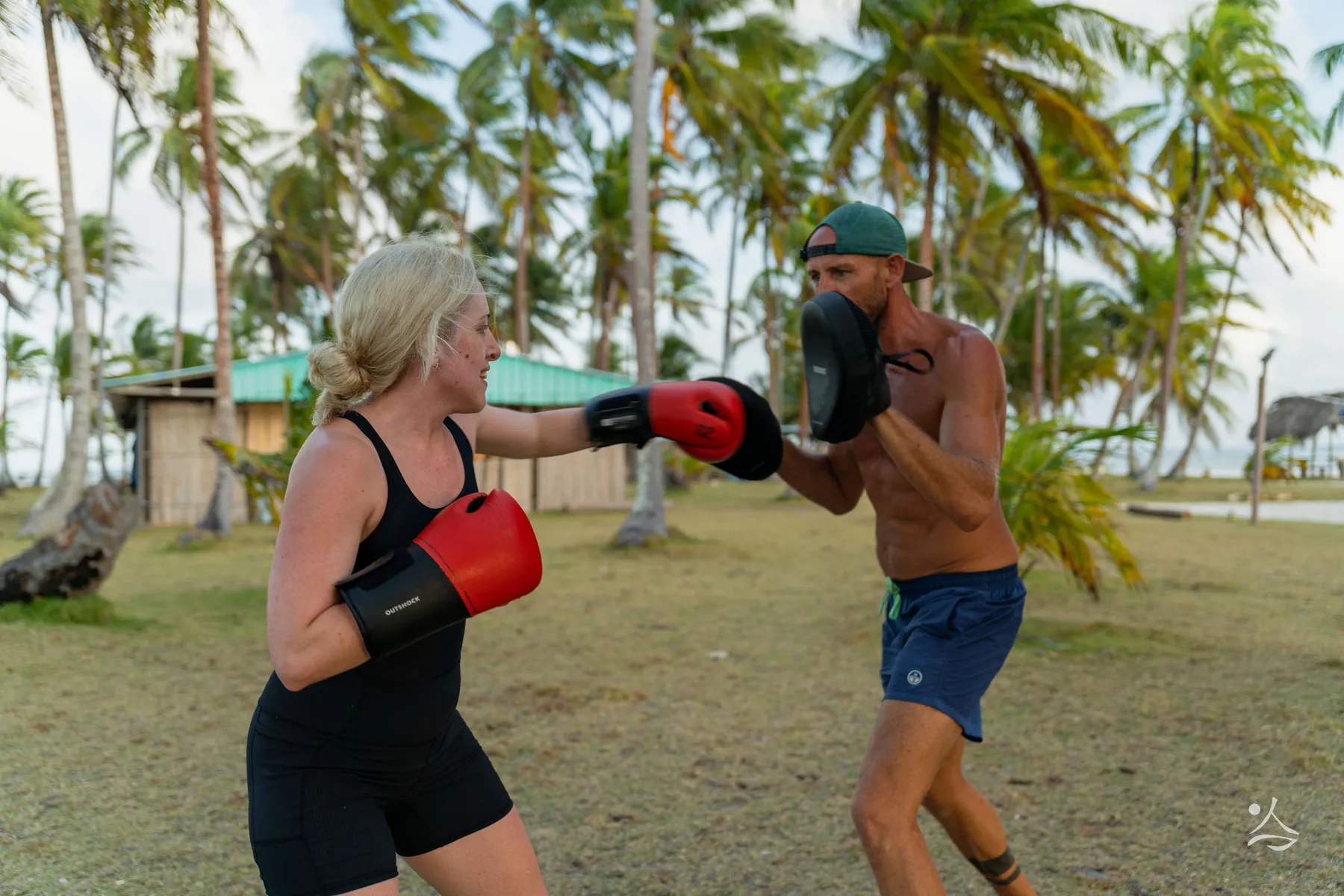
- Boxing-inspired stations — stance, guard, footwork
- Level
- Scales to any fitness — no experience required
A natural training space
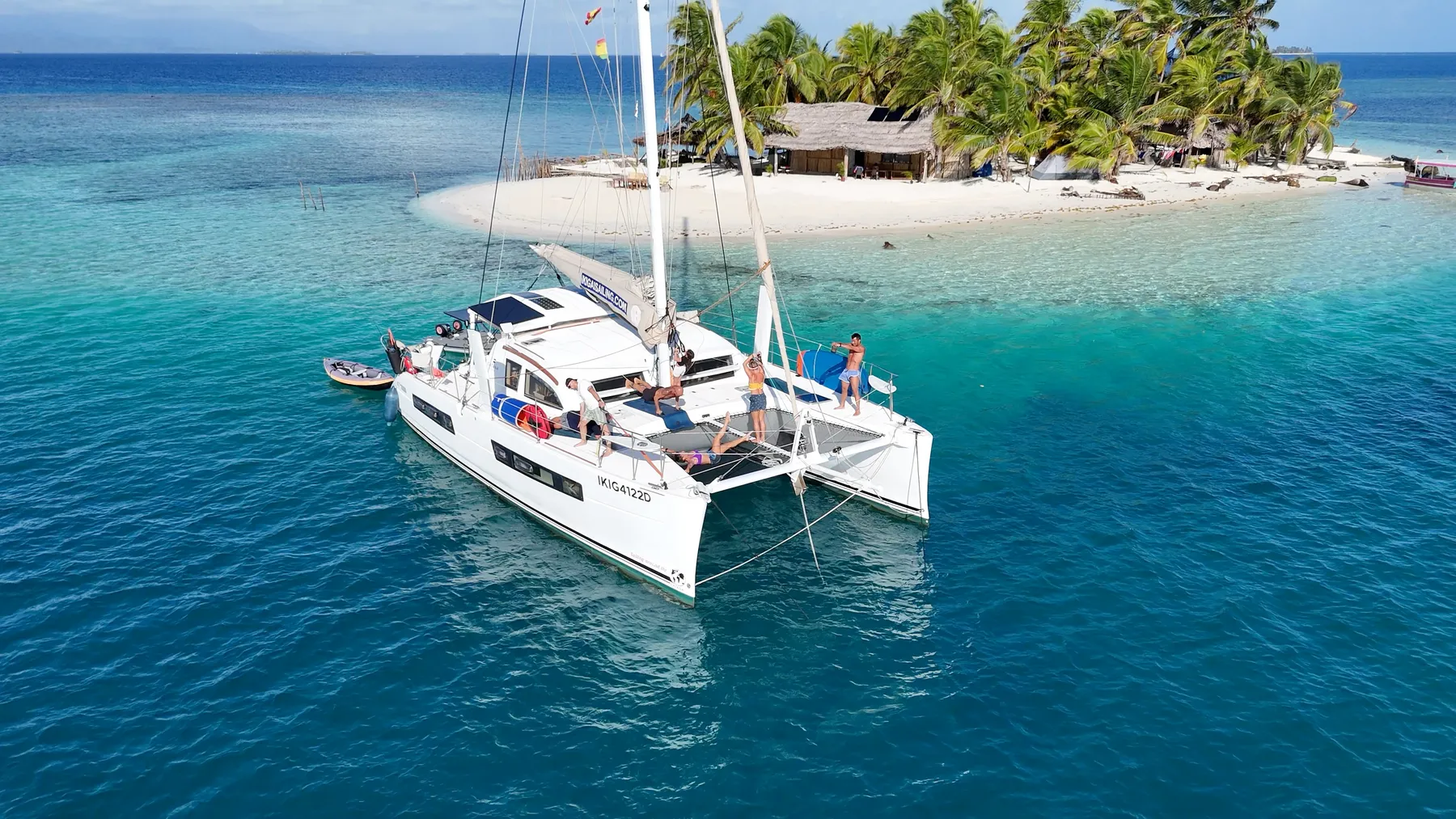
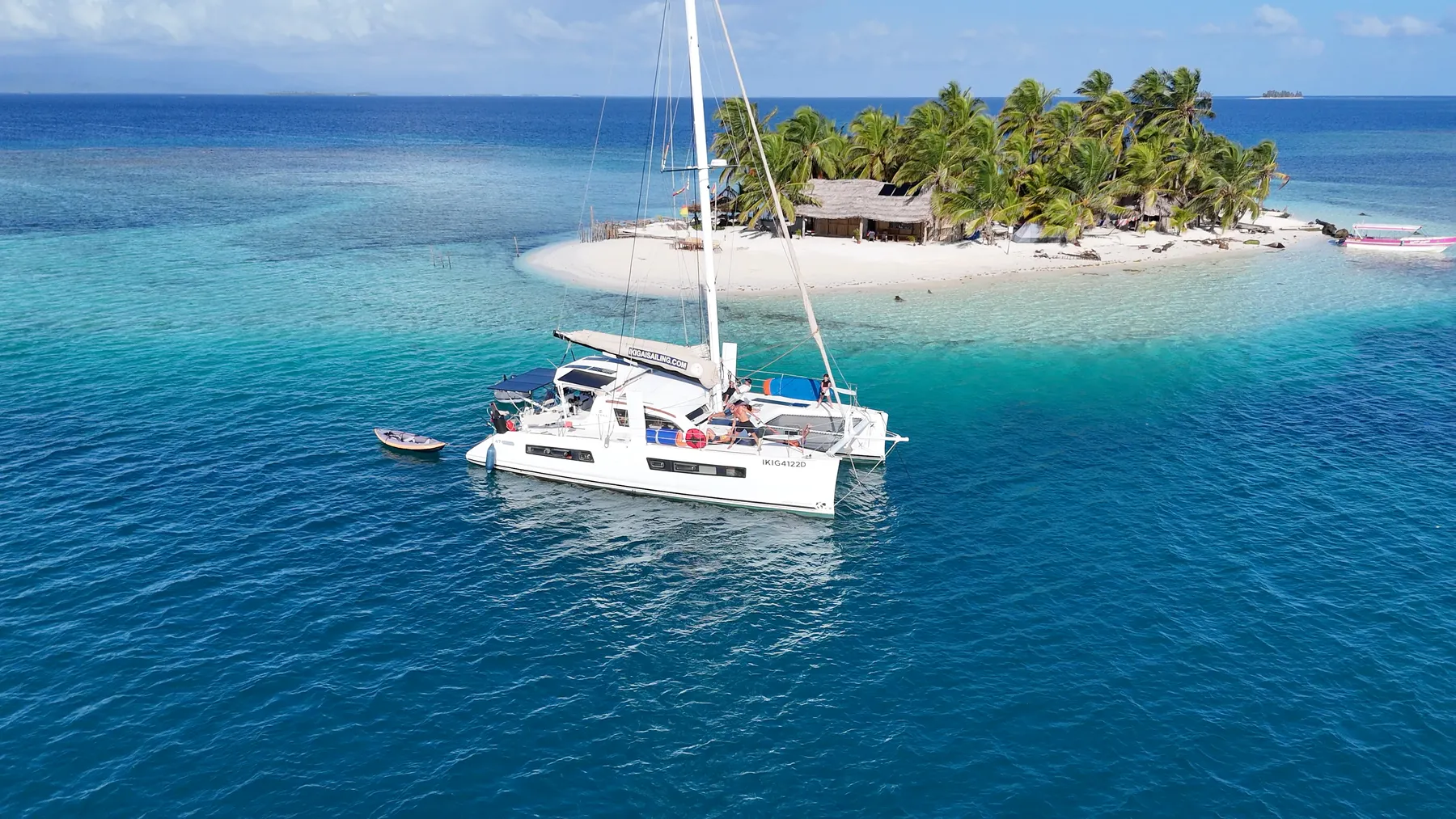
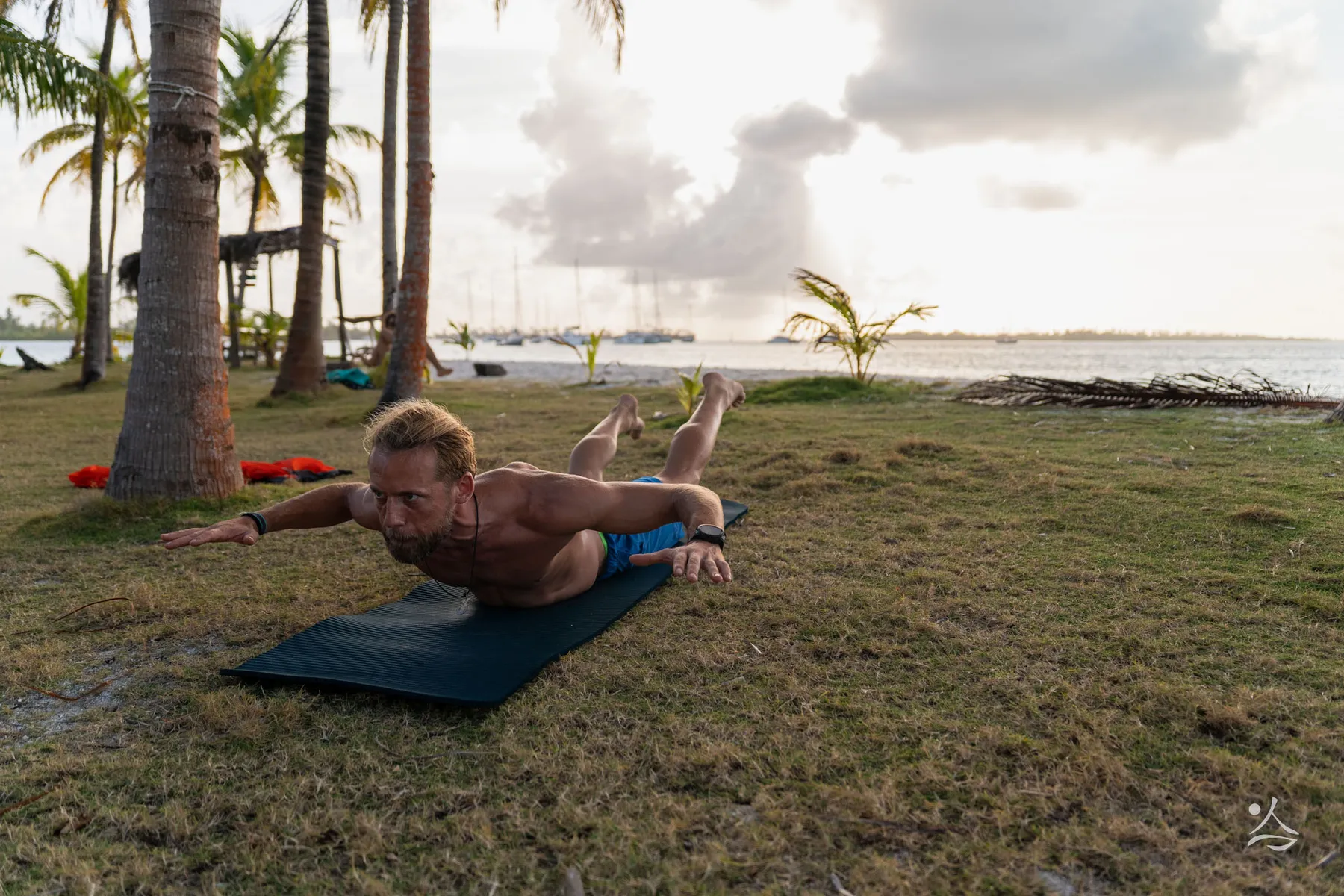
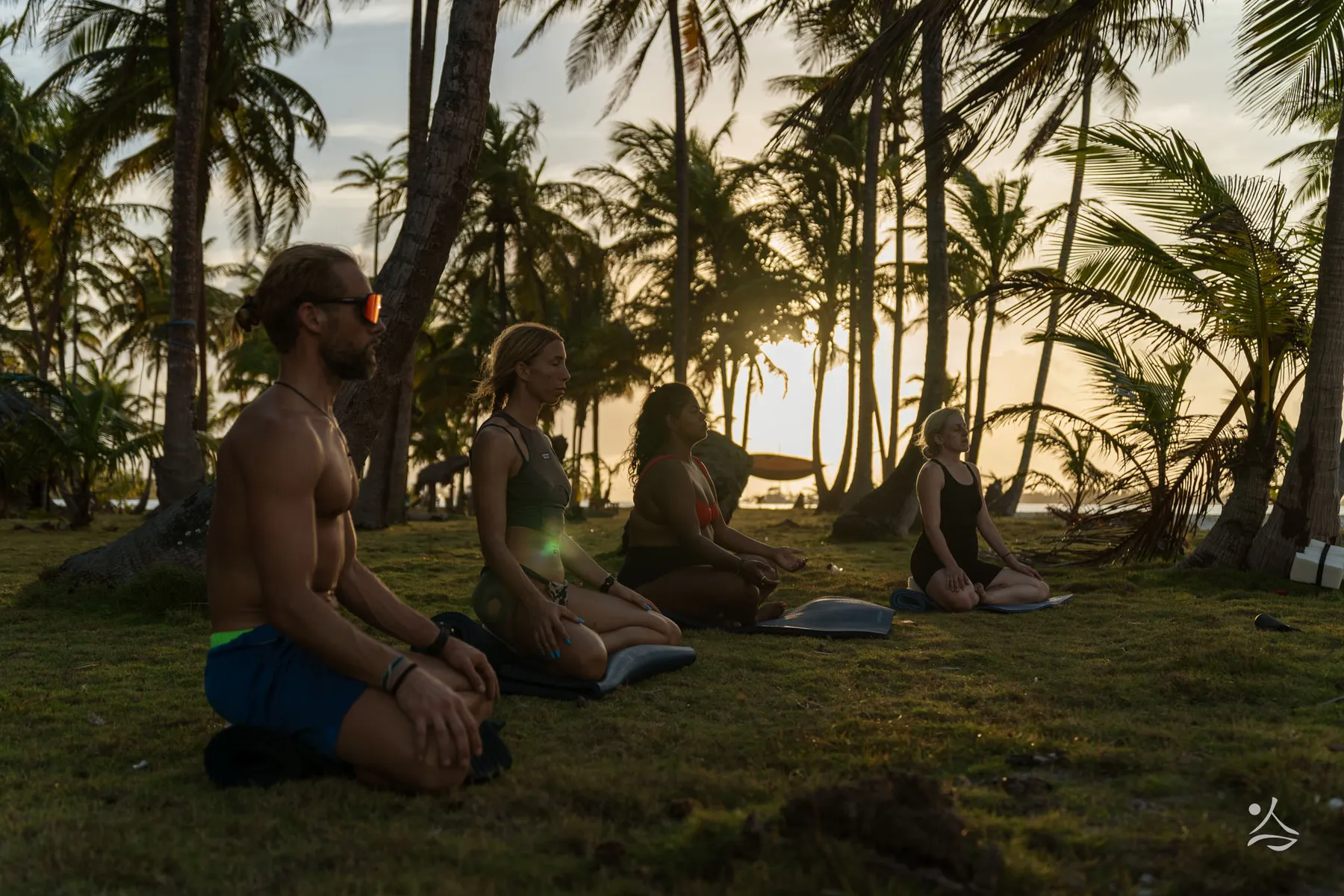
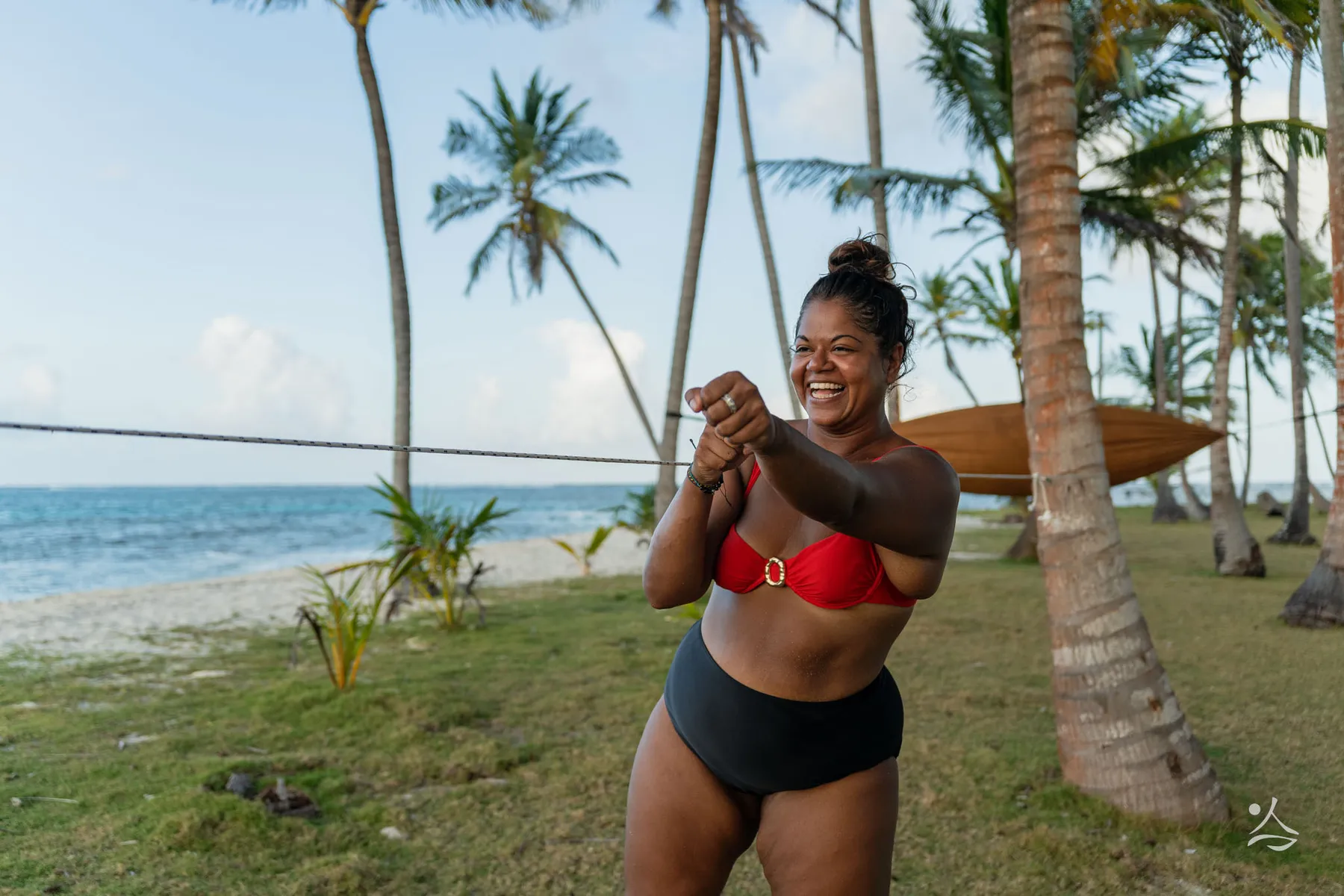
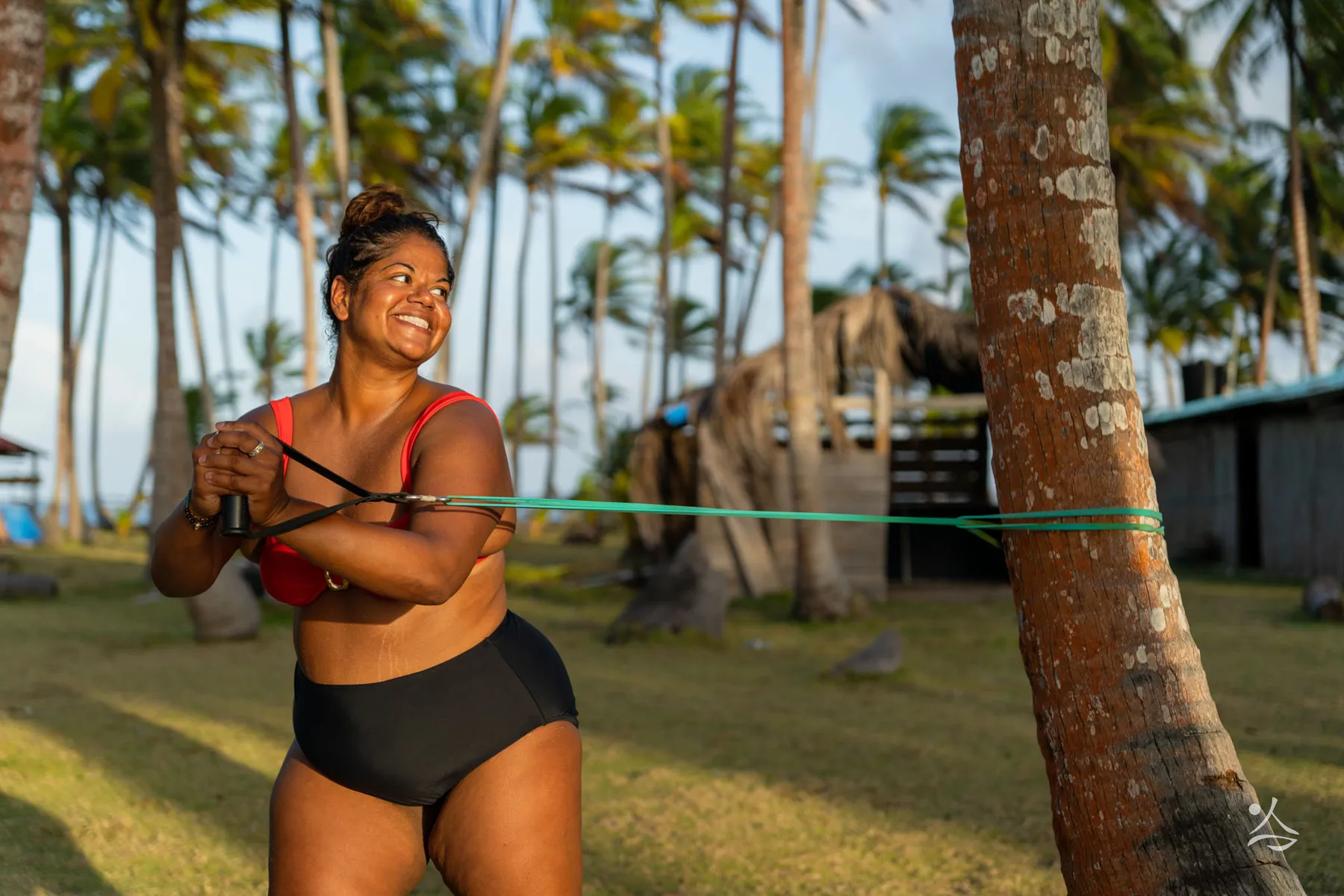
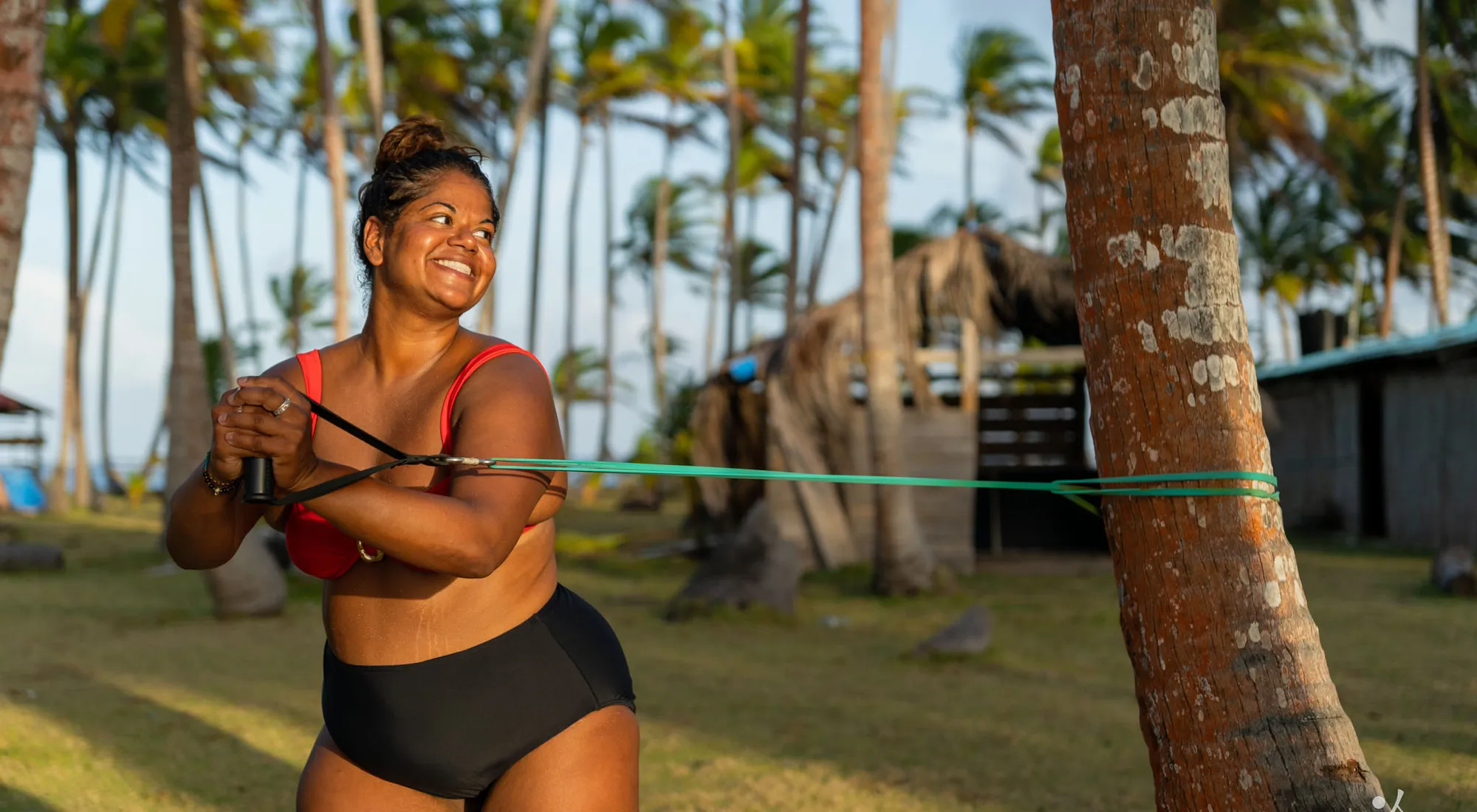
There’s no gym aboard. The boat, the deck, the beach and the islands become our training space. We use simple, functional tools — resistance bands, kettlebells, TRX, bodyweight exercises and natural movement patterns — and focus on strength, mobility, coordination, balance, breath and cardiovascular activation. Every session is accessible and adaptable. You don’t need to be an athlete; you only need the willingness to move, breathe and respect your own pace.
Tabata-inspired circuits
Most sessions are built around short interval circuits inspired by the Tabata method — around 20 to 30 seconds of work, then 10 to 20 seconds of rest, moving to the next station during the break. The rhythm keeps the training dynamic and easy to follow, and lets each person self-regulate: push harder when you feel strong, soften when you need to.
The goal is not to exhaust the body. It’s to activate it. Interval training can support cardiovascular health, muscular endurance, coordination, metabolism and mental focus — and because the effort comes in short waves, it teaches you to manage intensity, breath and recovery. You learn when to push, when to soften and when to listen.
Strength, cardio and breath
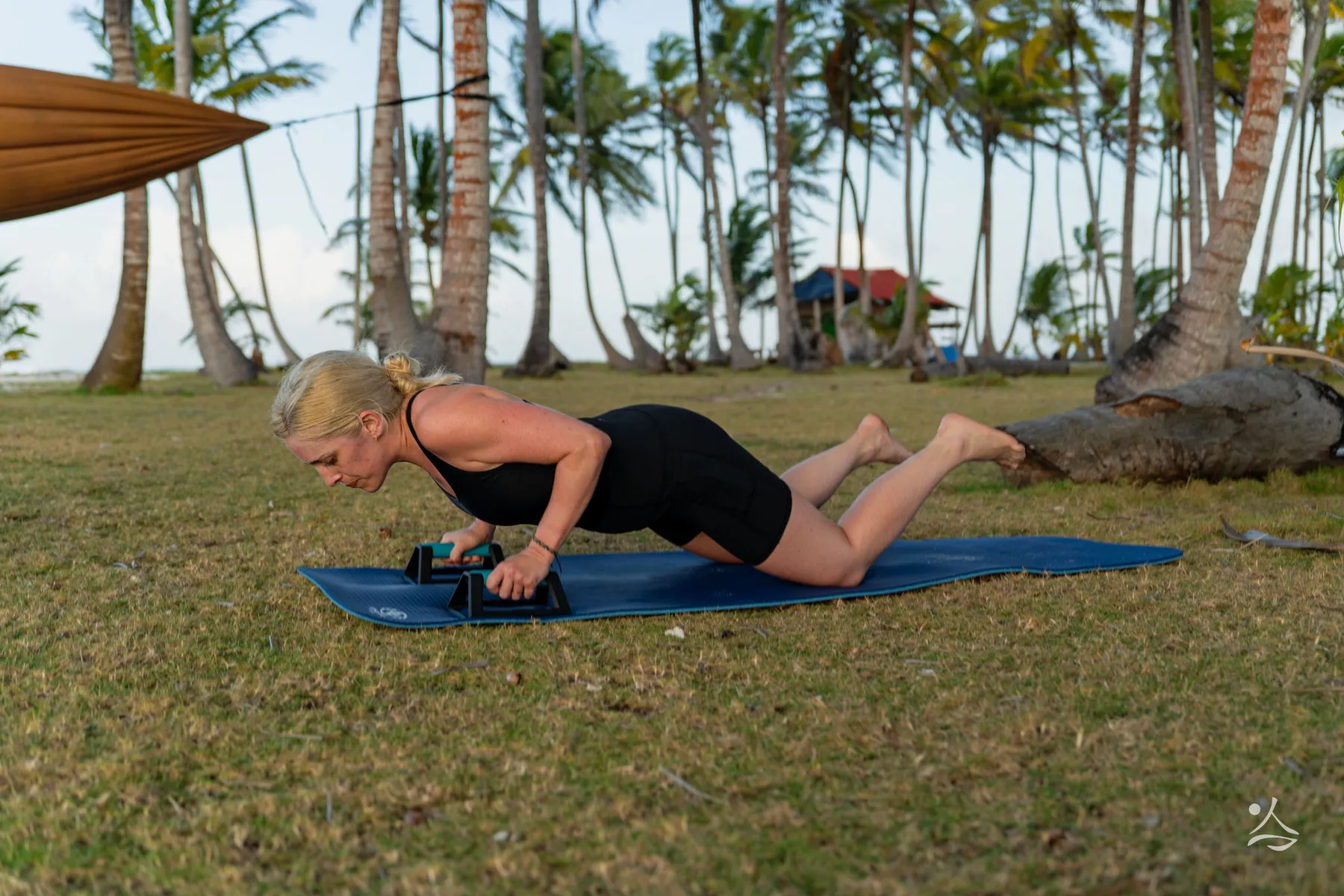
A session often combines strength and cardio: squats, lunges, push-ups, core work, rows with bands, TRX movements, kettlebell exercises, balance drills and short bursts of cardio. This kind of training can improve stamina, circulation, posture, body awareness and overall energy. Done in the morning, it wakes up the nervous system, sharpens focus and sets a good rhythm for the day. And after training, the sea is right there — a swim, a breath, a moment of silence. The body feels awake; the mind feels clearer.
Optional boxing stations
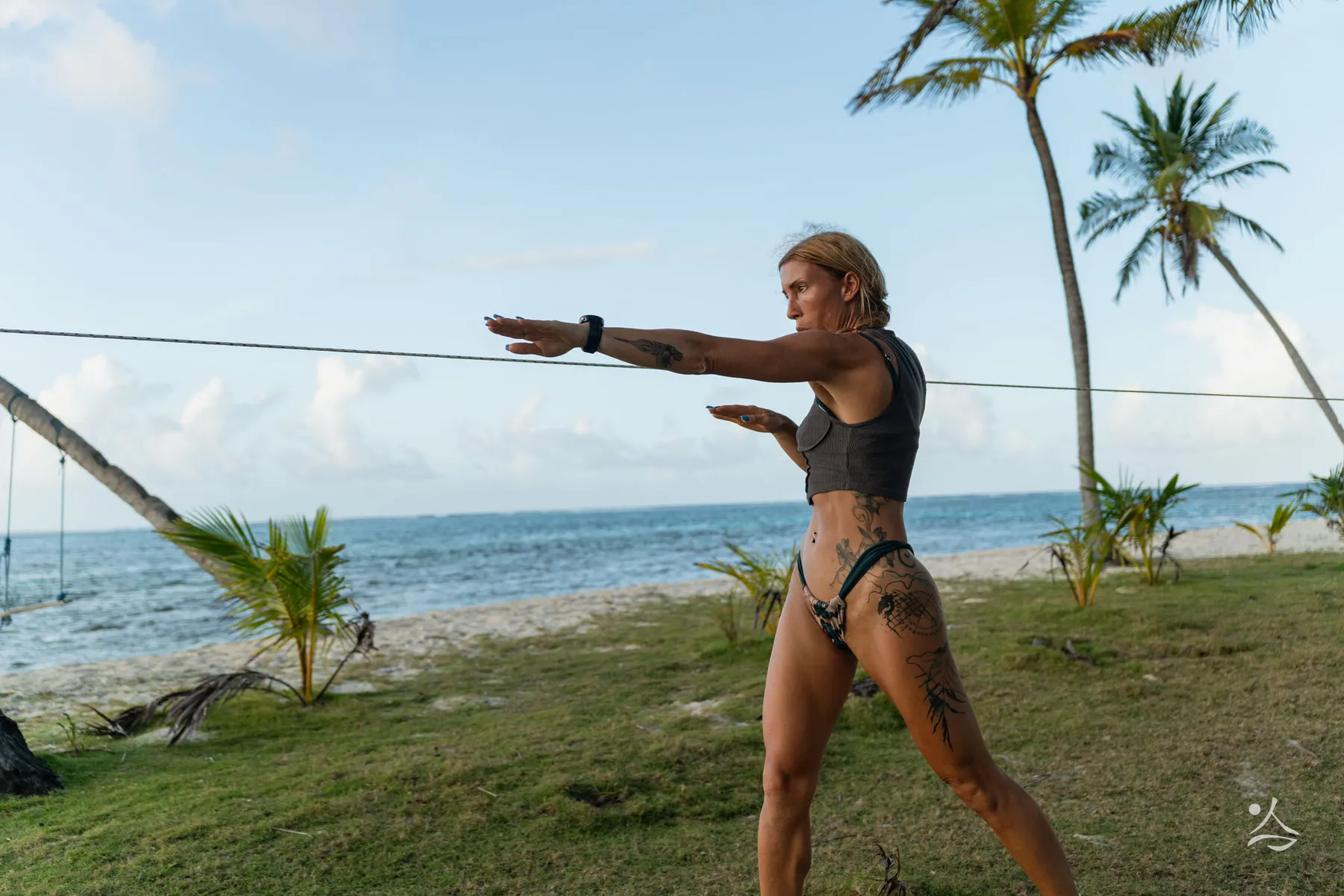
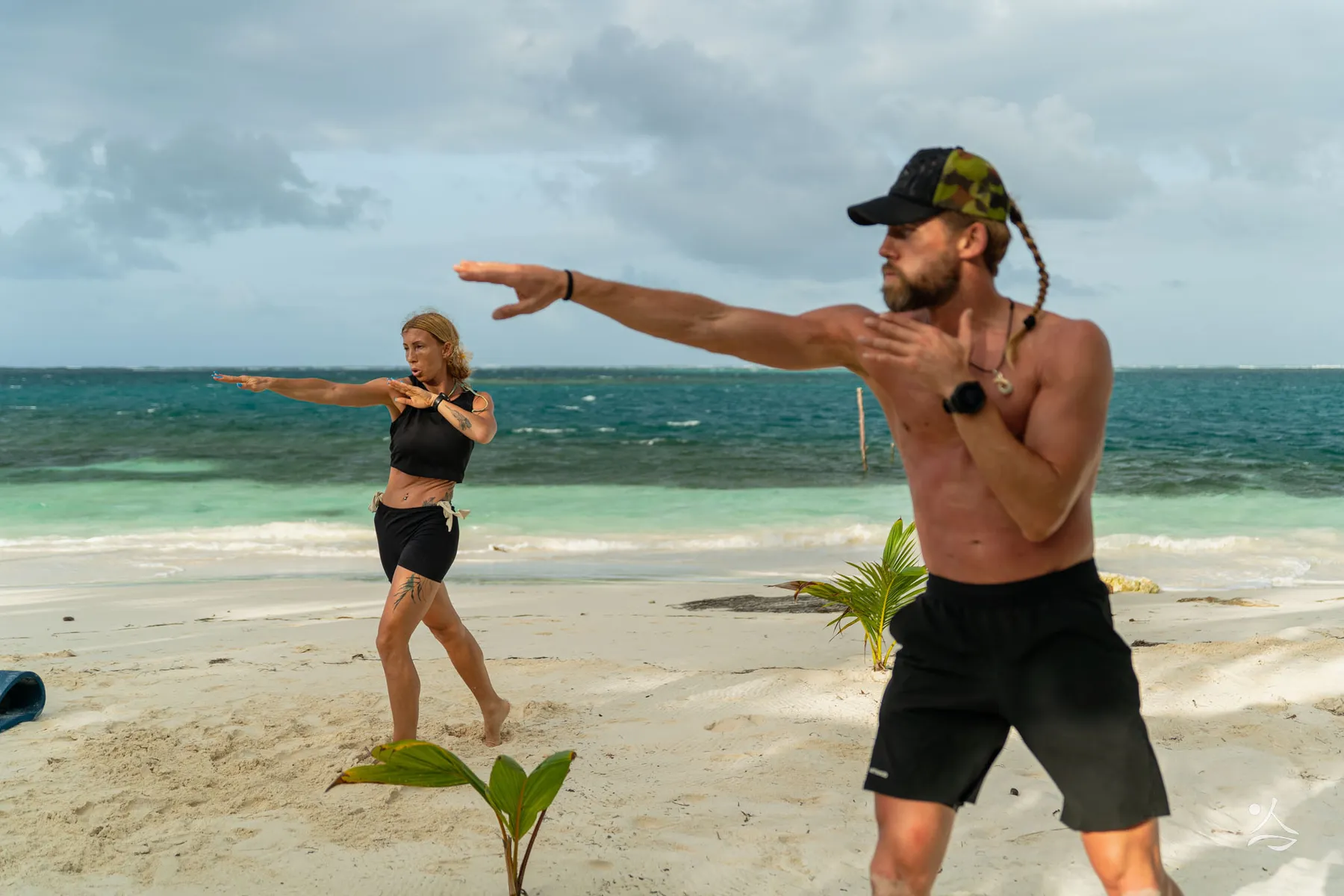
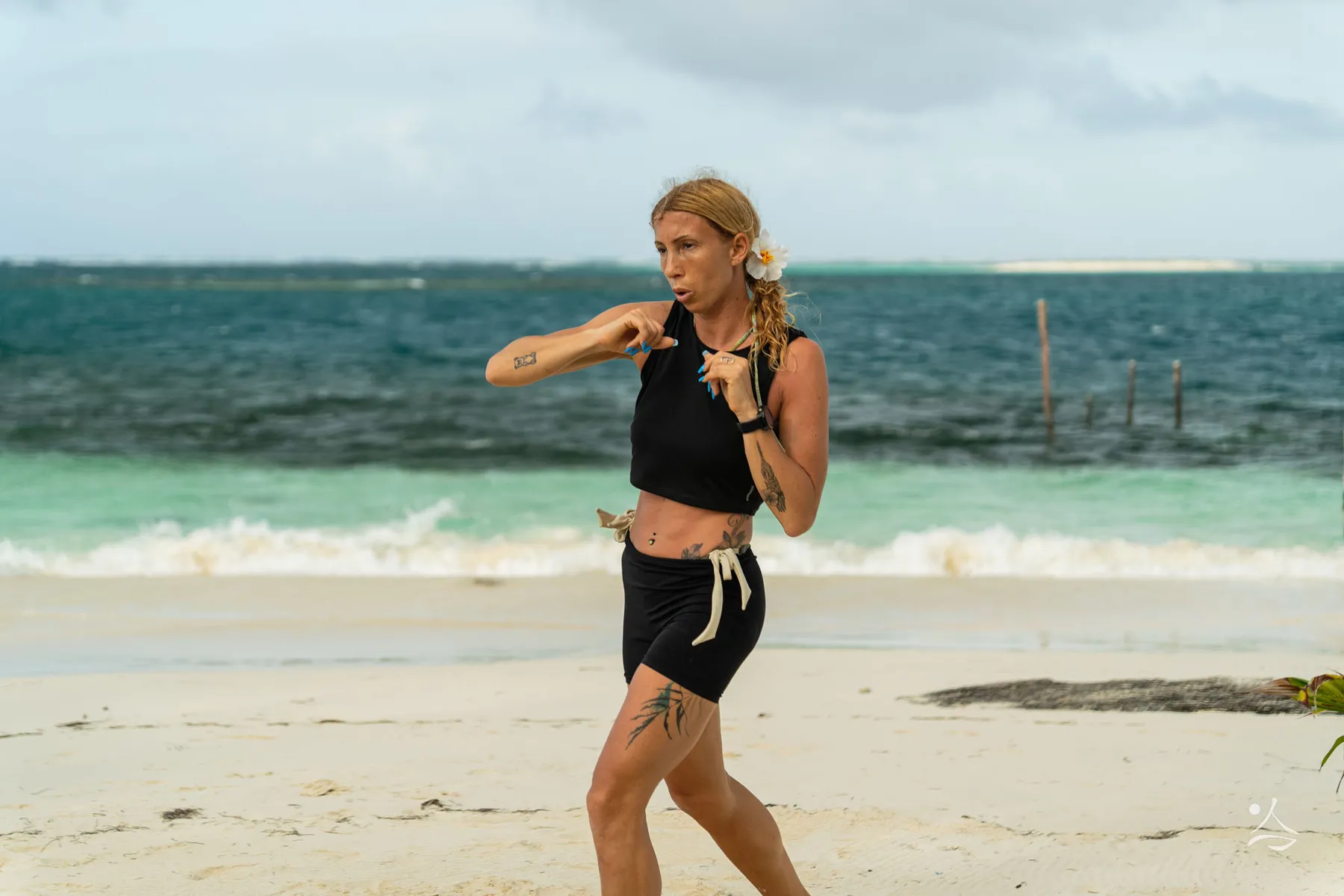
Depending on the group, we may add one or two boxing-inspired stations to the circuit. These aren’t combat classes — they’re playful, technical moments exploring the basics of stance, guard, footwork, defence and how to generate power from the whole body. Boxing trains coordination, timing, focus, reaction and cardio intensity, and brings something simple and alive into the practice: presence. You have to be there. You have to breathe. You have to feel your body.
Adapted to each person
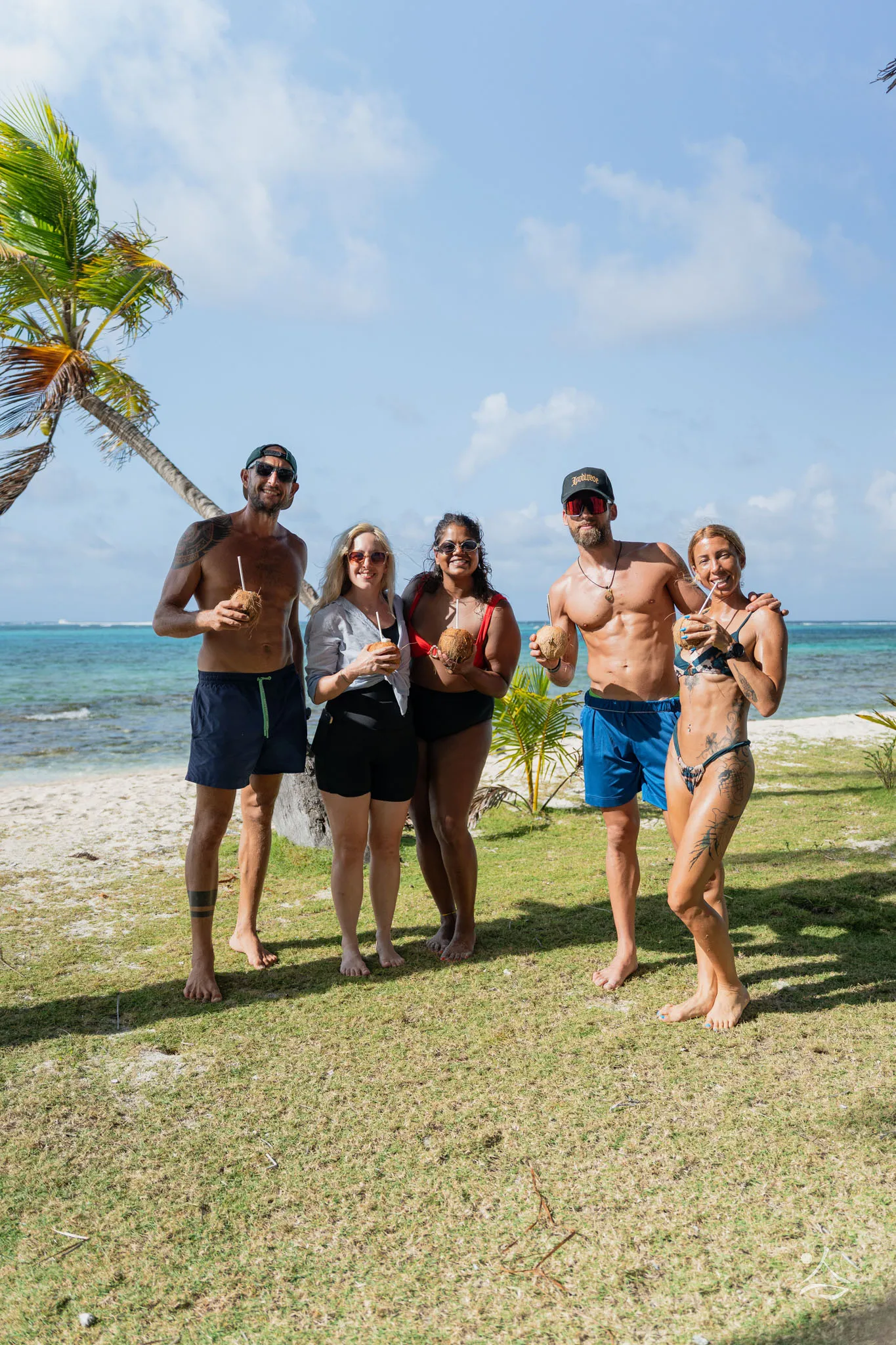
Every body is different, and so is every day. Some guests want to sweat; some want to move gently; some are already active; some are coming back to training after a long pause. All of it is welcome. We encourage everyone to listen to their body, choose the right intensity and respect their own condition. Movement shouldn’t become another pressure — it should become a way back into presence.
What to expect
A session may include:
- Bodyweight exercises
- Resistance bands, TRX and kettlebells
- Core work, mobility and balance drills
- Tabata-style circuits and cardio intervals
- Optional boxing basics
- Breath awareness
- Adapted intensity for different levels
No previous experience is required, and you can join at your own rhythm. The strength you build carries straight into freediving, sailing and the rest of life aboard.