What to expect
- Level
- Complete beginners to aspiring skippers — no experience needed
- Hands-on
- Helm, sail trim, reefing, anchoring, navigation, watch-keeping
- Instructor
- MSP Italia national sailing instructor diploma (CONI-recognised, SNaQ framework)
- Skipper
- RYA Yachtmaster certified
- Boat
- Catana 47 ocean catamaran
- Approach
- Seamanship, not performance — practical, not a formal certification
- Logbook
- Sea miles logged and your logbook signed
- Contribution
- Included in the contribution for your stay
Learn by living aboard
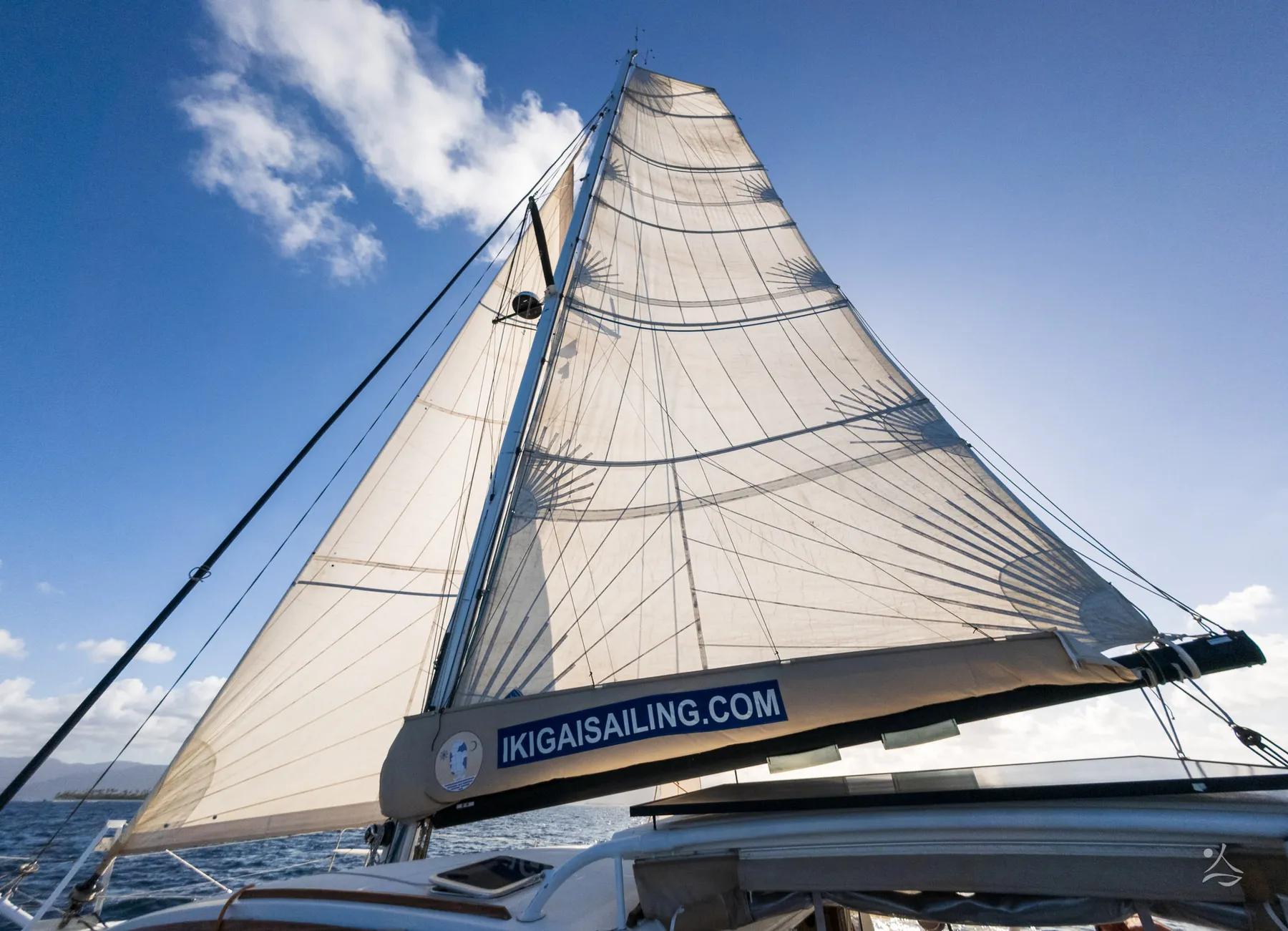
Sailing training aboard Ikigai is not a classroom course. It’s a practical way to understand sailing while living on a real ocean catamaran, moving between islands, anchorages and open water in Guna Yala.
You learn by being part of the boat — observing the wind, helping with the sails, taking the helm, understanding the route, joining in at anchor, and slowly beginning to feel how a sailing boat moves, reacts and breathes with the sea. The goal isn’t to turn every guest into a sailor in a few days. It’s to give you a real, embodied experience of sailing.
Who runs the sailing training aboard?
The training is led by Luca Vitiello, who holds the national sailing instructor diploma issued by MSP Italia, a sports promotion body recognised by CONI, the Italian National Olympic Committee, within the SNaQ national framework of sport qualifications. The diploma was issued on 30 June 2022, in the discipline of sailing. MSP Italia is also the body IKIGAI SAILING ASD is affiliated to. Luca is RYA Yachtmaster certified as well, and has been living aboard and sailing Ikigai since 2022, through more than 20 countries and over 10,000 miles.
That distinction matters in practice: teaching sailing is a different skill from sailing. What you get aboard is structured instruction from a qualified instructor who adapts the pace to you, not a passenger’s tour with an occasional turn at the helm. What we do not issue is a pleasure-craft licence. That is earned at a licensed nautical school, and nothing aboard replaces it.
A real boat, a real rhythm
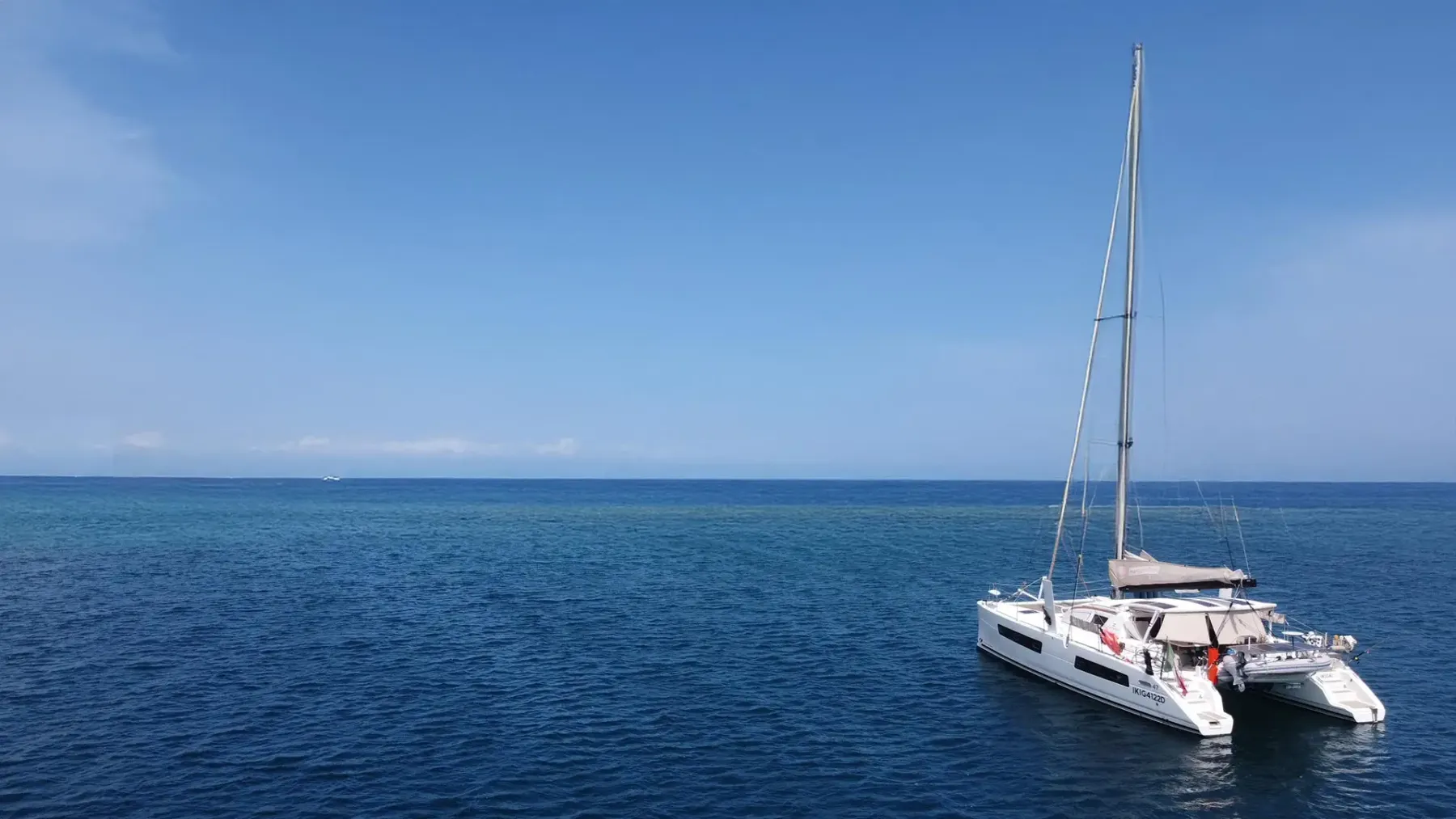
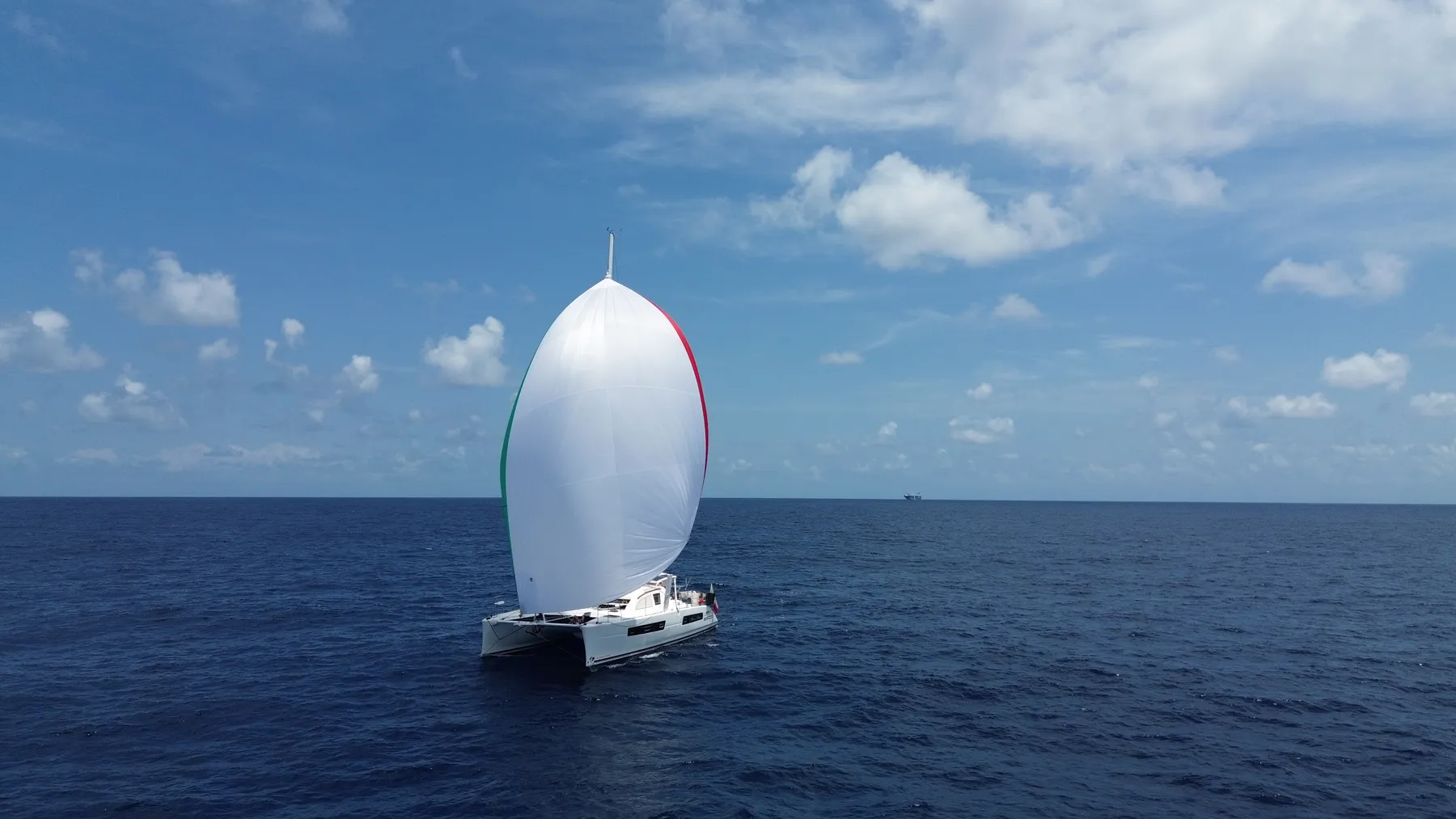
Ikigai is a Catana 47 catamaran built for ocean sailing. Life aboard follows the rhythm of the sea, the weather and the route: some days are perfect for sailing, others are for anchoring, exploring, swimming, resting or waiting for the right conditions. That’s part of the training too. Sailing isn’t only pulling ropes or steering a course — it’s reading the environment, understanding timing, respecting the weather, making decisions and adapting to what the sea is offering.
Hands-on practice
Depending on the weather, route and group, sailing training may include:
- Taking the helm and holding a course
- Understanding apparent wind and points of sail
- Basic sail trim, reading telltales and sail shape
- Hoisting, lowering and reefing the sails
- Tacking and gybing
- Rope handling, knots and line organisation
- Anchoring procedures and life at anchor
- Dinghy use and shore landings
- The role of each person during manoeuvres
Everything is explained simply and practically. You don’t need previous experience, and you can take part at your own rhythm.
Safety first
Sailing always begins with safety. Before any manoeuvre, we explain what’s happening, where to stand, what to touch and what not to touch. You learn to move safely on deck, to communicate during manoeuvres, and to stay aware of lines, winches, sails, wind and the movement of the boat. The aim is to build confidence without pressure — nobody is forced to do anything. You’re invited to participate, observe, ask questions and slowly grow more comfortable with the boat.
Steering, wind and awareness
One of the most powerful moments aboard is often the first time you take the helm. At first sailing can feel abstract — wind direction, sails, course, compass, waves. Then, little by little, it becomes physical: you feel the pressure on the rudders, you see how the boat accelerates when the sails are balanced, you understand how a small movement changes the course. You begin to connect eyes, hands, wind and sea. This is where sailing becomes more than transport. It becomes attention.
Navigation and anchoring
When conditions allow, we introduce basic navigation and route awareness — how we choose anchorages, read charts, check the weather, judge distances, approach reefs and plan a safe passage between islands. In Guna Yala, navigation asks for presence and respect: the area is beautiful but full of reefs, shallows and remote anchorages, which makes it a powerful place to learn observation, preparation and calm decision-making. A big part of cruising isn’t sailing fast — it’s anchoring well: judging depth and holding, preparing the anchor, communicating between helm and bow, and knowing the feeling of a safe place for the night.
Seamanship, not performance
This is not about racing. It’s about seamanship — calm, awareness, preparation, communication, and respect for the boat, the crew and the environment. Good sailing is often quiet: a well-prepared manoeuvre, a reef taken early, clear communication, a safe anchorage, a relaxed crew, a boat moving in balance.
We adapt the level to the group, the weather and the energy aboard. Some guests want to be very involved; others prefer to observe and join gently. Both are welcome. This is not a formal certification course — it’s practical sailing experience aboard a real boat, in real conditions. Come aboard, take the helm, feel the wind, and learn what it means to move through the world under sail — not as a passenger watching from outside, but as part of the boat.