
Janzu: the regenerative power of water
Published April 5, 2025 · Ikigai Sailing crew
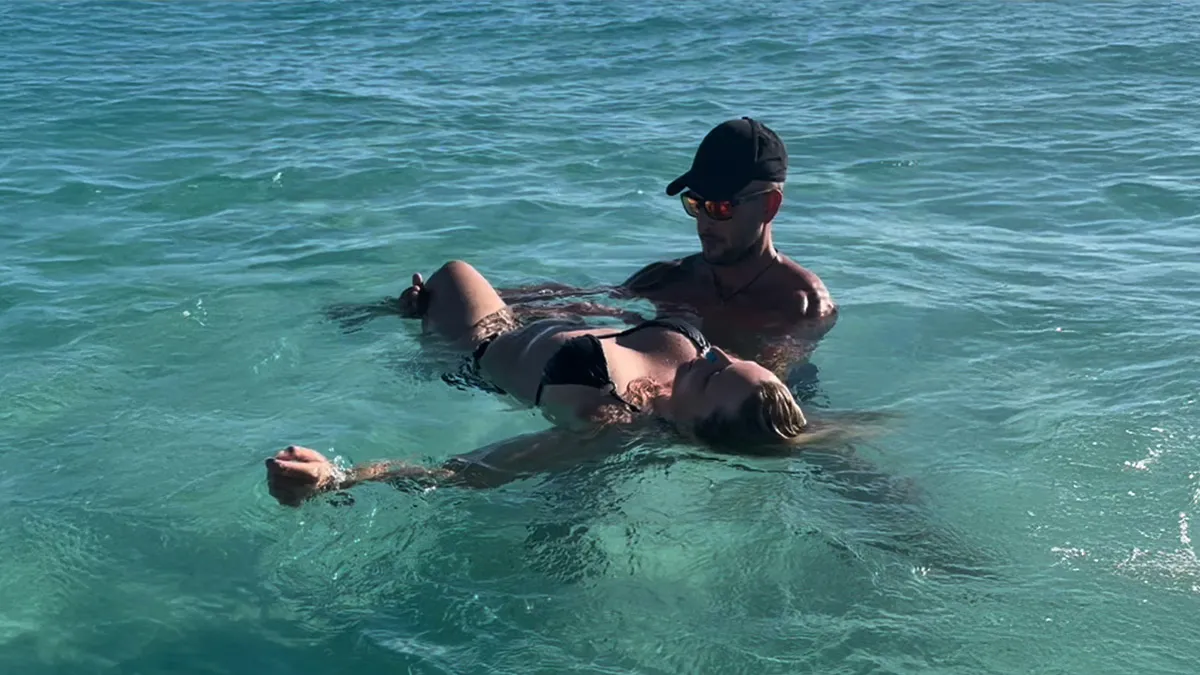
Janzu is a one-to-one aquatic bodywork practice. The receiver is supported and guided through slow, circular and wave-like movements, allowing the water to carry the body’s weight.
It requires no performance, flexibility or previous experience. There is no position to achieve and no result to pursue: the practice begins with listening, breathing and gradually trusting the support of the water.
Where Janzu comes from
Janzu originated in Mexico in the 1990s through the work of Juan Villatoro, known as Patik, who created its name and helped shape the vision behind the practice.
Patik shared his work with several people, including María Ornelas, who later developed a teaching methodology that became part of the Escuela de Artes Acuáticas and Colectivo Agua.
Rather than remaining a fixed protocol, Janzu has been passed from practitioner to practitioner through direct experience. Its forms have evolved, while water, movement, breath and attentive presence have remained at its centre.
What happens during a session
A session takes place in warm, calm and sheltered water. Before beginning, the practitioner explains how the practice will unfold, checks the receiver’s comfort level and agrees on any boundaries.
The body is supported throughout the session. Movement generally begins on the surface with slow, progressive rocking. If the person feels comfortable, the practice may include brief immersions, always introduced with consent and without pressure.
Pace, intensity and depth vary according to the individual and the water conditions. You do not need to be a strong swimmer, but you should feel sufficiently comfortable in the water.
What you may experience
Every session is different. Some people primarily notice physical relaxation; others describe a sense of lightness, quieter breathing or a state similar to meditation.
Water reduces the body’s perceived weight and allows muscles and joints to move with less effort. Being supported by another person also requires trust and can make our instinct to remain in control more noticeable.
There is no correct experience and no guaranteed effect. Ikigai does not present Janzu as a medical or psychological treatment, but as a practice of presence and aquatic bodywork.
Are Janzu and Watsu the same?
Janzu and Watsu belong to the same family of aquatic practices, but they are not identical.
Watsu takes place mainly on the surface and combines support, stretching and gentle mobilisation. Janzu often uses more fluid sequences and may include brief immersions. WATA, or WaterDance, also works with underwater movement, but follows its own structure and training path.
Aboard Ikigai, Luca draws on his training in Janzu and WATA, adapting every session to the individual, their comfort level and the sea conditions.
Janzu aboard Ikigai
Aboard Ikigai, Janzu is not separate from life at sea. Sessions take place in the warm, sheltered lagoons of Guna Yala, and only when conditions are suitable.
The same water that supports the boat supports the body. The surrounding landscape, the quiet of the anchorage and the slower pace of the day all become part of the experience.