What to expect
- Level
- Suitable for beginners and advanced practitioners
- Duration of sessions
- 1 hour
- Where
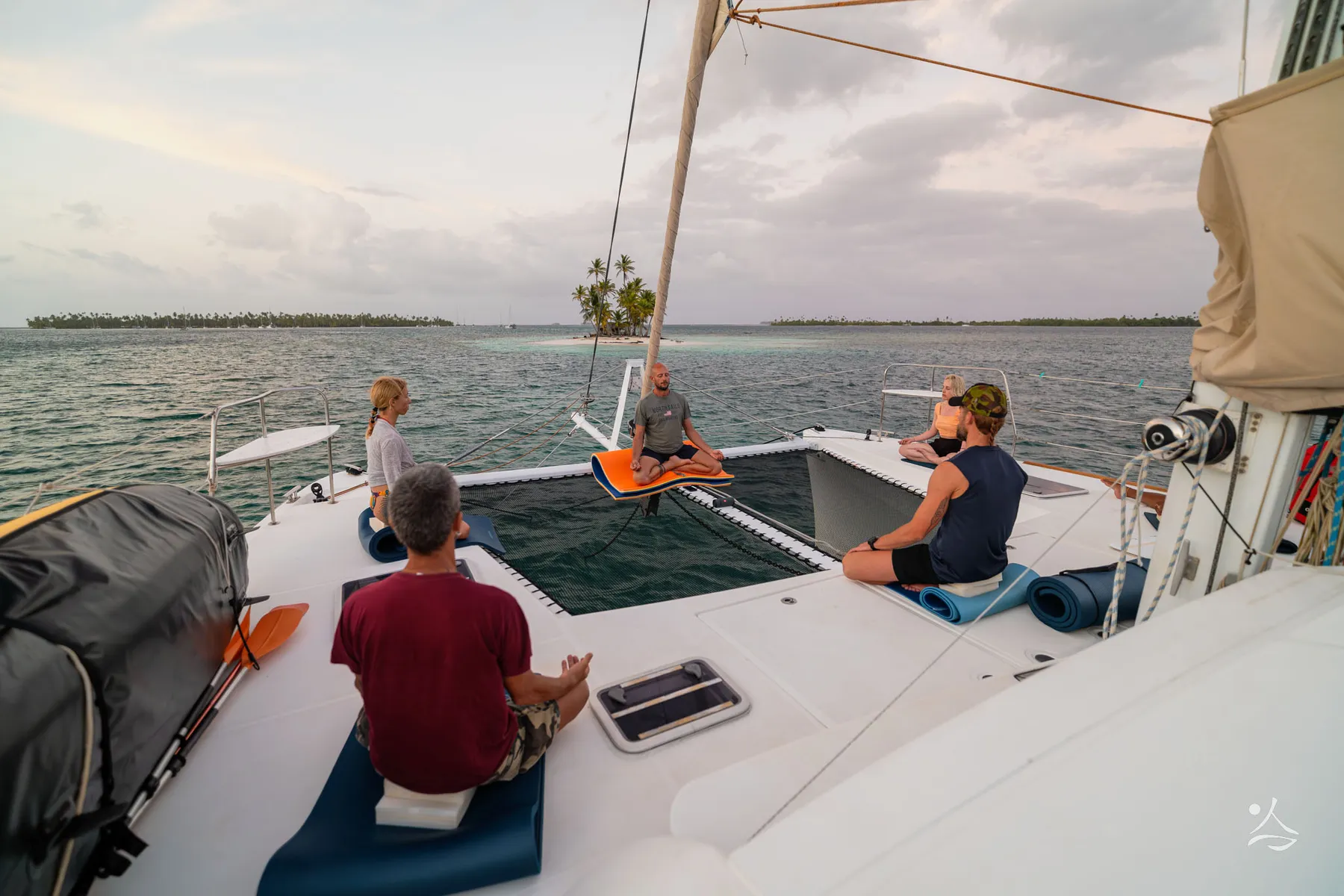
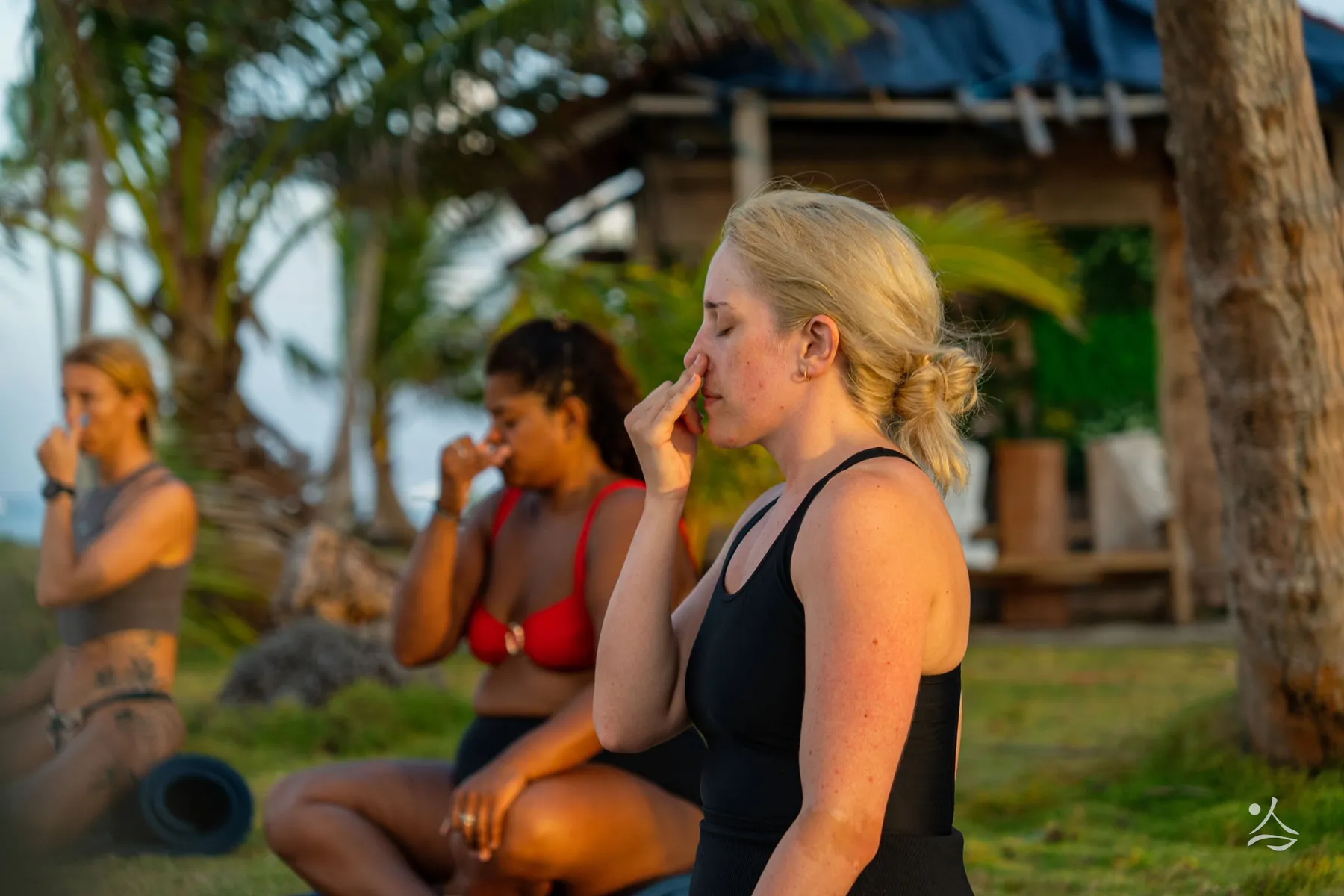
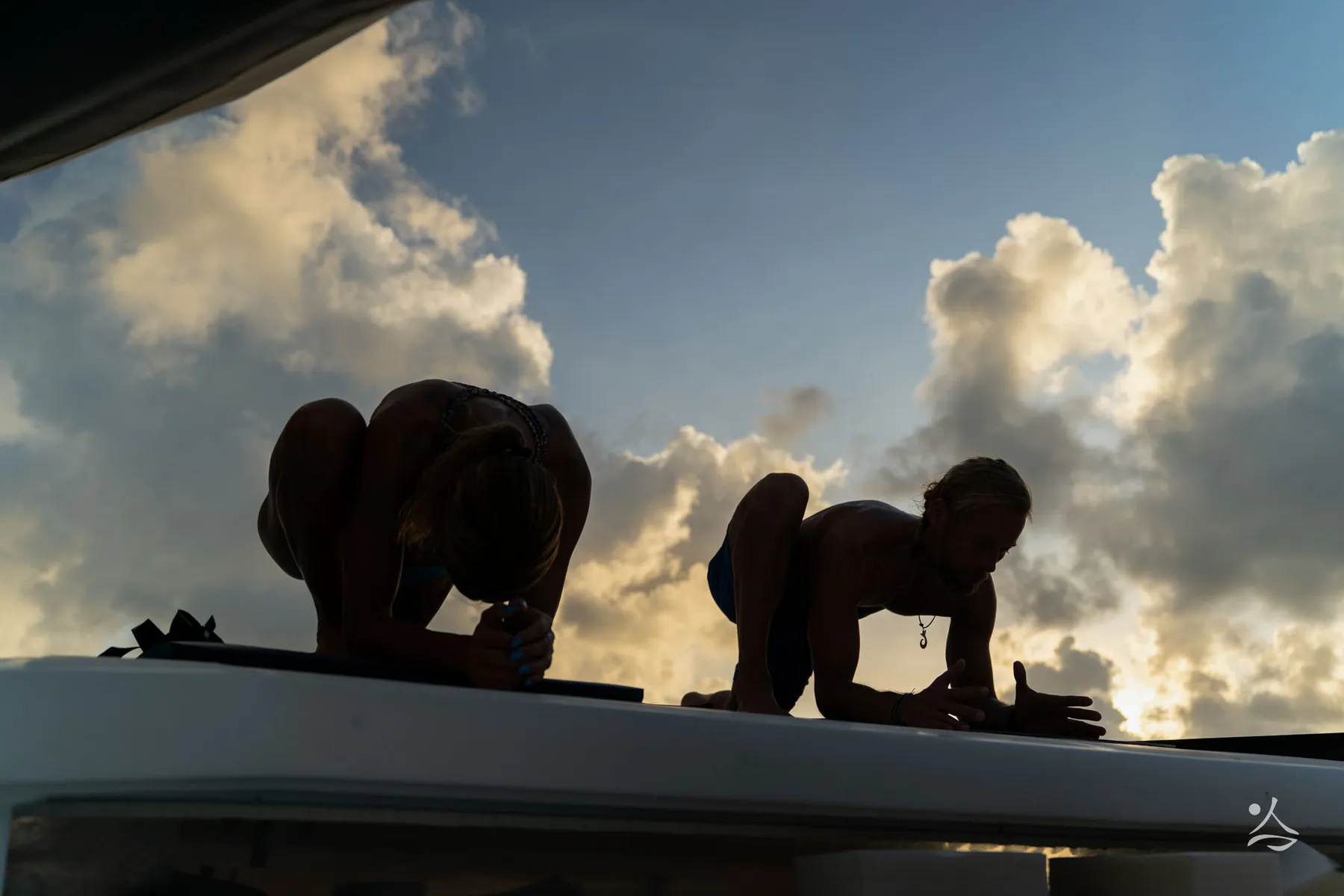
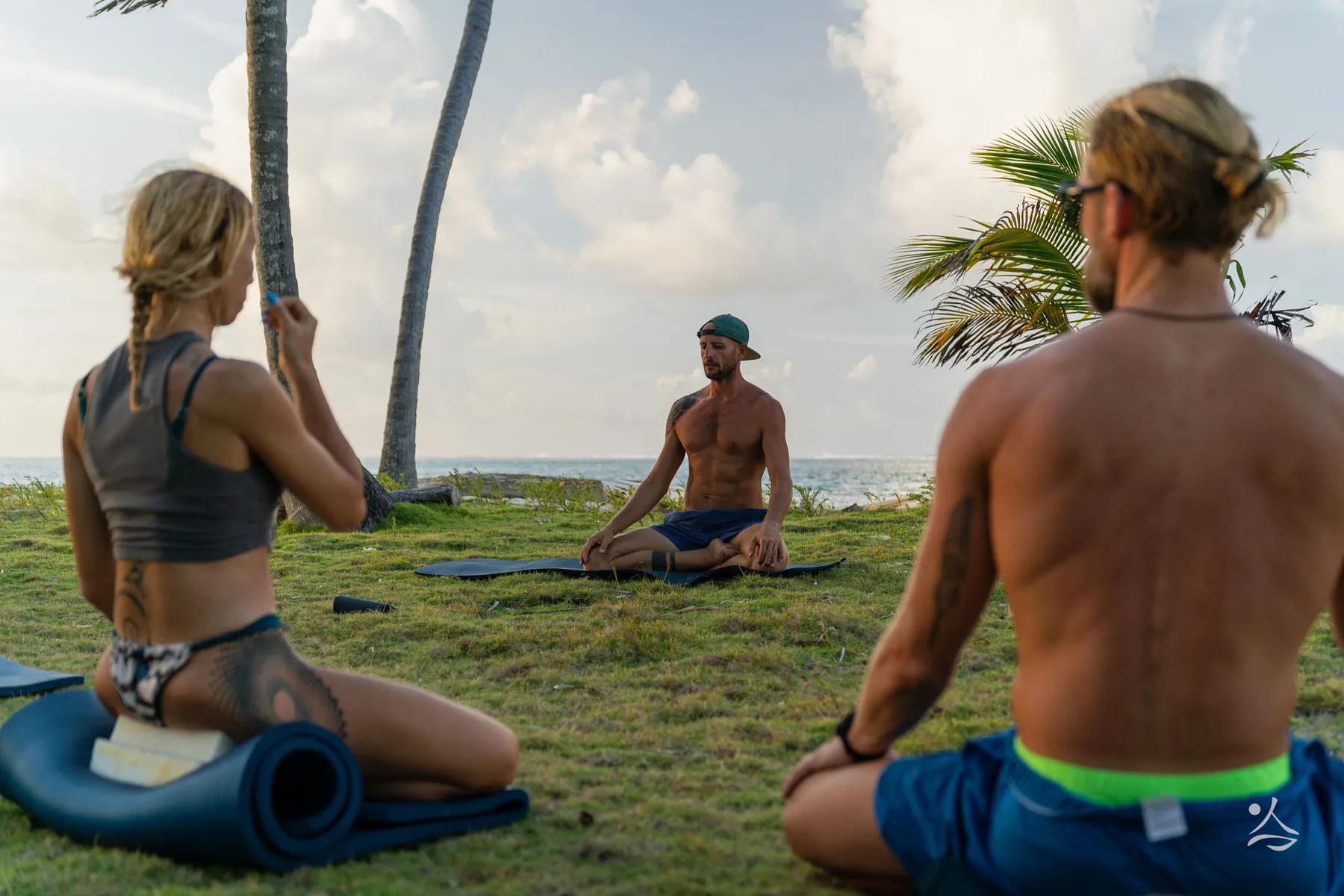
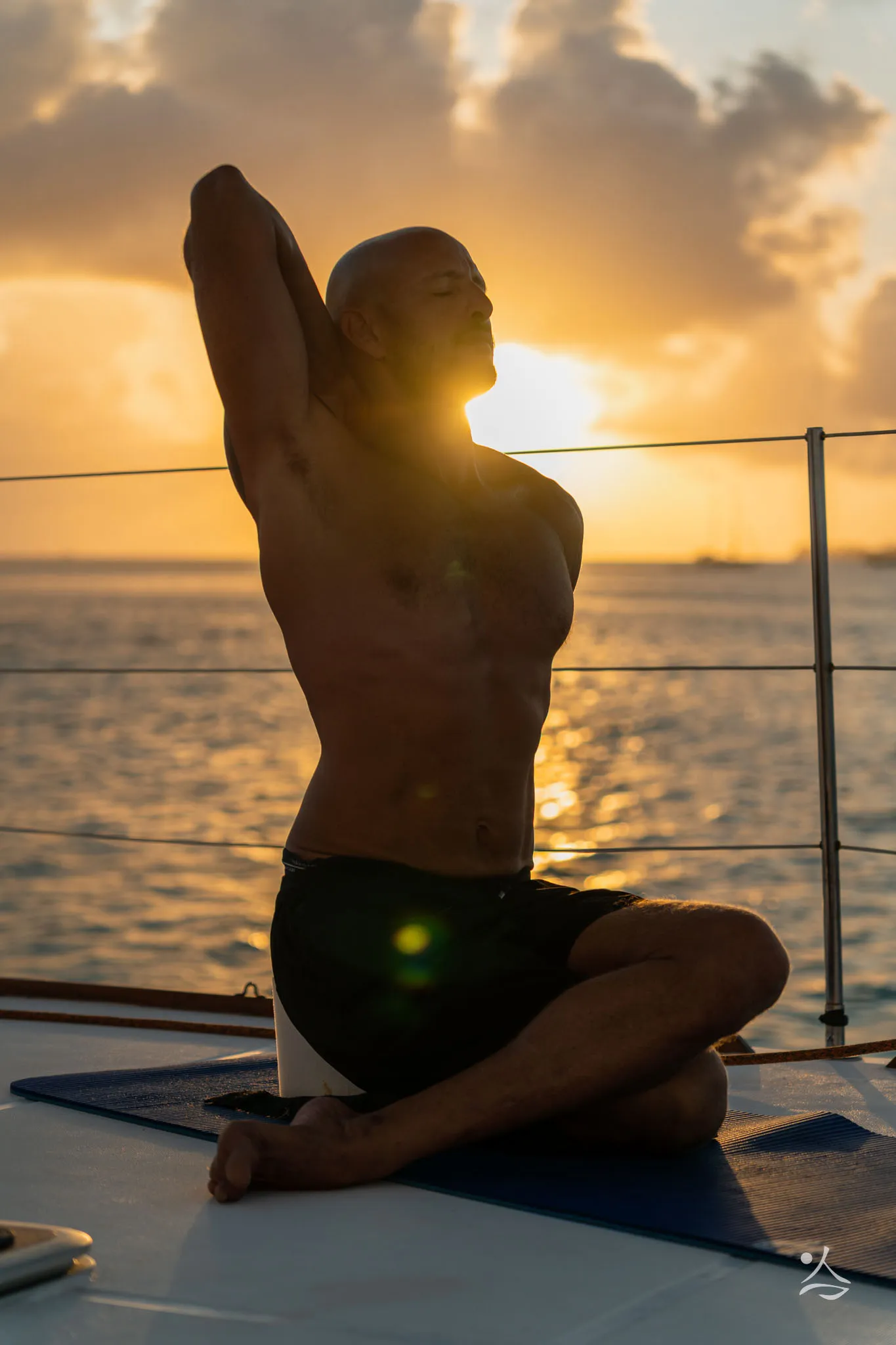
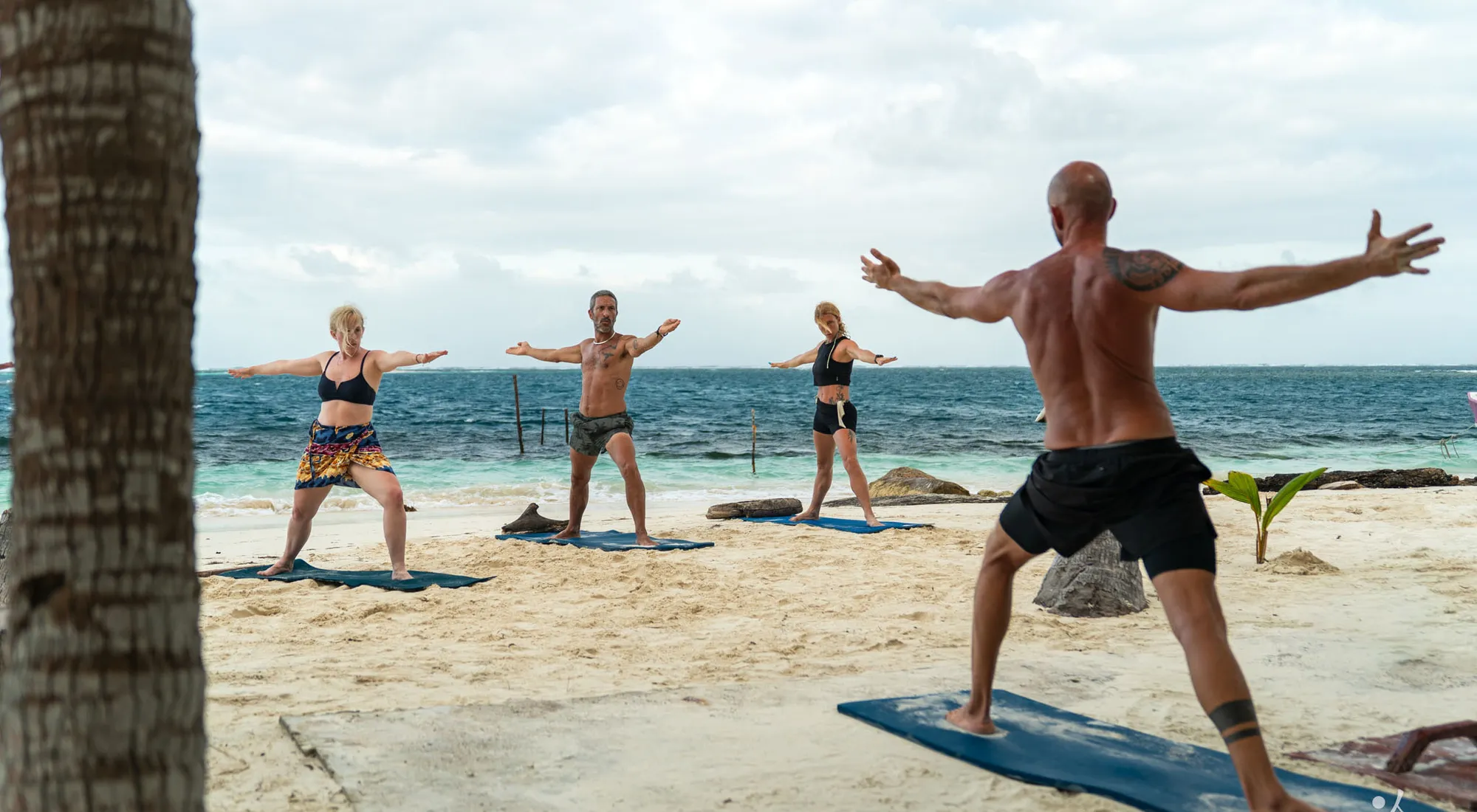
- On the catamaran deck or on remote beaches, sunrise or sunset
- Part of
- A wider balance with breathwork, meditation and freediving
Taking care of our home
For me, yoga is not a sequence of poses. It’s a way to return to the body. In everyday life we’re often stuck in the mind — thoughts, tension, automatic patterns. Yoga is the moment you begin to truly listen: to the breath, the sensations, the limits and possibilities of your body.
It’s not about “doing a pose well,” but about feeling what happens while you’re in it. And in that feeling, something shifts: the body softens, the mind slows down, and you start to reconnect with yourself in a simpler, more honest way.
Why practising aboard is different
Practising yoga aboard Ikigai is different from a studio, and the boat is the reason. A catamaran sits flat — two hulls, no heel — so the deck is a wide, stable platform that won’t tip you out of a balance the moment a wake rolls through. On a monohull you’d spend half the session bracing. Here you can hold a pose and actually breathe into it. Sessions happen on deck at sunrise or sunset, or on a remote beach surrounded only by sea and wind — no walls, no mirrors, no artificial sound, only space and light.
That completely changes the quality of the practice. The body opens more easily in warm air, the breath becomes more natural, and the mind offers less resistance to letting go. You don’t have to create a state of presence; the environment brings you there on its own.
Part of a wider experience
Aboard Ikigai, yoga is not an isolated activity. It’s part of a broader balance that includes meditation, breathwork and freediving. The work on the body integrates with the work on breath and mind: the postures release tension, improve mobility and make the body more functional; the breath becomes deeper and more conscious; the mind grows more stable.
That feeds straight into everything else. In freediving, a more relaxed body and a more conscious breath make a real difference. In meditation, a stable posture and a less tense body make it easier to stay present. Everything is connected — and when the practices support each other, the experience goes deeper.
Benefits in everyday life
Over time, what you develop on the mat doesn’t stay there. You become more aware of your body, more attentive to your breath, less reactive to tension. You learn to recognise when you’re stressed and to have real tools to come back to balance. Even in the simplest situations, the way you experience things begins to change: more presence, more stability, more clarity. In that sense, yoga isn’t only a practice — it’s a way of moving through life with more balance and awareness.