
Snorkeling in San Blas: What to Expect
Published July 12, 2026 · Ikigai Sailing crew
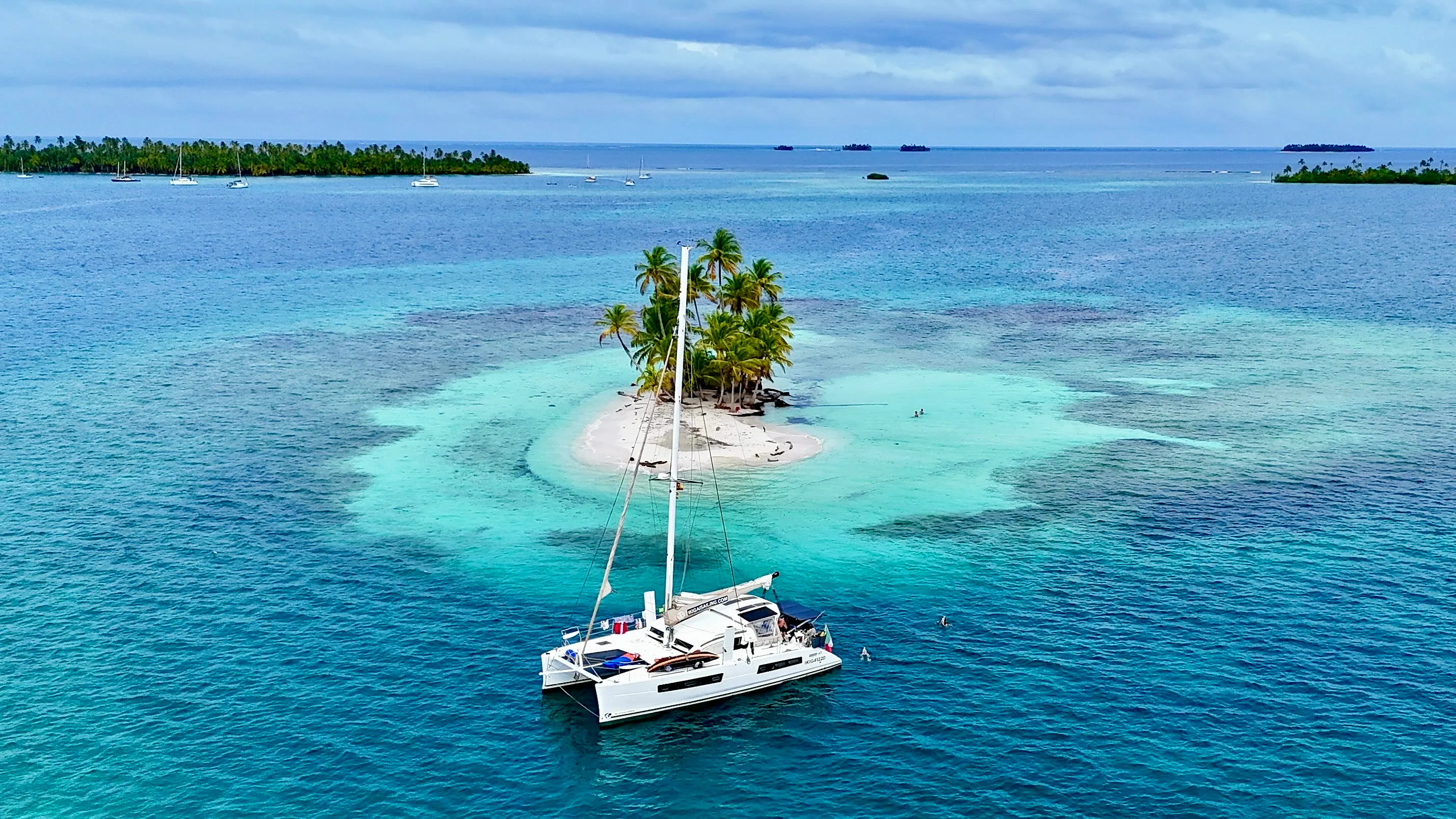
Snorkeling in San Blas means warm, clear water — around 28 °C most of the year — over shallow coral gardens, sandy patches and reef drop-offs scattered across roughly 350 islands in Guna Yala, Panama. Expect reef fish, rays, starfish and, in a few spots, resting nurse sharks. Visibility is best in the calmer, drier months, from December to April.
That’s the short answer. The longer one is about how you snorkel here, because the archipelago rewards patience more than checklists.
What the water is actually like
San Blas isn’t one reef. It’s a scattered field of low islands, shallow banks and channels, and the snorkeling changes with each anchorage. Over a coral garden the seabed sits a few metres down and the water is bath-warm and bright. Trace the edge of a bank and the bottom falls away, the colour deepening from turquoise to a darker blue where the reef drops off.
You don’t need experience. If you’re comfortable putting your face in the water and breathing through a snorkel, you can do this. Full mask, snorkel and fins are aboard, so there’s nothing to buy or carry.
What you see depends on where we anchor and how still you get. Reef fish work between the coral heads. Rays glide over the sand. Starfish, sea fans, soft corals and sponges lean in the current. The archipelago is calm and shallow enough that even a first-time snorkeler sees a lot in twenty minutes.
The places worth knowing
A few names come up again and again, and they’re worth understanding before you go.
The Cayos Holandeses — the Holandes Cays — sit on the outer edge of the archipelago, furthest from the mainland. They take the open swell first, which means clearer water and healthier reef, and they’re the classic San Blas snorkeling ground. Cayo Perro (Dog Island) is known for a shallow reef and, famously, a shipwreck you can snorkel straight off the beach. Isla Pelicano is a small, protected islet, good for an easy, sheltered swim when the wind is up.
These aren’t fixed stops on a fixed route. Where we go on any given day depends on wind, swell and where the water is clearest — which is exactly the advantage of moving on a boat instead of being driven to the same three islands as everyone else.
What marine life can you see while snorkeling in San Blas?
The answer changes from reef to reef, and no sighting is ever guaranteed. That is part of the beauty of snorkeling in a wild place.
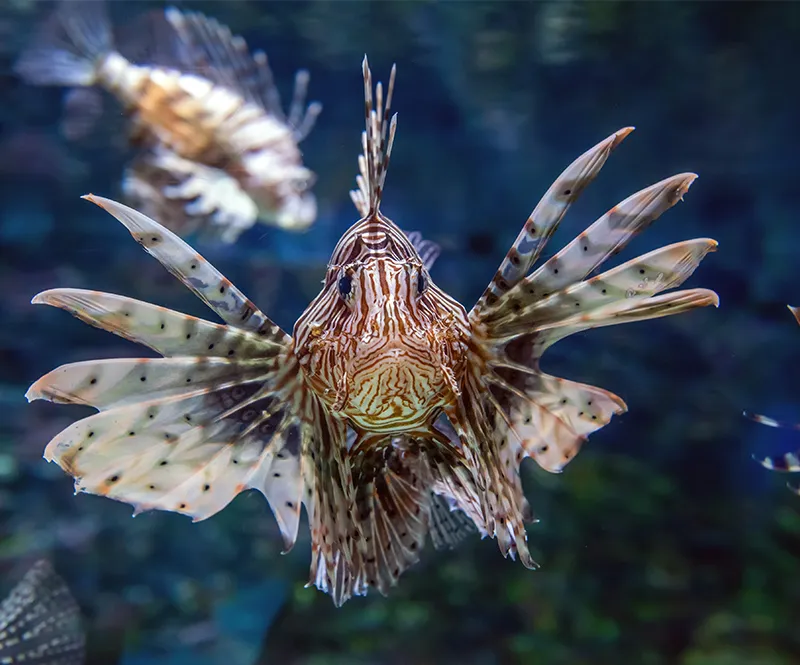
Around the reefs of Guna Yala, you may encounter schools of colorful reef fish, parrotfish grazing on coral, angelfish, butterflyfish, surgeonfish, snappers and groupers.
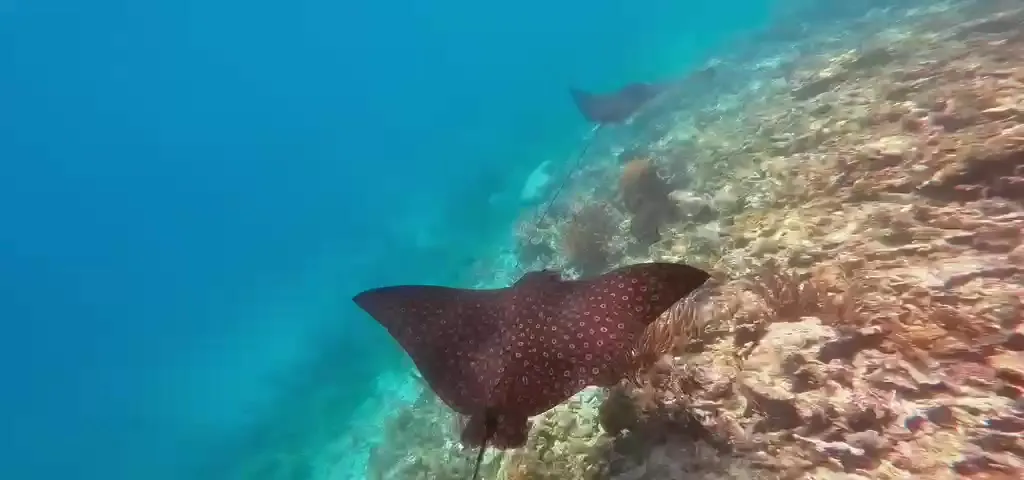
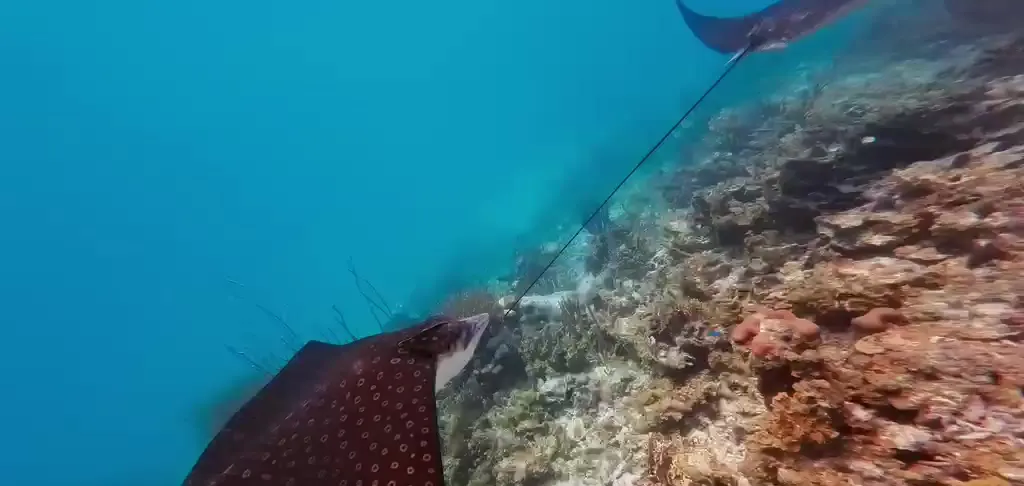
In sandy shallows and around seagrass beds, southern stingrays sometimes glide almost invisibly over the bottom, while nurse sharks can occasionally be found resting in calm, shallow areas. Over the reefs, spotted eagle rays occasionally pass through — unhurried, patterned with pale rings, unmistakable once you’ve seen one.
Sea turtles, barracudas, moray eels, lobsters and octopuses are also among the encounters possible in the wider marine ecosystem of the archipelago.
But some of the most memorable moments are not necessarily the rarest ones. It may be a school of tiny silver fish moving as one body, a parrotfish feeding quietly on the reef, or the sudden appearance of a ray beneath you that makes you stop for a moment and simply watch.
The more slowly you move, the more the reef reveals. In San Blas, the best sightings often belong not to those who swim the farthest, but to those who learn to stop and look.
Will you see sharks?
Yes. San Blas is home to nurse sharks — generally docile bottom-dwellers that can sometimes be seen resting on the sand or gliding slowly through shallow water. Some anchorages are known for them. They’re not usually aggressive toward people, and when one comes close and stays relaxed, you might rest a hand on its back for a calm, brief moment. We never feed or chase them, and we let the shark set the pace — it decides how close it wants to be, not us. Sharing the water with one this way is one of the quiet highlights of the archipelago. You’ll also see rays over the sand and, if you’re lucky and patient, larger reef life along the drop-offs.
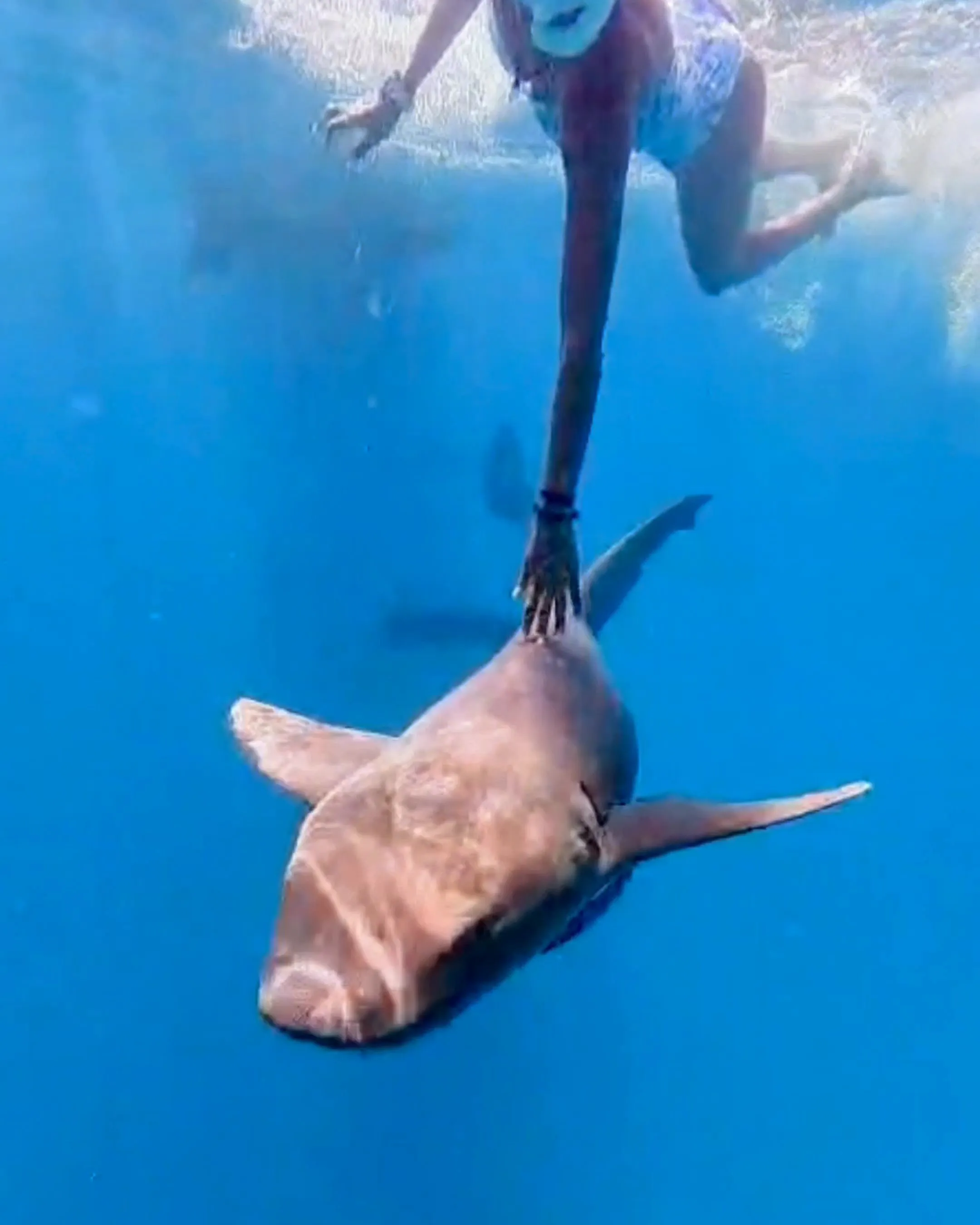
The rule with all of it is the same one we keep for the coral: look closely, don’t touch. We stay off the reef, keep our fins clear, and never chase the animals. You’re a guest in the water, not a visitor at an attraction.
Why a catamaran changes the snorkeling
Here’s the difference most people don’t think about until they’ve done both.
Many San Blas day tours leave Panama City before dawn, drive several hours, load you onto a fast boat, and follow similar routes to a handful of popular islands, often during the busiest hours of the day. By the time you’re in the water, the sun is high and those spots are at their most crowded.
On Ikigai you sleep in the archipelago. You wake up already anchored over a reef. You can be in the water at first light — mask on, slipping in over the coral before a single day boat has left the mainland. The reef is yours. The light is low and gold. The fish are active. And when the day crowds arrive at one island, you’ve already sailed to a quieter one.
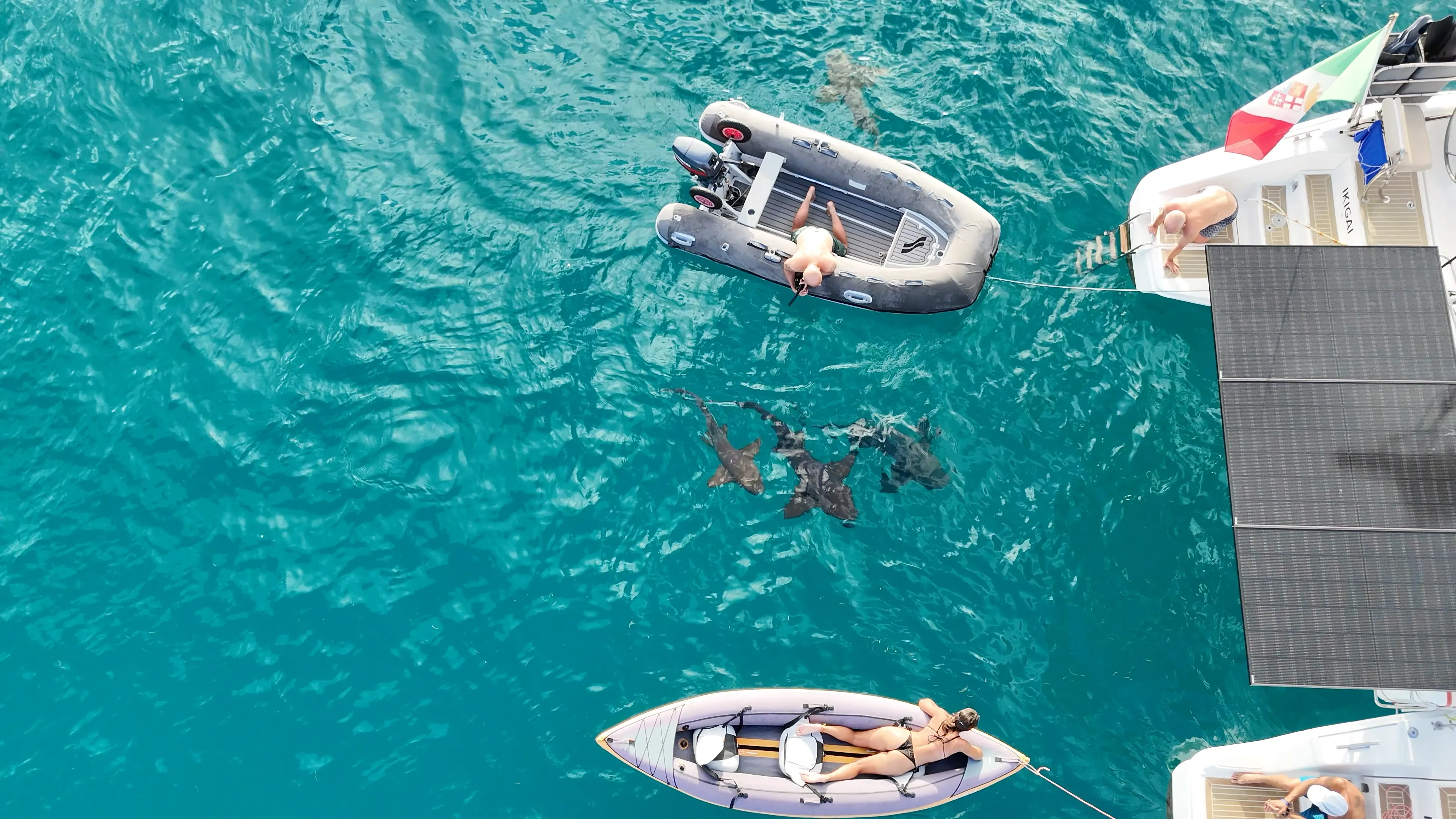
Snorkeling here isn’t a scheduled stop between transfers. It’s part of the daily rhythm — a swim before breakfast, a long float in the afternoon, a last look at the reef as the light goes. It also feeds directly into the freediving practice aboard: the calm breathing and easy finning you learn on a snorkel carry straight down the line on your next dive. Both are the same thing, really — learning to be quiet in the water and notice more.
We’re not a day-tour operator and we’re not a floating spa. Ikigai is a 47-foot bluewater catamaran, currently sailing the San Blas islands as the present chapter of a longer voyage. Snorkeling is one of the ways we slow down and pay attention to where we are.
What to bring
Not much. Gear is aboard, so a snorkel set is optional unless you’d rather use your own. Some chemical UV filters can harm corals and other marine life, so we recommend a mineral or reef-conscious sunscreen and, whenever possible, a rash guard or UV-protective shirt to reduce the amount of sunscreen entering the water. Bring your original passport and some cash for the Guna Yala entrance fee. Everything else — masks, fins, safety, knowing where the good water is that day — is our job.
If you want the full picture of a week out here, including what a cabin costs and what’s included, read how much a week in San Blas on a catamaran costs, and see the San Blas experience itself.
Snorkel San Blas at the rhythm of the islands
On Ikigai, snorkeling isn’t an excursion added to the itinerary. It’s part of everyday life aboard: an early swim before breakfast, a reef discovered from the kayak, or twenty quiet minutes in the water before sunset.
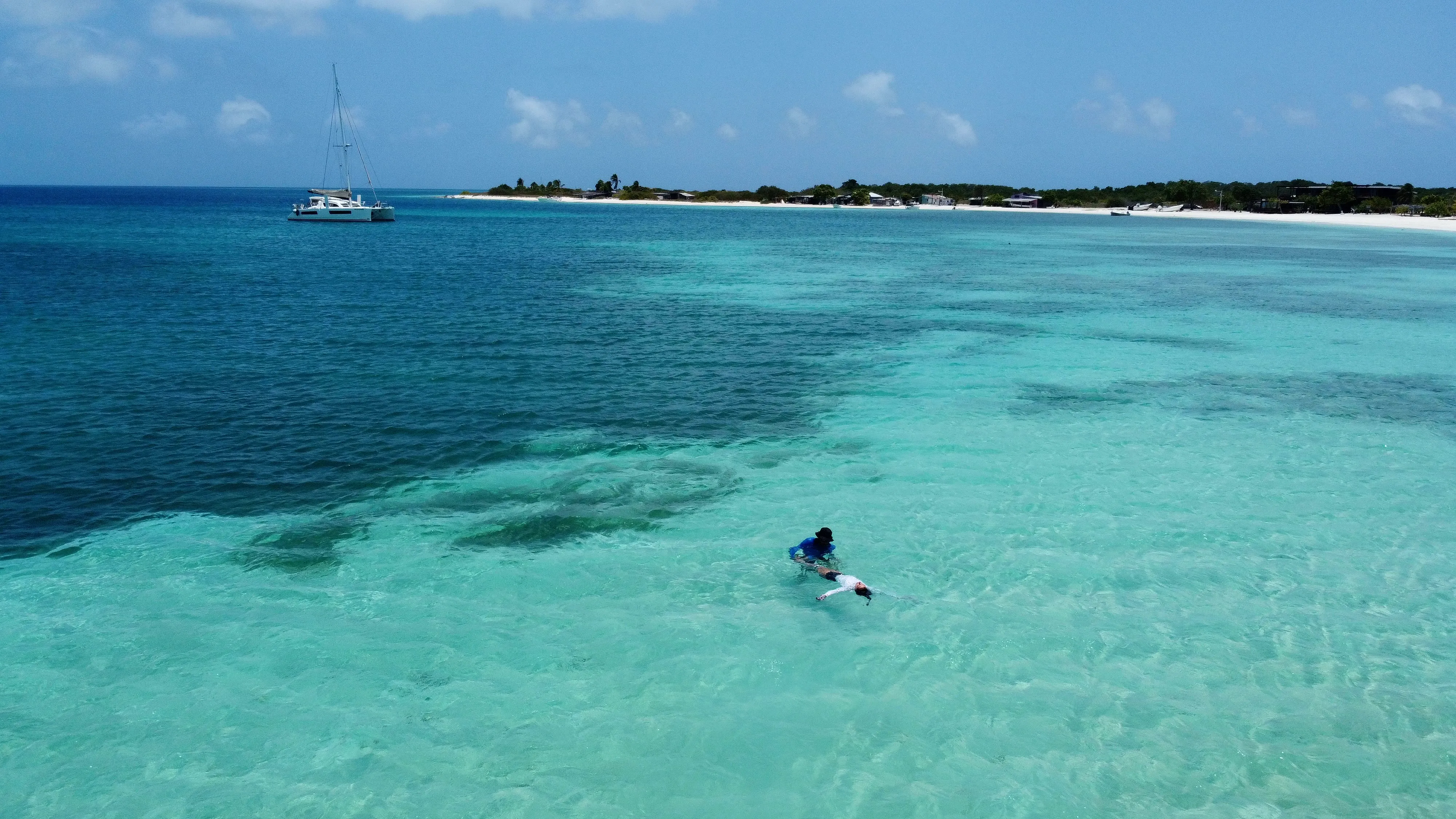
Explore the San Blas experience aboard Ikigai.
FAQ
Is snorkeling in San Blas good?
Yes. San Blas offers warm, clear water over shallow coral reefs, sandy flats and drop-offs across hundreds of small islands, with reef fish, rays, starfish and nurse sharks. The outer cays like the Cayos Holandeses have the clearest water and healthiest reef. It’s suitable for complete beginners and experienced snorkelers alike.
Do I need to know how to snorkel?
No. If you’re comfortable in the water and can breathe through a snorkel, you can do this with no prior experience. Full mask, snorkel and fins are provided aboard, and the crew helps you fit the gear and feel easy in the water before you get in.
What will I see snorkeling in San Blas?
Reef fish, rays, starfish, sea fans, soft corals and sponges are common, along with parrotfish, angelfish, snappers and the occasional sea turtle or barracuda. Some anchorages have resting nurse sharks, generally docile bottom-dwellers. In the outer cays you’ll also find better visibility and larger reef life along the drop-offs. No sighting is ever guaranteed — that’s part of snorkeling a wild place.
When is the best time to snorkel in San Blas?
The dry season, roughly December to April, generally brings calmer seas, less rain and the best underwater visibility. Snorkeling is possible year-round, but clarity is more reliable in the drier months.
Are there nurse sharks in San Blas?
Yes. Nurse sharks are found in the shallows of several San Blas anchorages. They’re slow, generally docile bottom-dwellers that rest on the sand. They’re not usually aggressive toward people; any contact is gentle and brief, we never feed or chase them, and we let the shark decide how close it wants to be.
Is snorkeling better on a catamaran than a day tour?
On a catamaran you sleep in the archipelago and can snorkel the reefs at first light, before the day boats arrive from Panama City. You reach quieter, clearer anchorages and swim before the crowds. Many day tours follow similar routes to the most popular islands during the busiest hours of the day.
Do I need to bring my own equipment?
No. Mask, snorkel and fins are aboard Ikigai. You’re welcome to bring your own if you prefer. We do recommend a mineral or reef-conscious sunscreen, which is gentler on corals and marine life.