
How a Boat's Energy Autonomy Works
Published February 27, 2025 · Ikigai Sailing crew
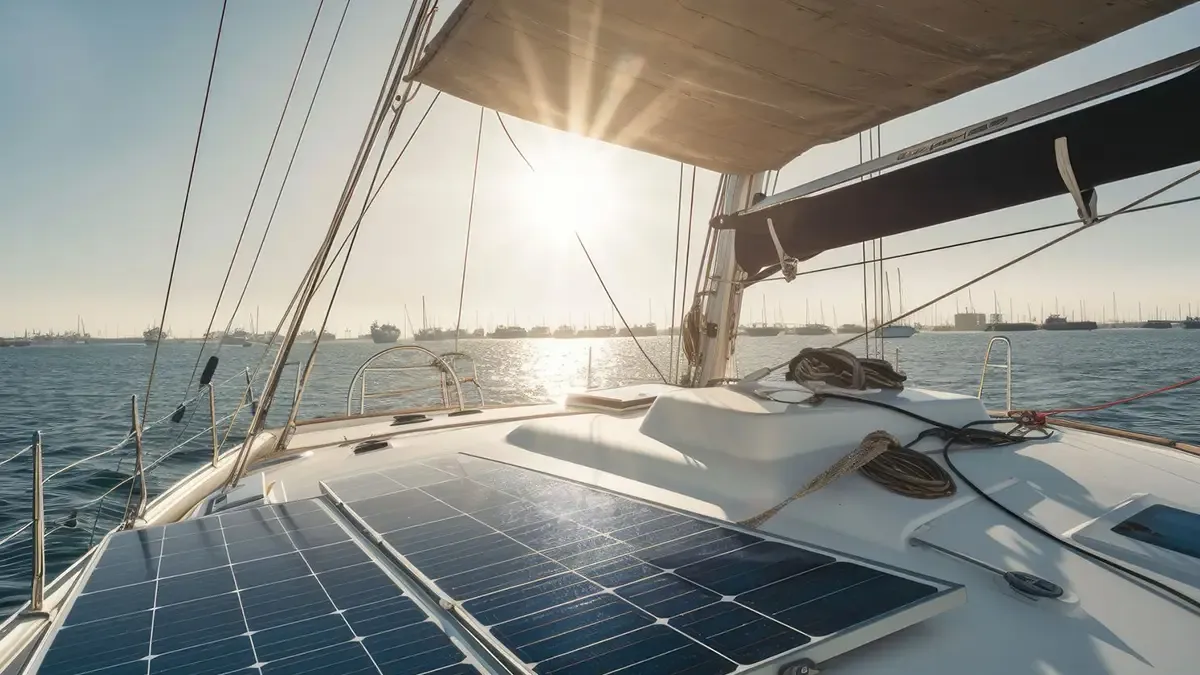
Modern boats are designed to be as self-sufficient as possible thanks to a combination of electrical systems and renewable energy sources. The main tools that ensure autonomy are:
- Solar panels:
- They collect solar energy to charge the onboard batteries.
- Ideal in conditions of high sun exposure, whether sailing or at anchor.
- Advantages: silent, sustainable and practically maintenance-free. 2. Generators:
- Often found on larger vessels, they provide extra power when the solar panels aren’t enough.
- They can run on fuel and be used to charge the batteries or power the electrical systems directly. 3. House batteries:
- The heart of the electrical system. They store the energy collected from the solar panels, the generator or the main engine’s alternator.
- They come in different types (lead-acid, AGM, lithium) with varying capacity depending on the size and needs of the boat. 4. Engine alternator:
- While sailing, the main engine can charge the batteries through the alternator, providing power even when there is no sun or wind. 5. Wind and hydro generation:
- Some boats use wind or hydro generators (which harness the boat’s movement through the water) to further supplement energy production.
Electrical and electronic skills for a skipper
A skipper doesn’t need to be an expert technician, but must understand and be able to manage the onboard electrical and electronic systems to ensure safety and autonomy. Here are the main skills required:
- Knowledge of the onboard systems:
- Being able to read a basic wiring diagram.
- Knowing the location and function of electrical panels, fuses, switches and batteries. 2. Routine maintenance:
- Periodically check electrical connections to prevent oxidation or short circuits.
- Clean the solar panel contacts and check they are working.
- Monitor the battery charge level and check for any leaks. 3. Managing consumption:
- Being able to balance energy needs with available production.
- Prioritising essential devices (navigation lights, instruments, autopilot) when resources are limited. 4. Troubleshooting:
- Identifying common faults such as blown fuses, broken connections or charger malfunctions.
- Knowing how to isolate a problem to prevent greater damage. 5. Using electronic instruments:
- Familiarity with GPS, depth sounders, autopilot, AIS (Automatic Identification System) and VHF.
- Being able to perform software updates or basic configurations. 6. Electrical safety:
- Knowing how to shut down the electrical system in an emergency.
- Avoiding work on electrical systems in damp environments without proper protection.